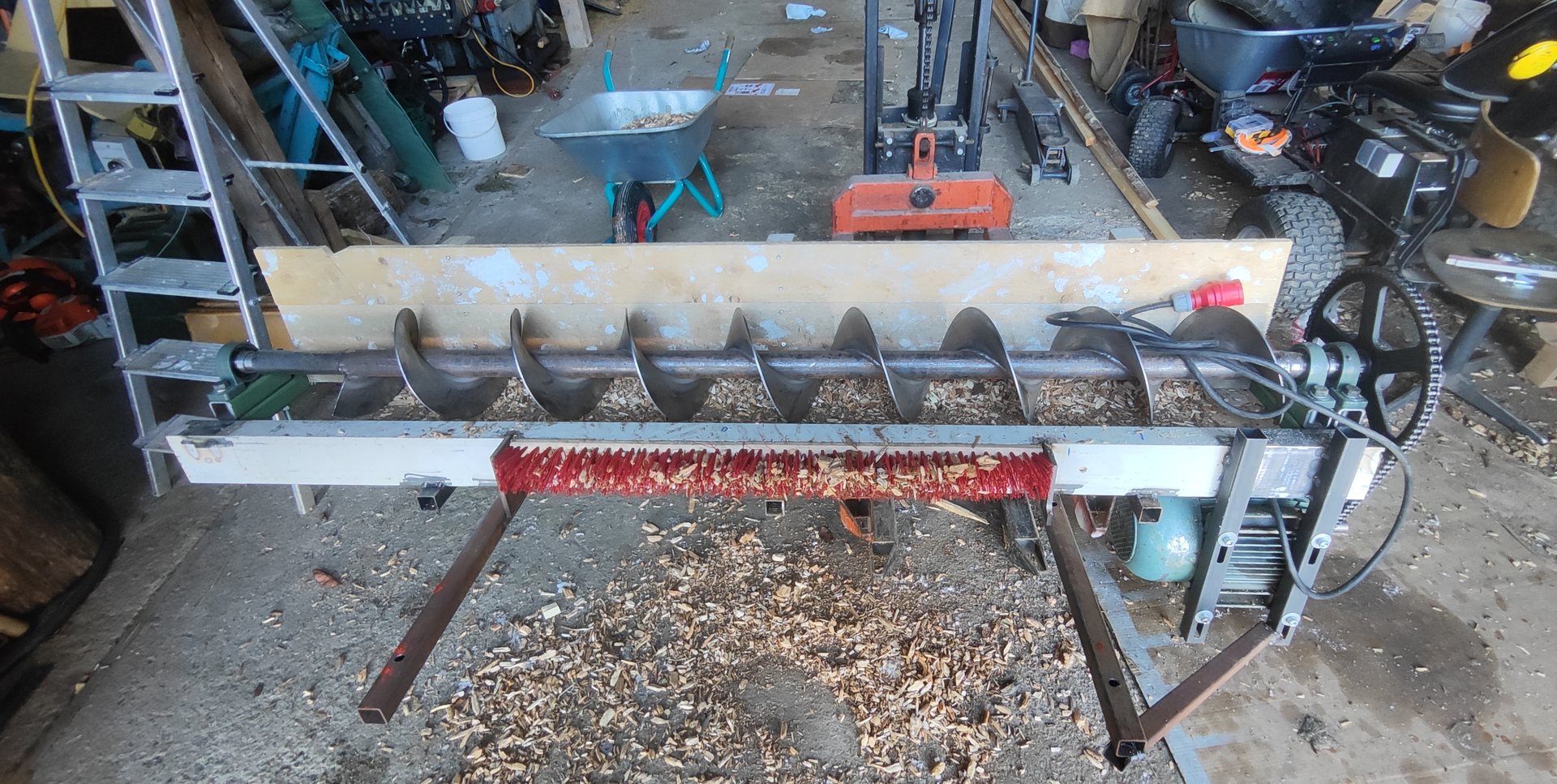
Retrofitting an old loader wagon so it fills buckets with wood-chips at the press of a button.
Motivation
Current situation
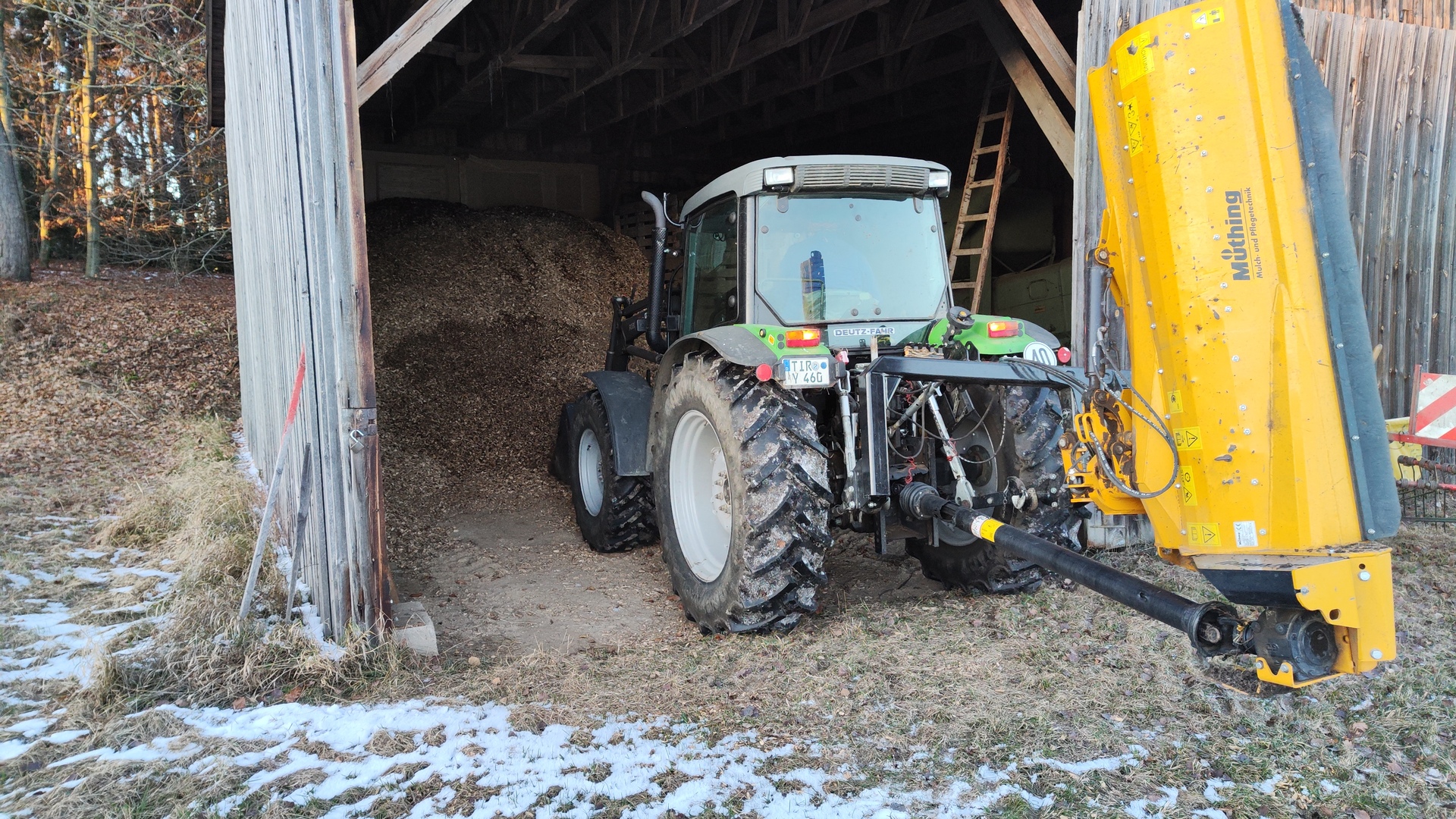
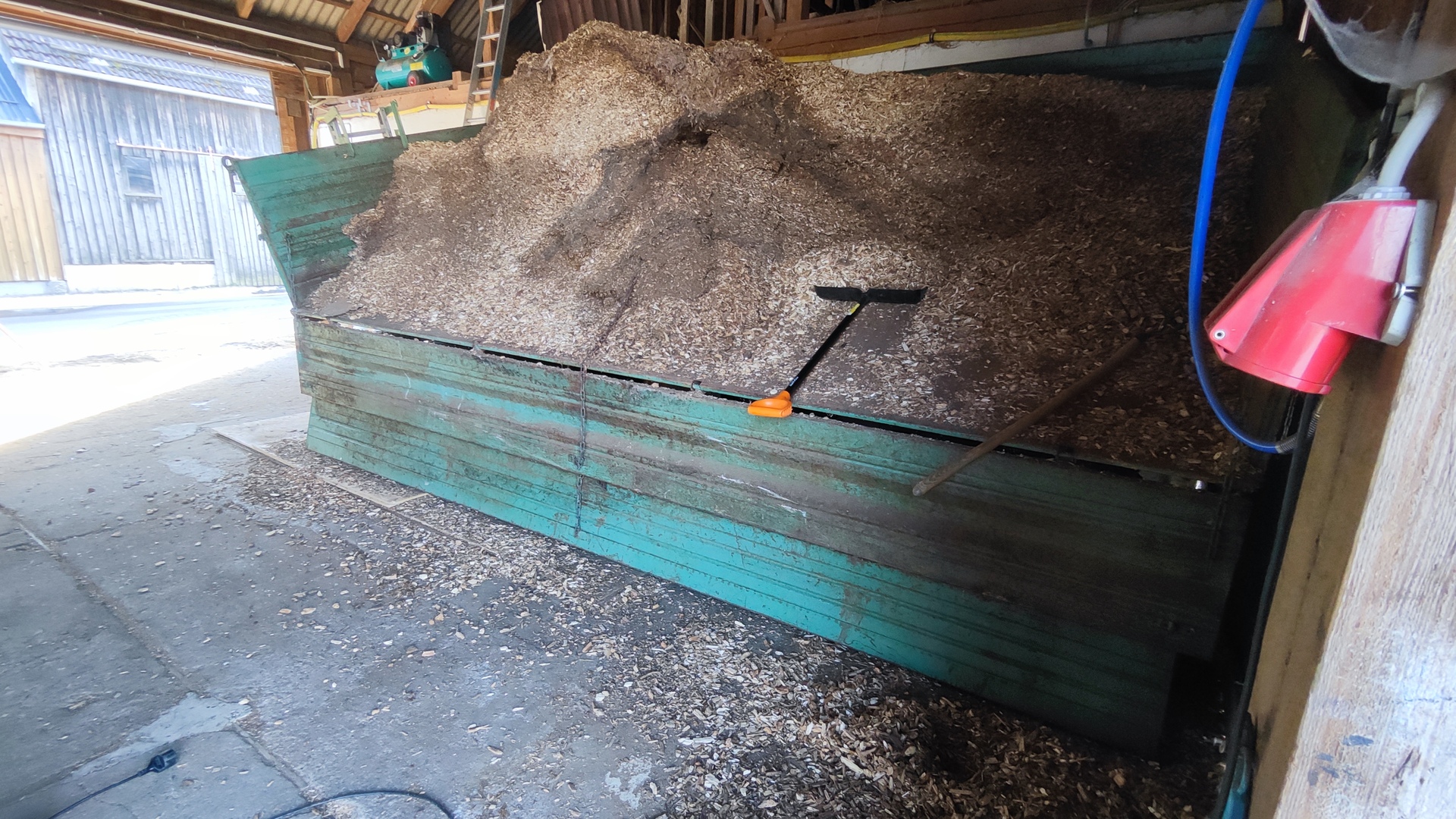
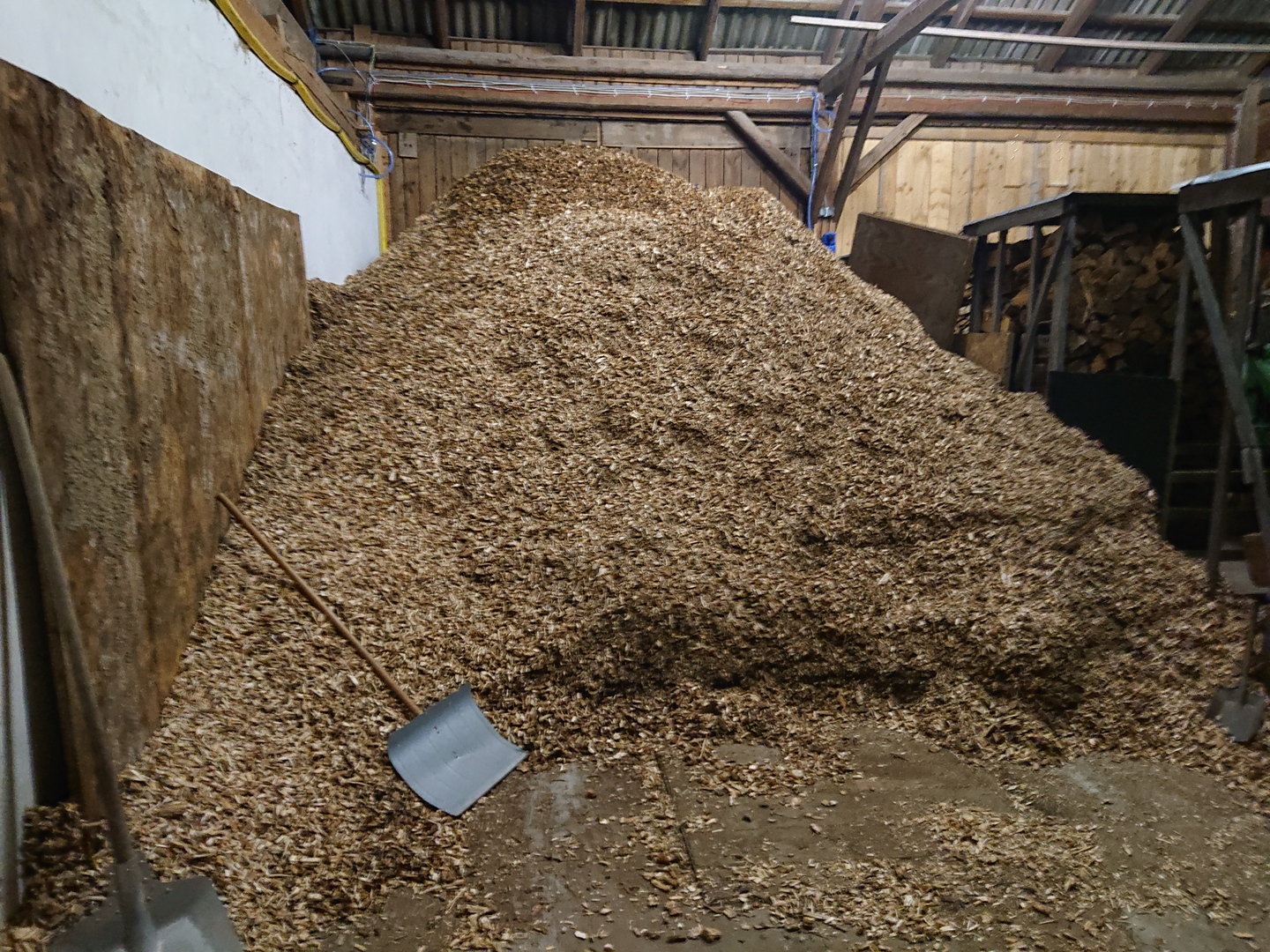
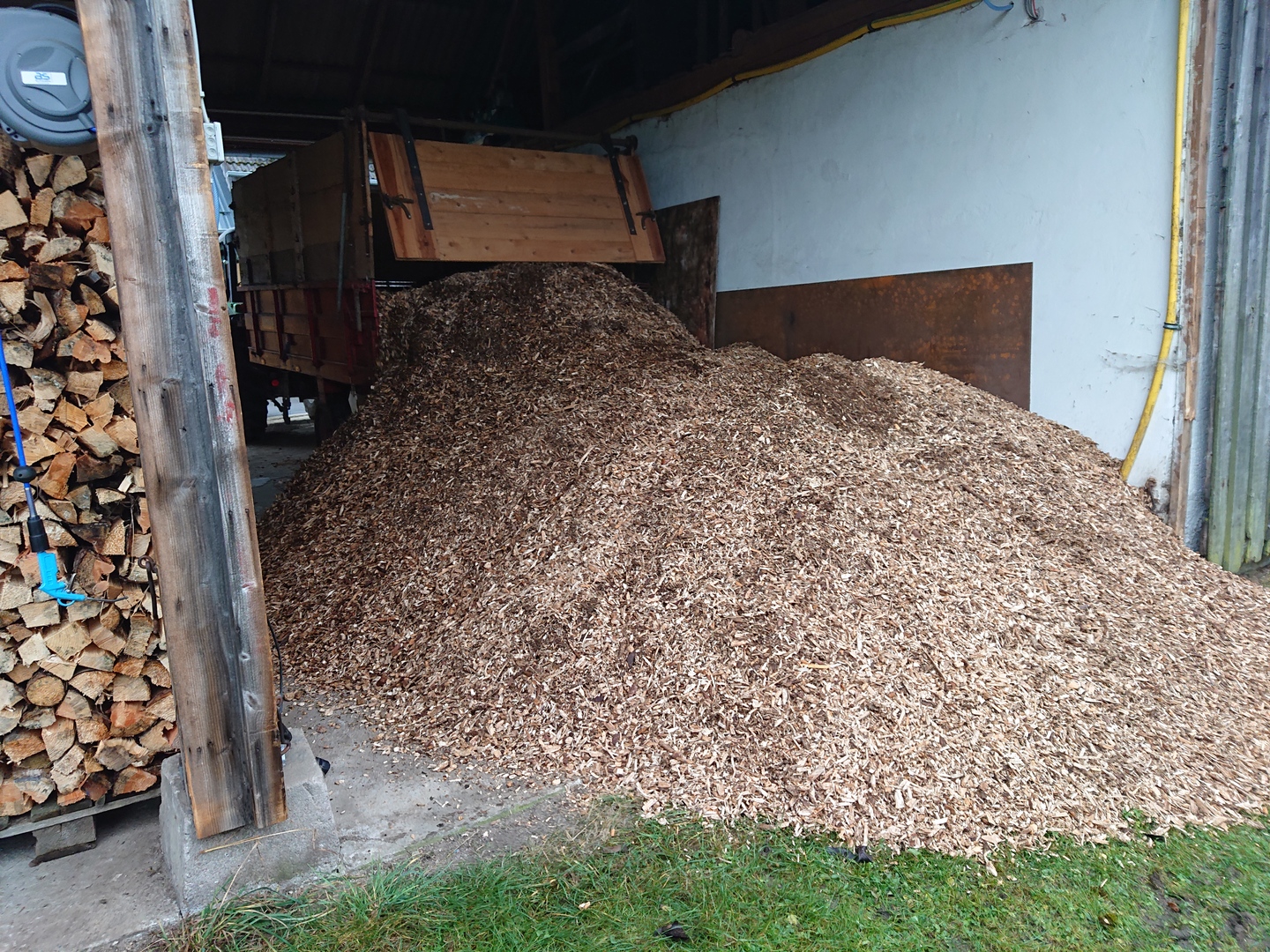
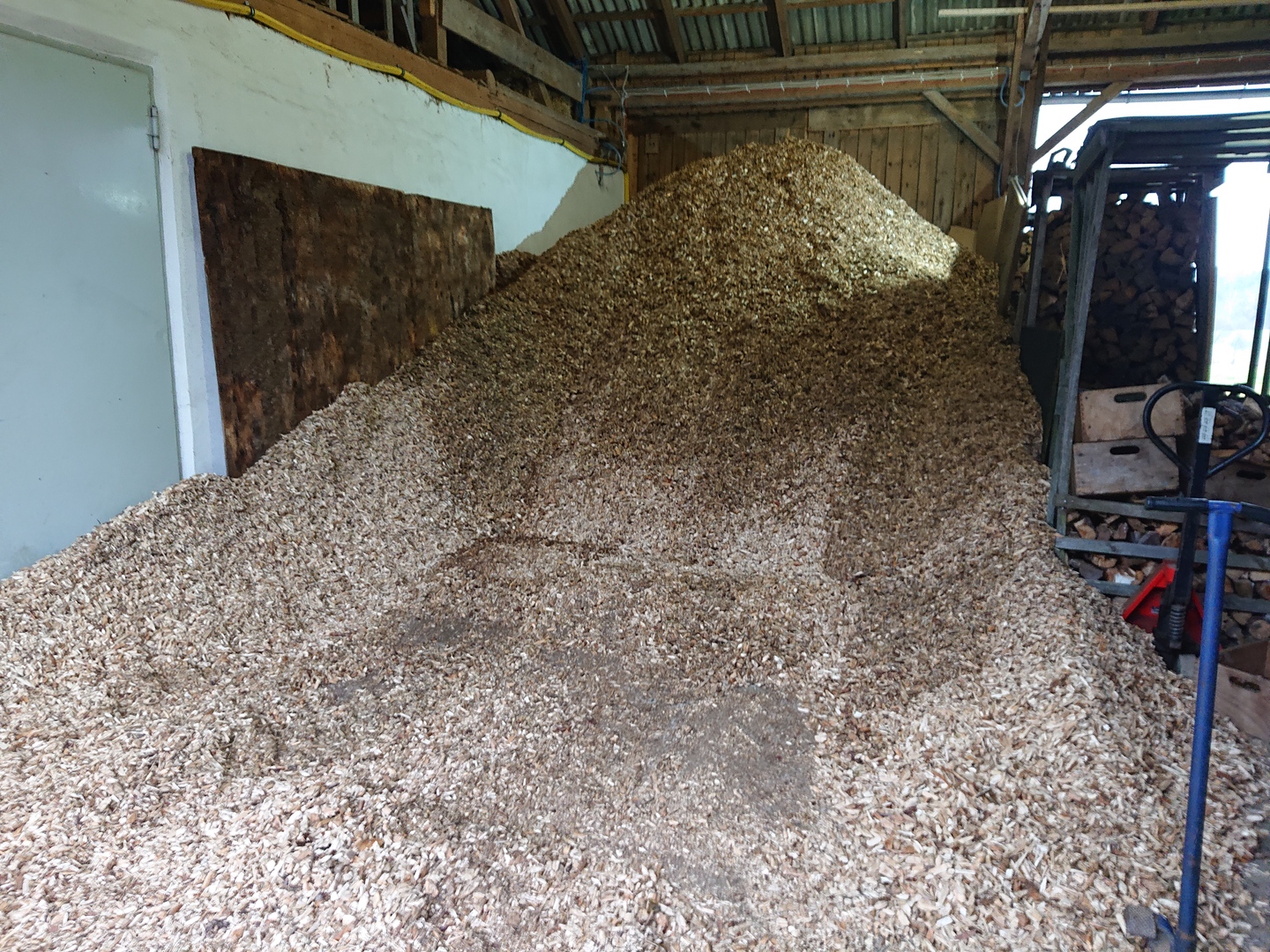
We don’t have a chip-fired heating system yet, but we still wanted to use some chips alongside firewood. The workaround was to dump chips on the floor and fill buckets by hand once a week (about ~25 buckets in one session). It worked, but only as a temporary workaround.
Problems
- Mess → chips everywhere → constant cleanup
- Dust → health risk, not great in the hall
- Heavy work → loosen, shovel and lift ~25 buckets in one go
- Slow → loosening layers + filling takes real time
- Space → big pile blocks space in the hall
- Compaction → chips bind into a solid layer; must be broken up before shoveling
- Overall → working with buckets is not elegant, but it kept things running for now.
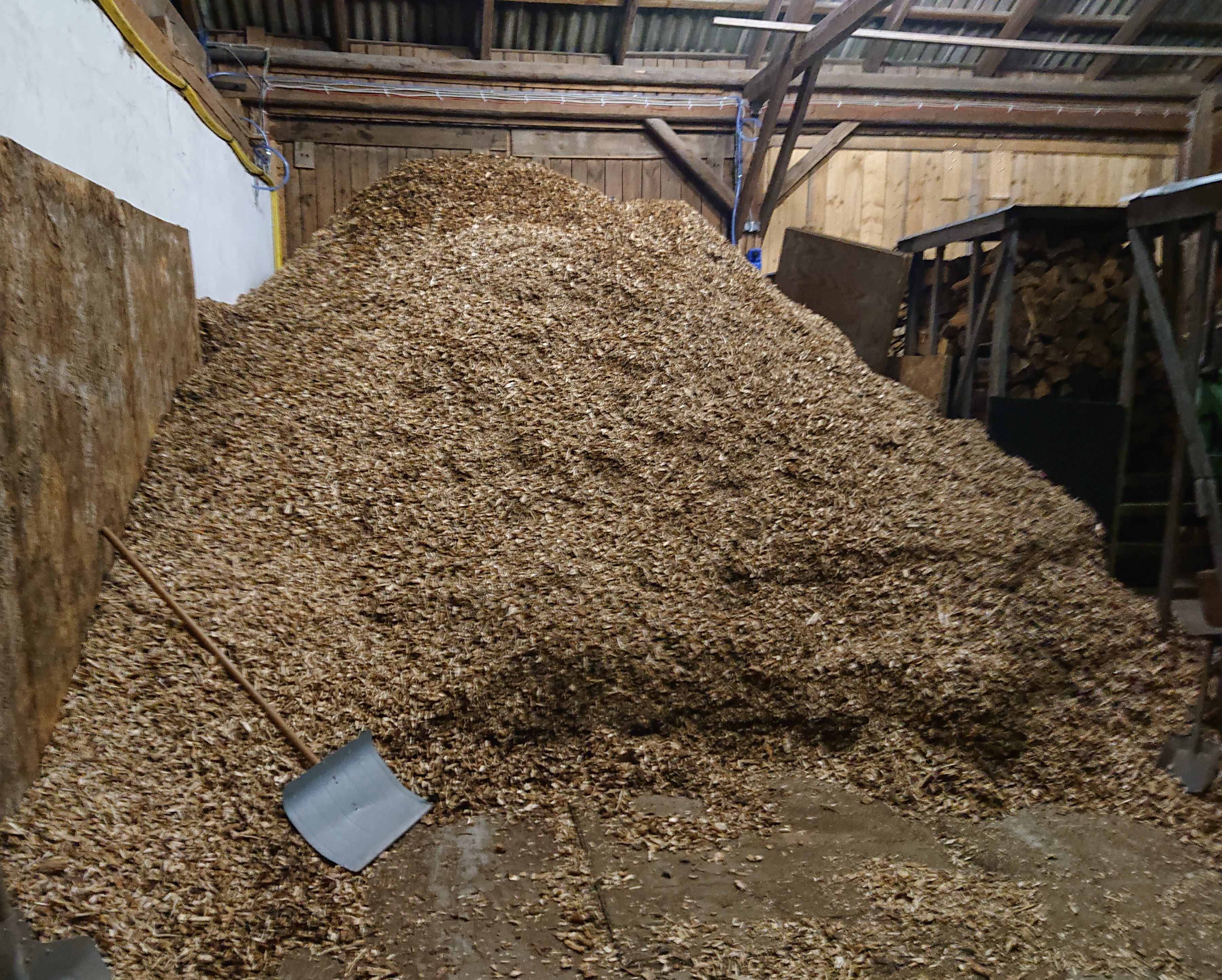 Hand-filling from the floor: dust, mess, and extra effort
This is a temporary bridge until a proper chip-heating system is installed.
Idea
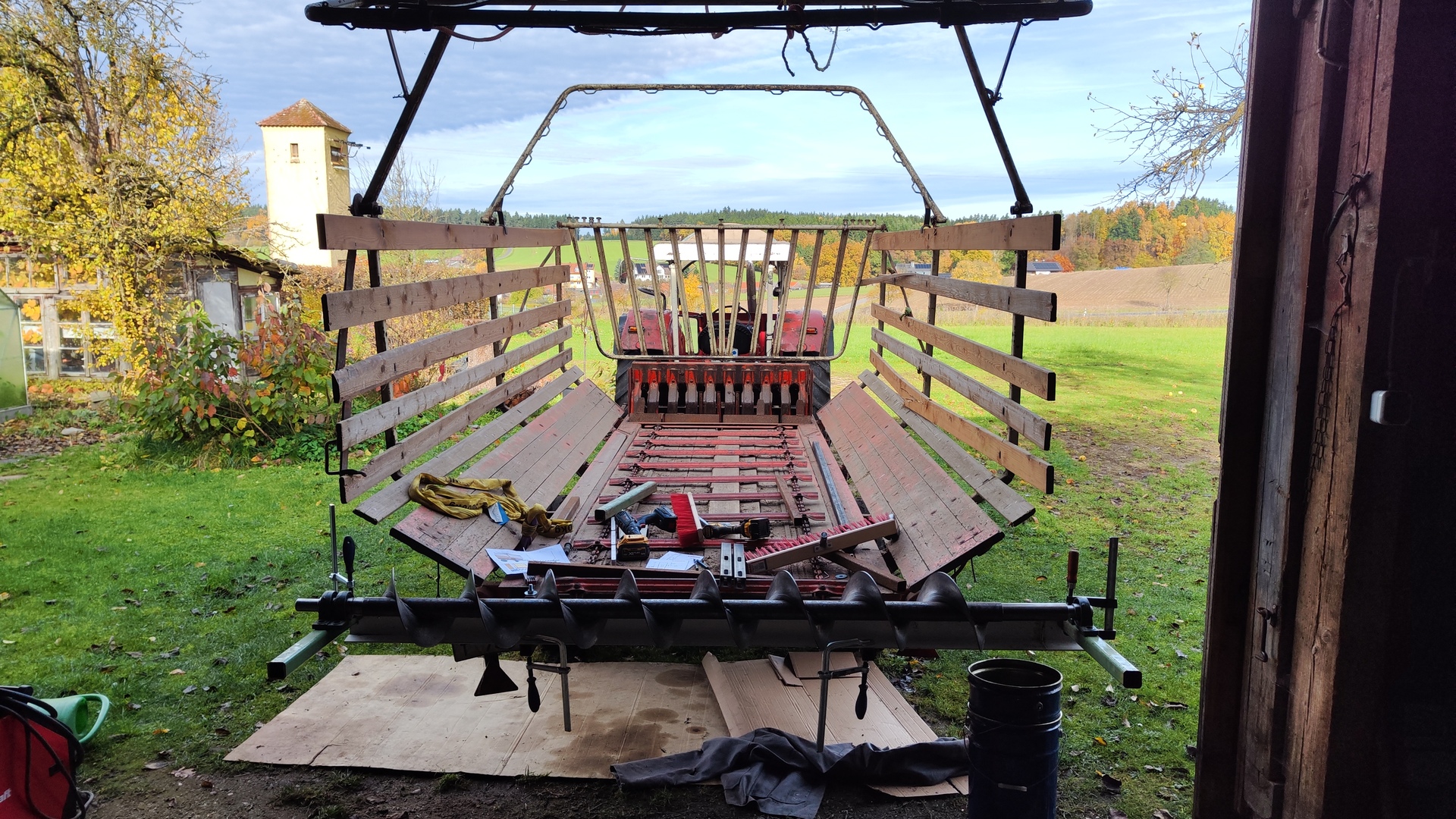
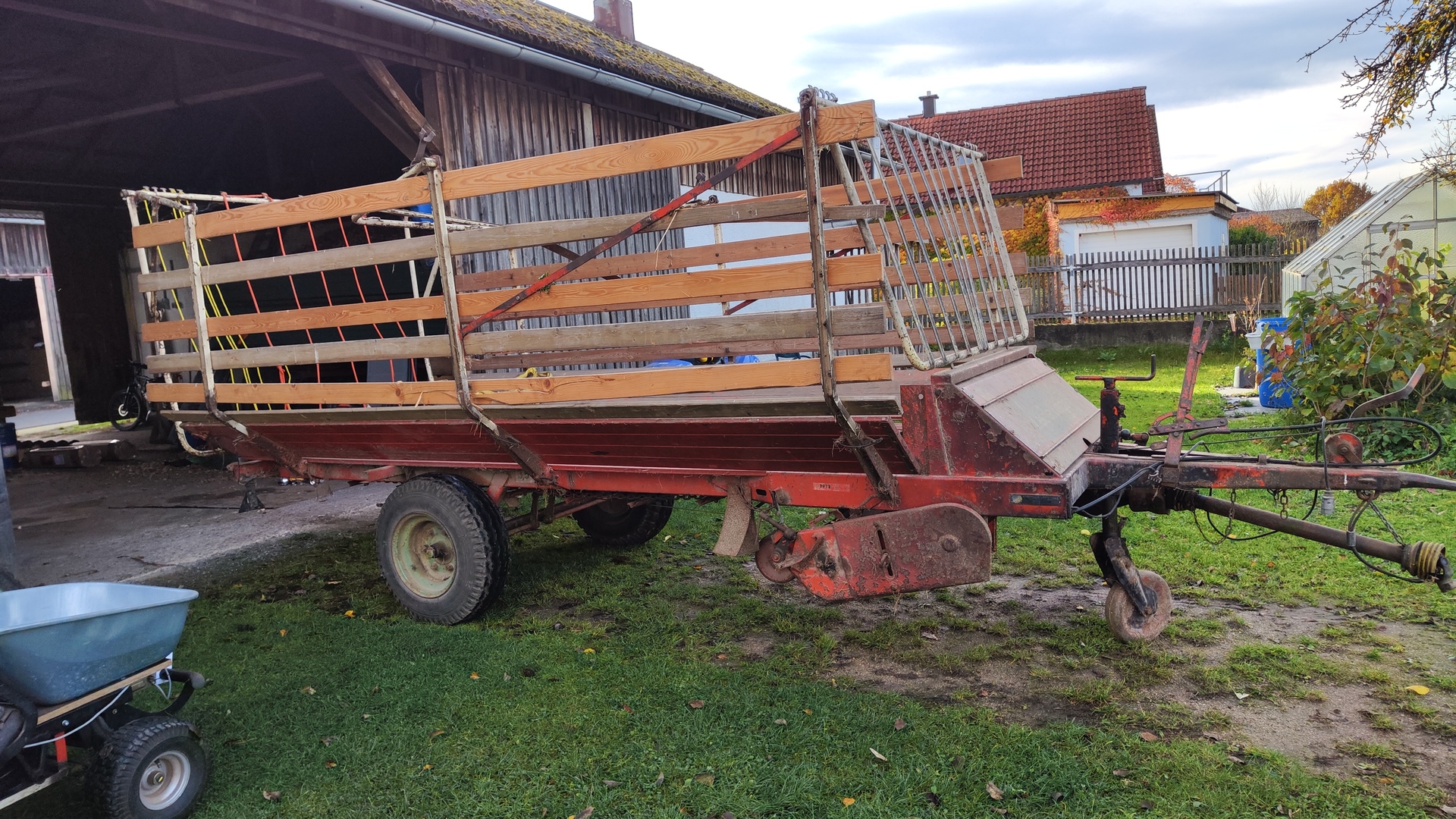
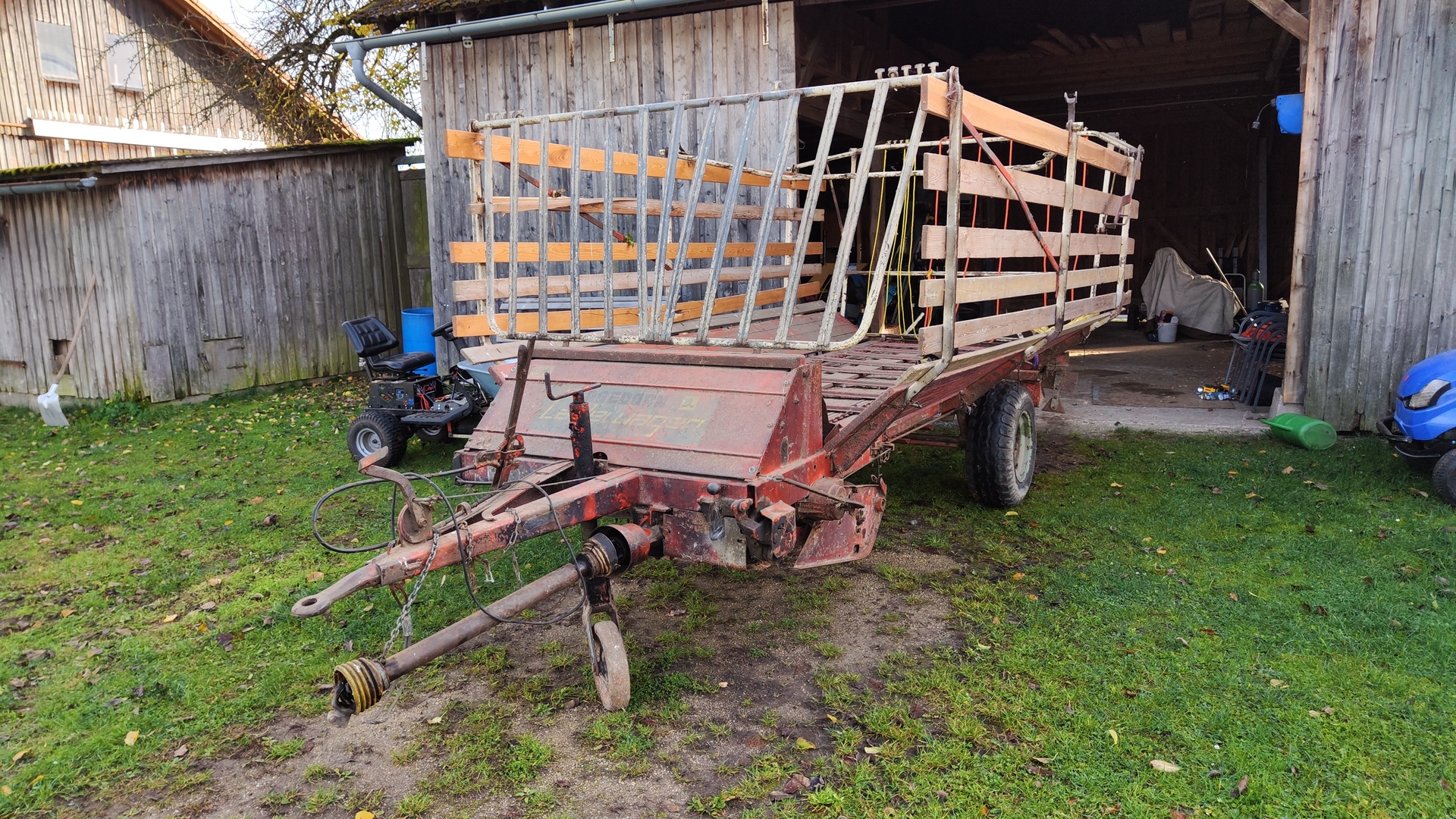
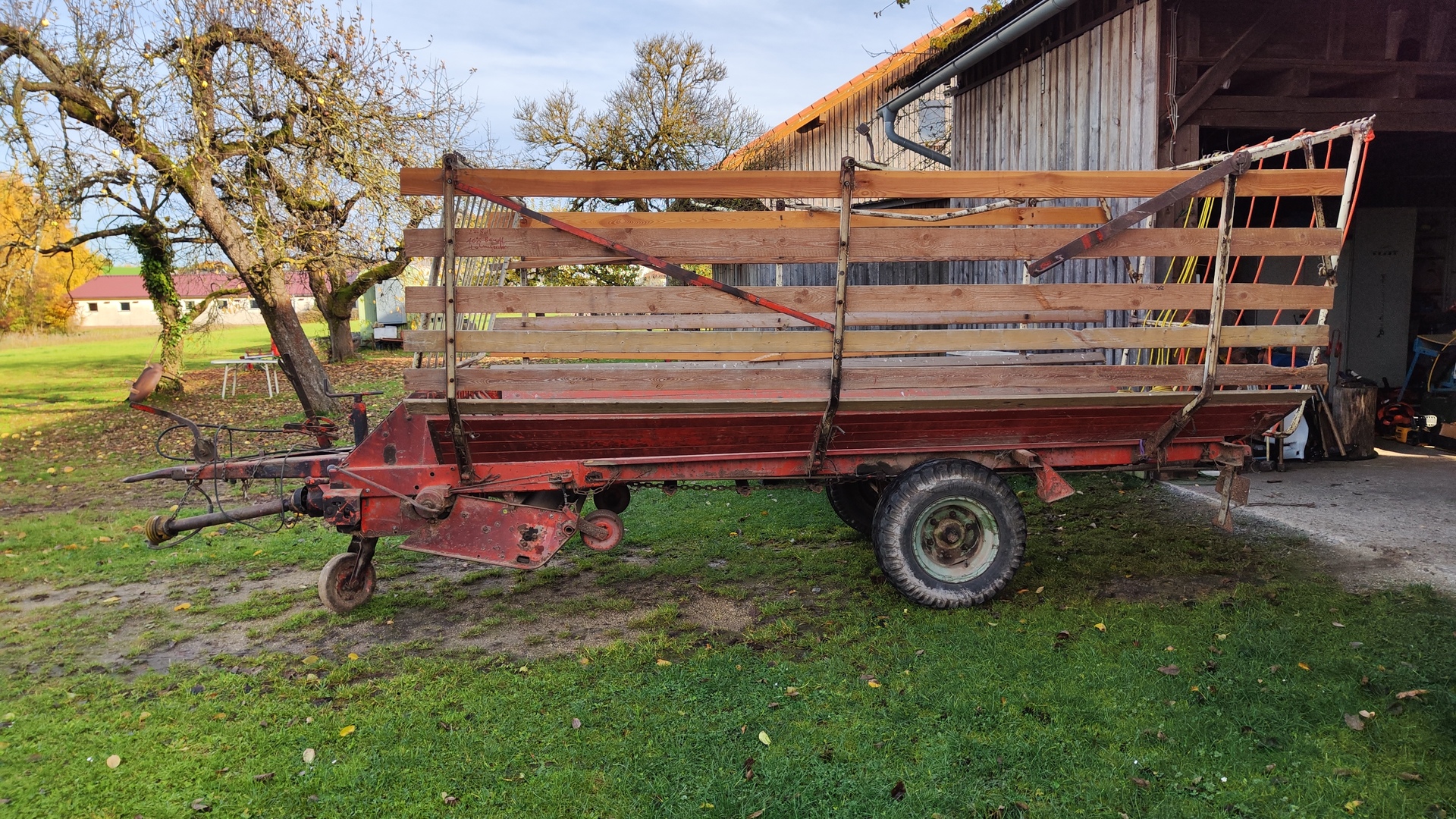
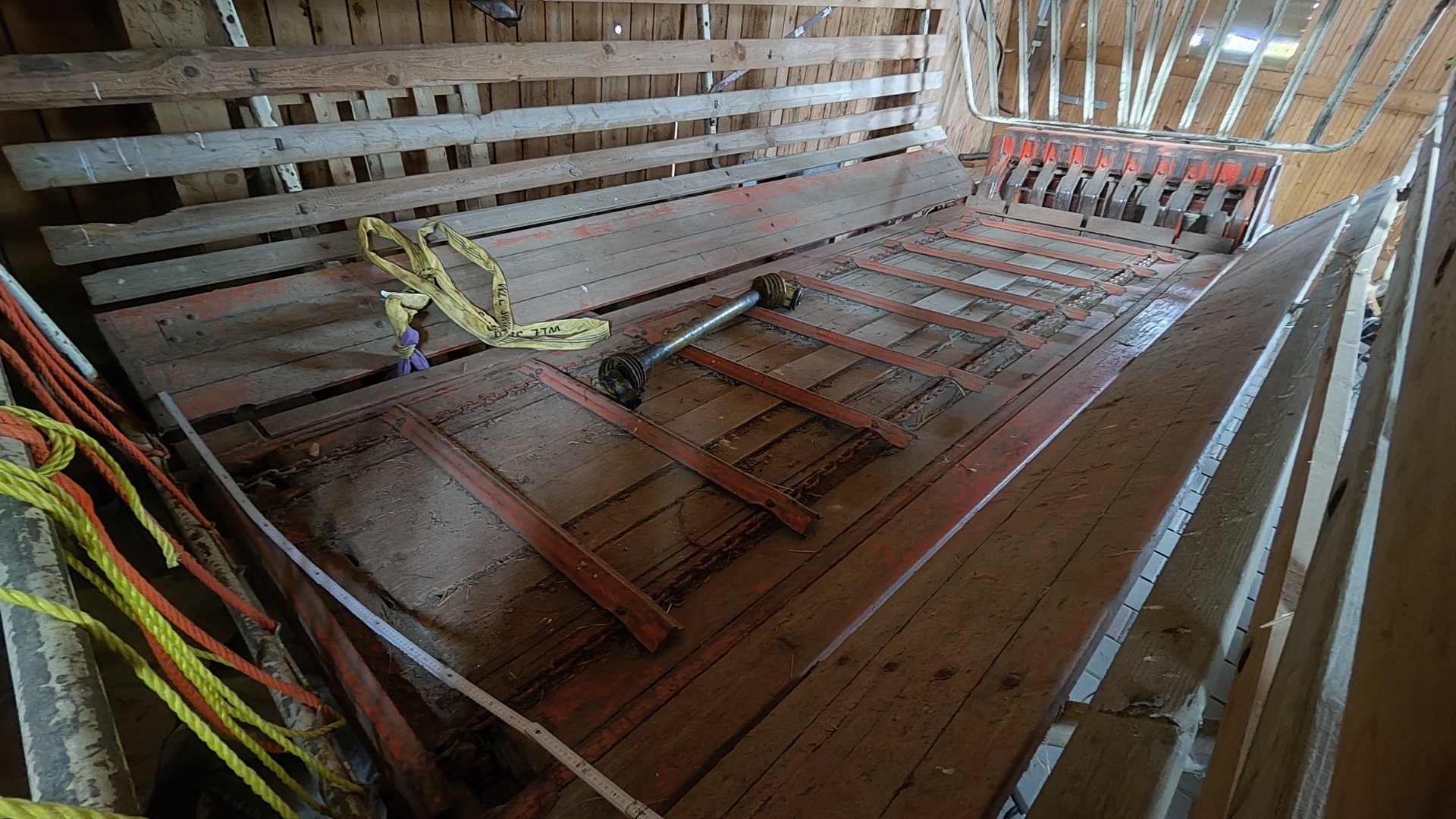
Repurpose an old loader/forage wagon instead of scrapping it: Use the scraper floor, add an auger, and fill buckets with one button press.
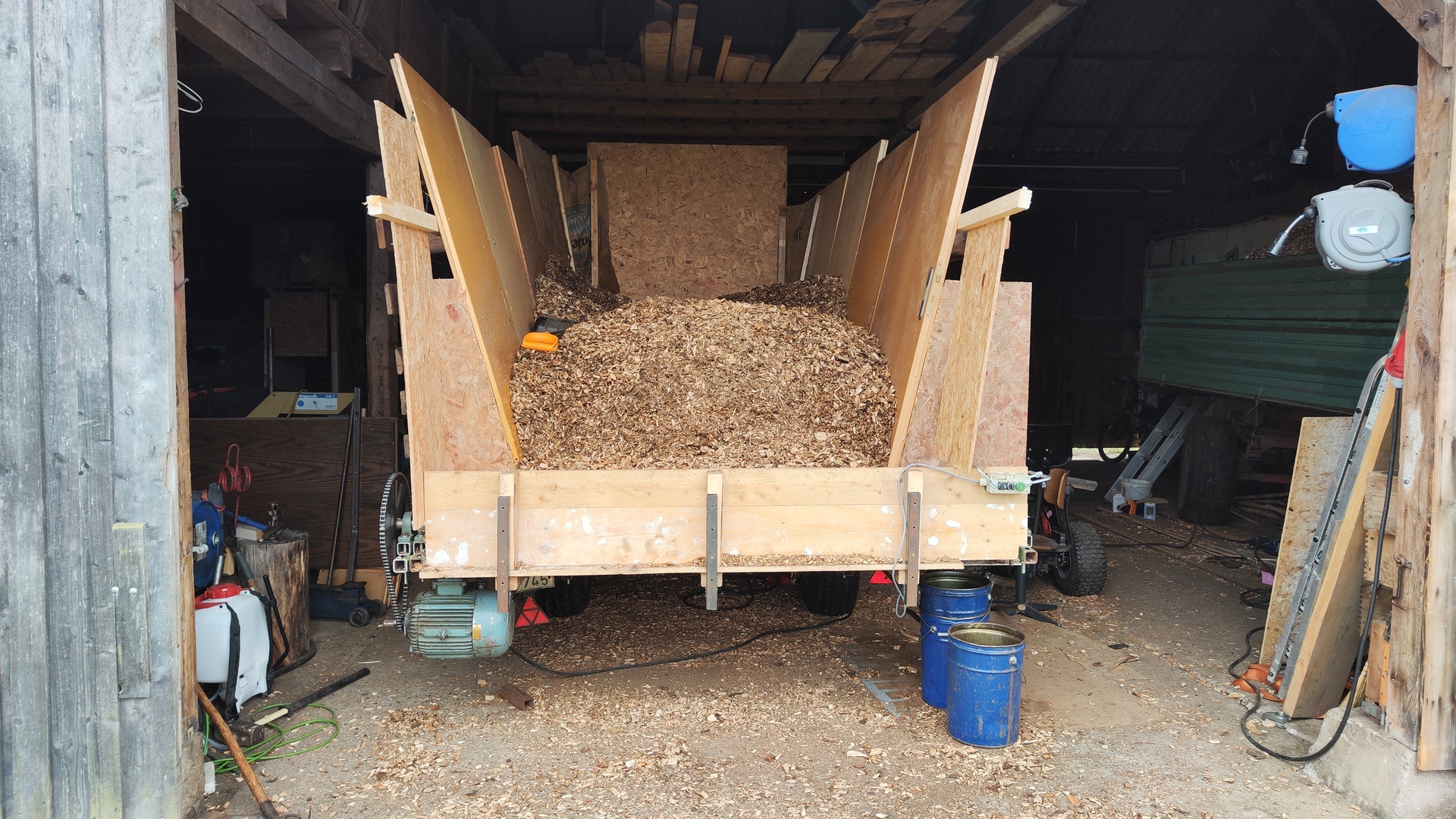
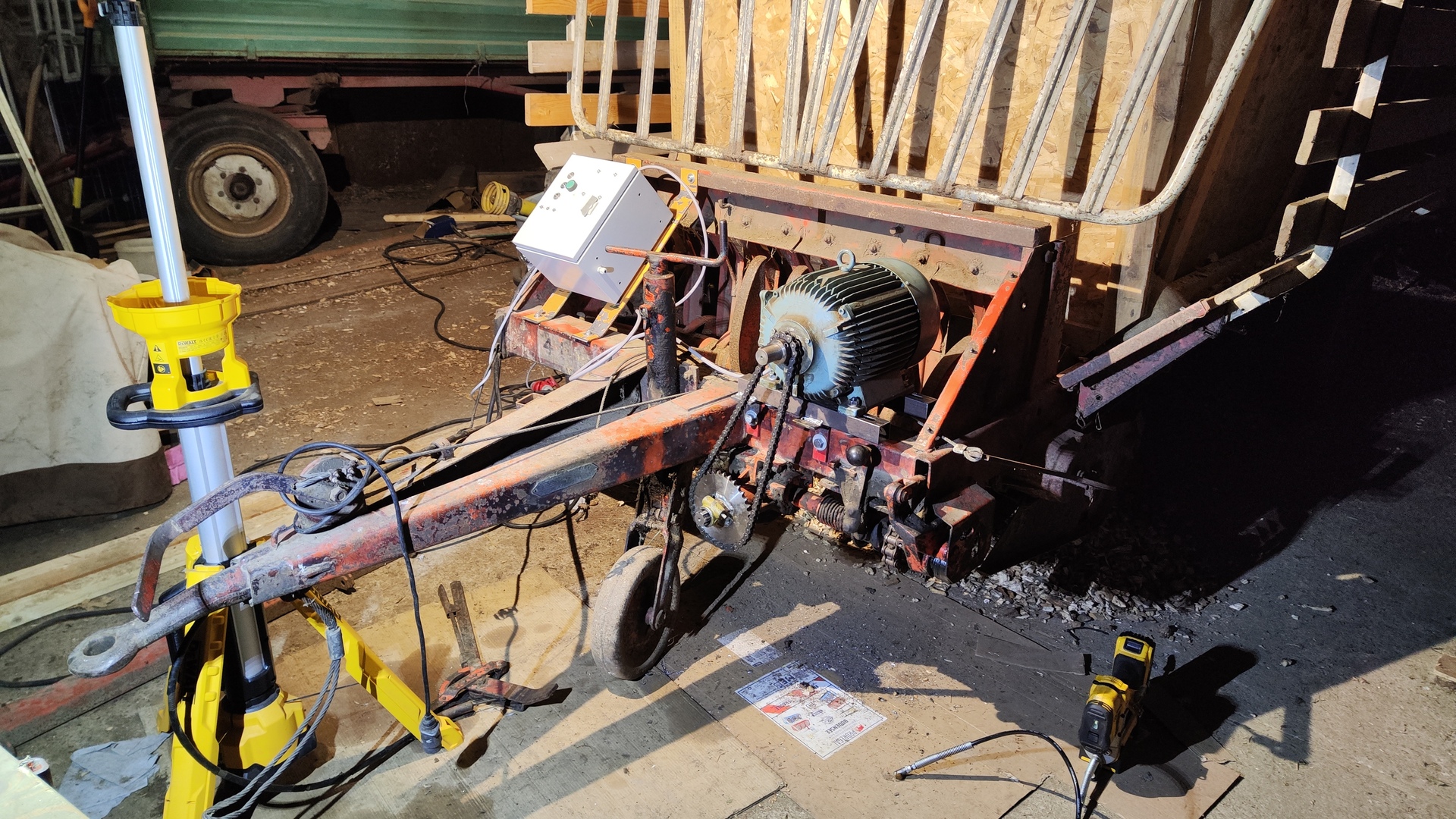
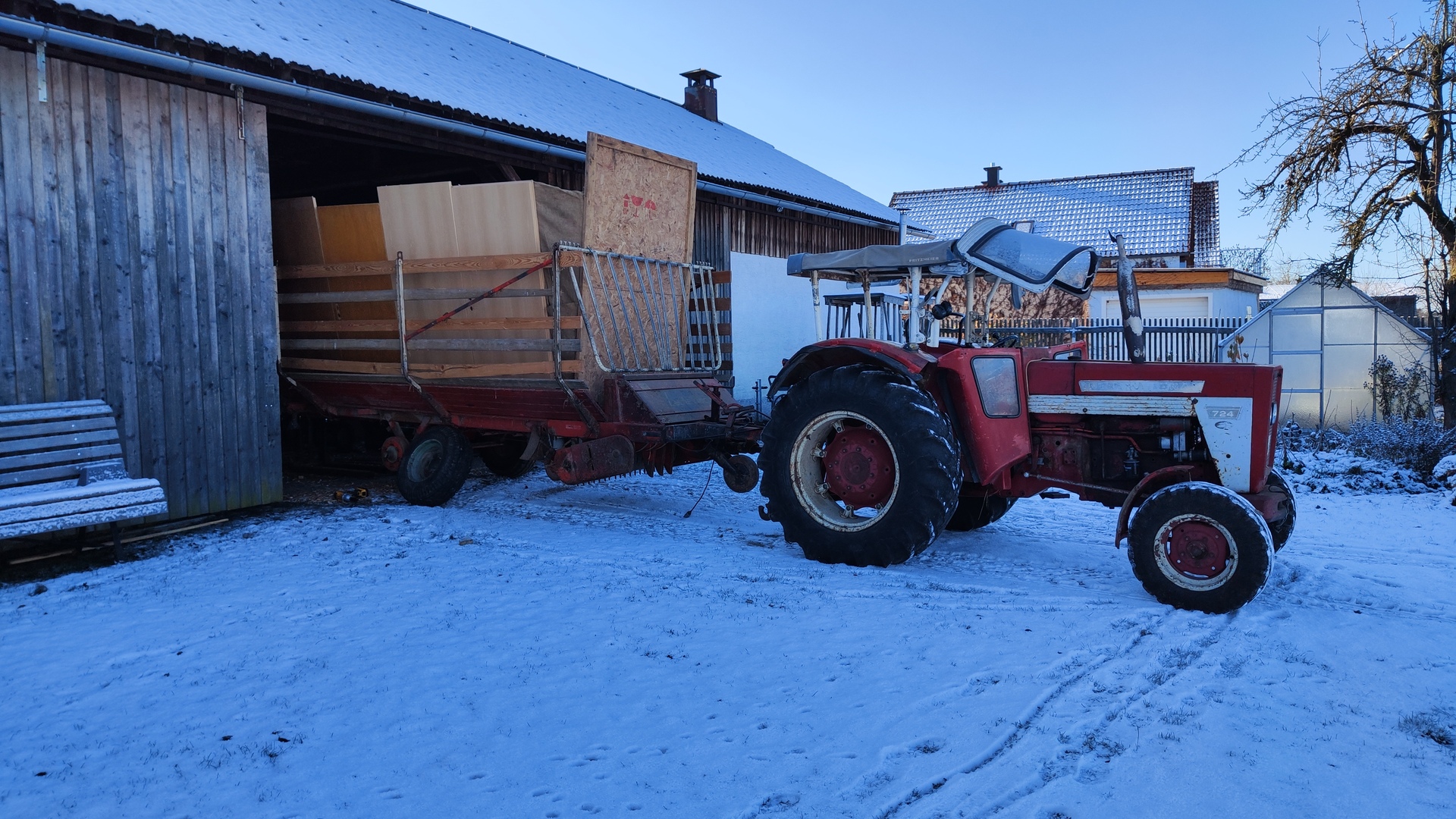
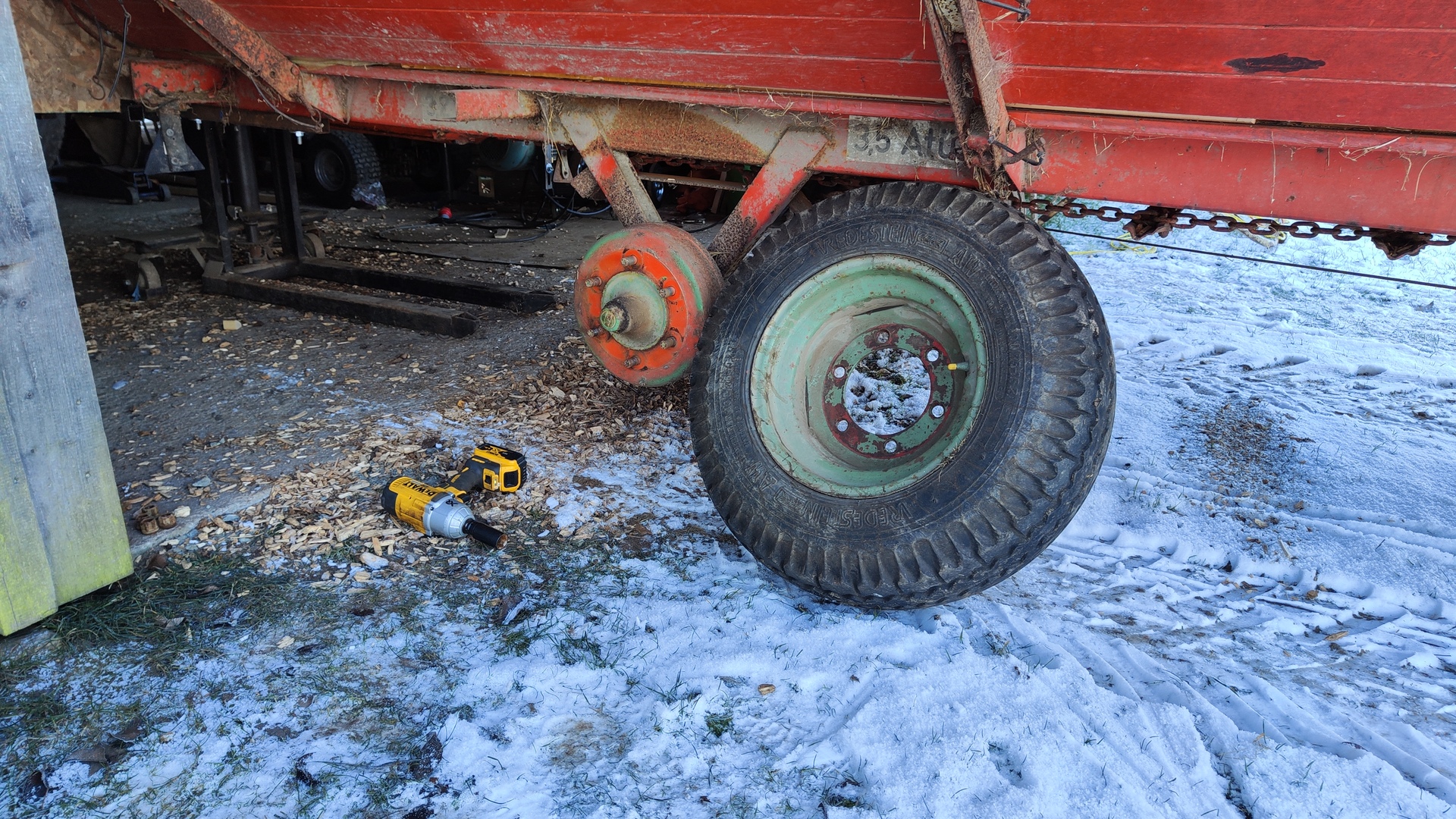
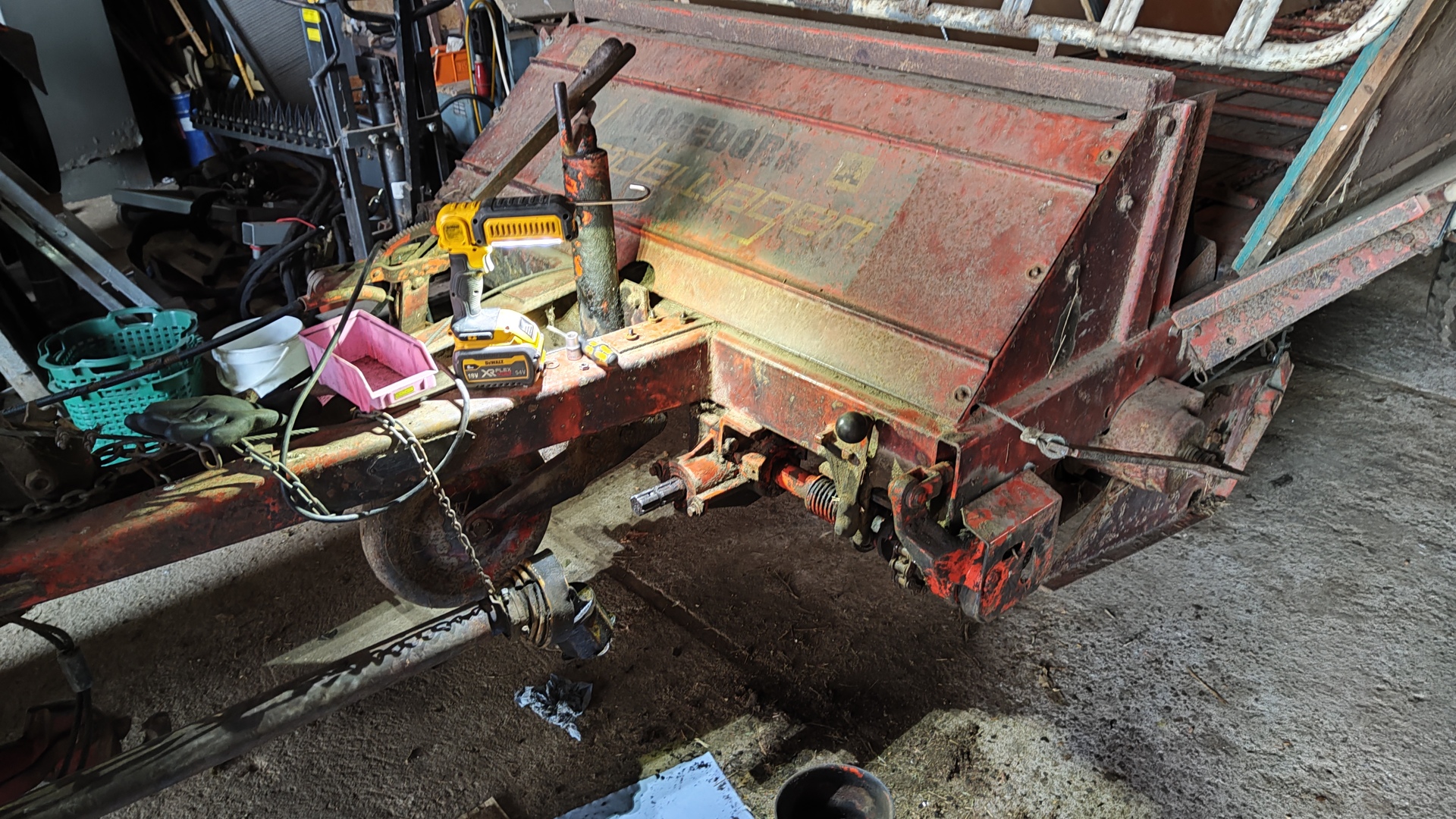
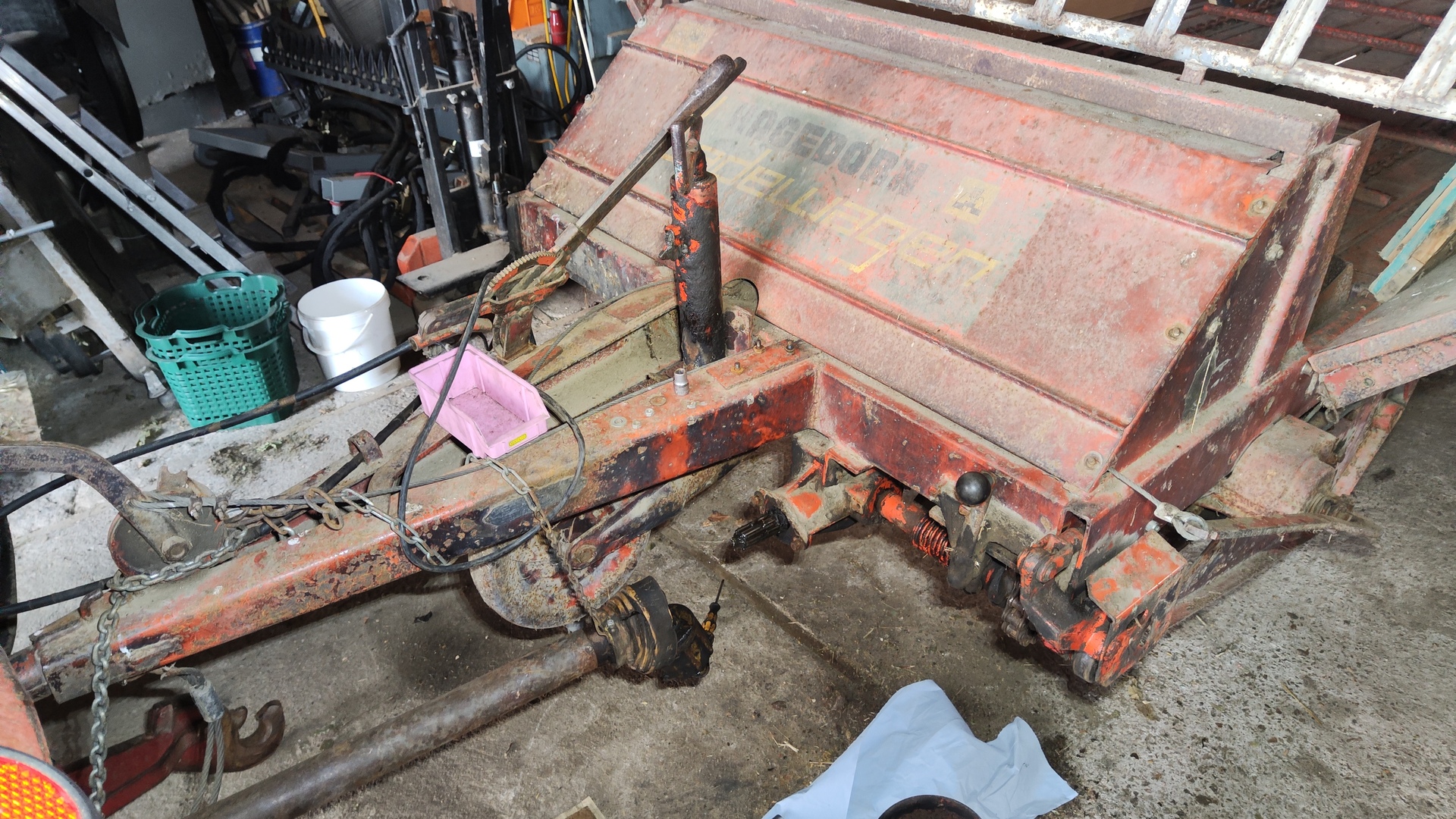
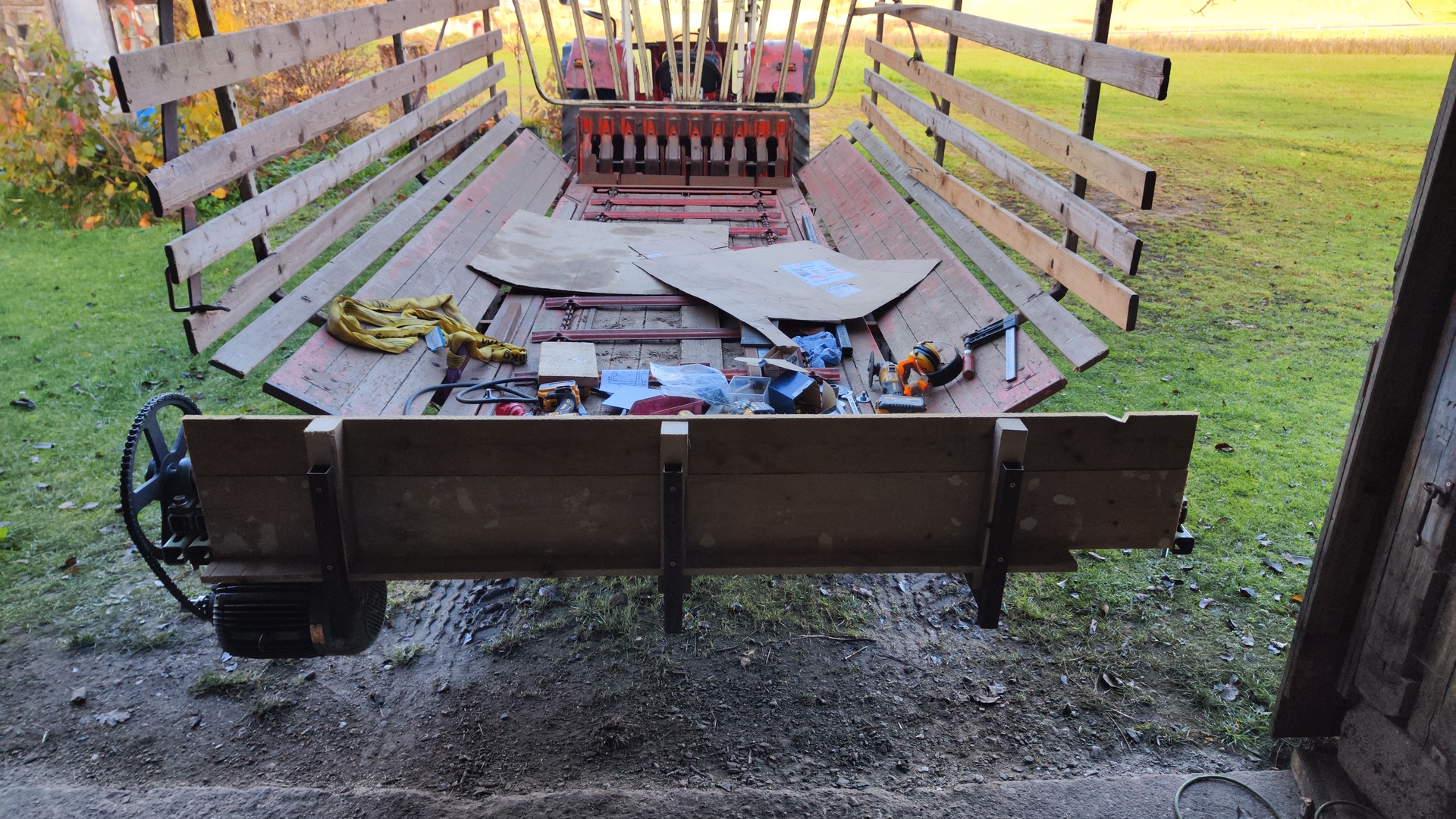
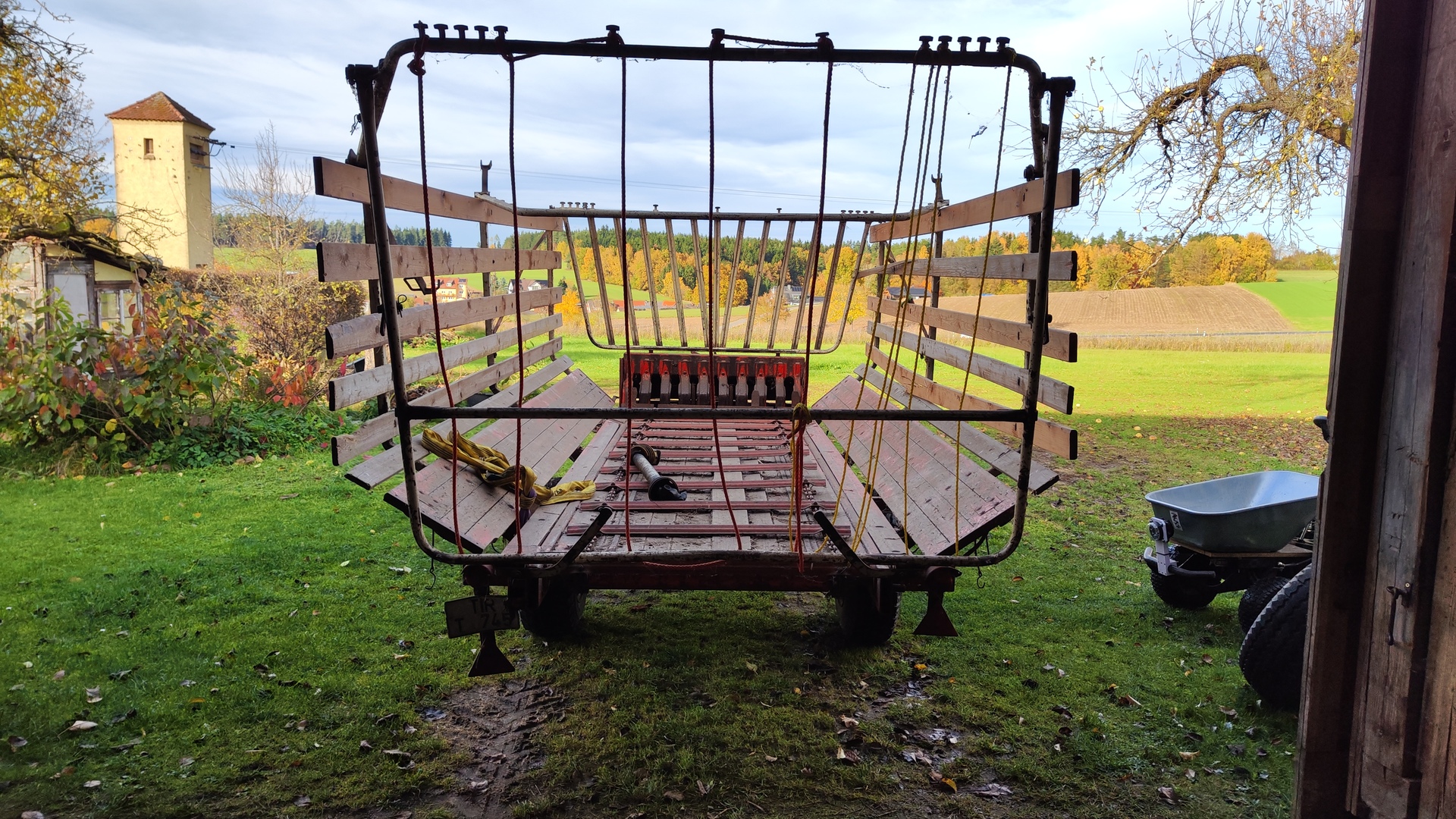
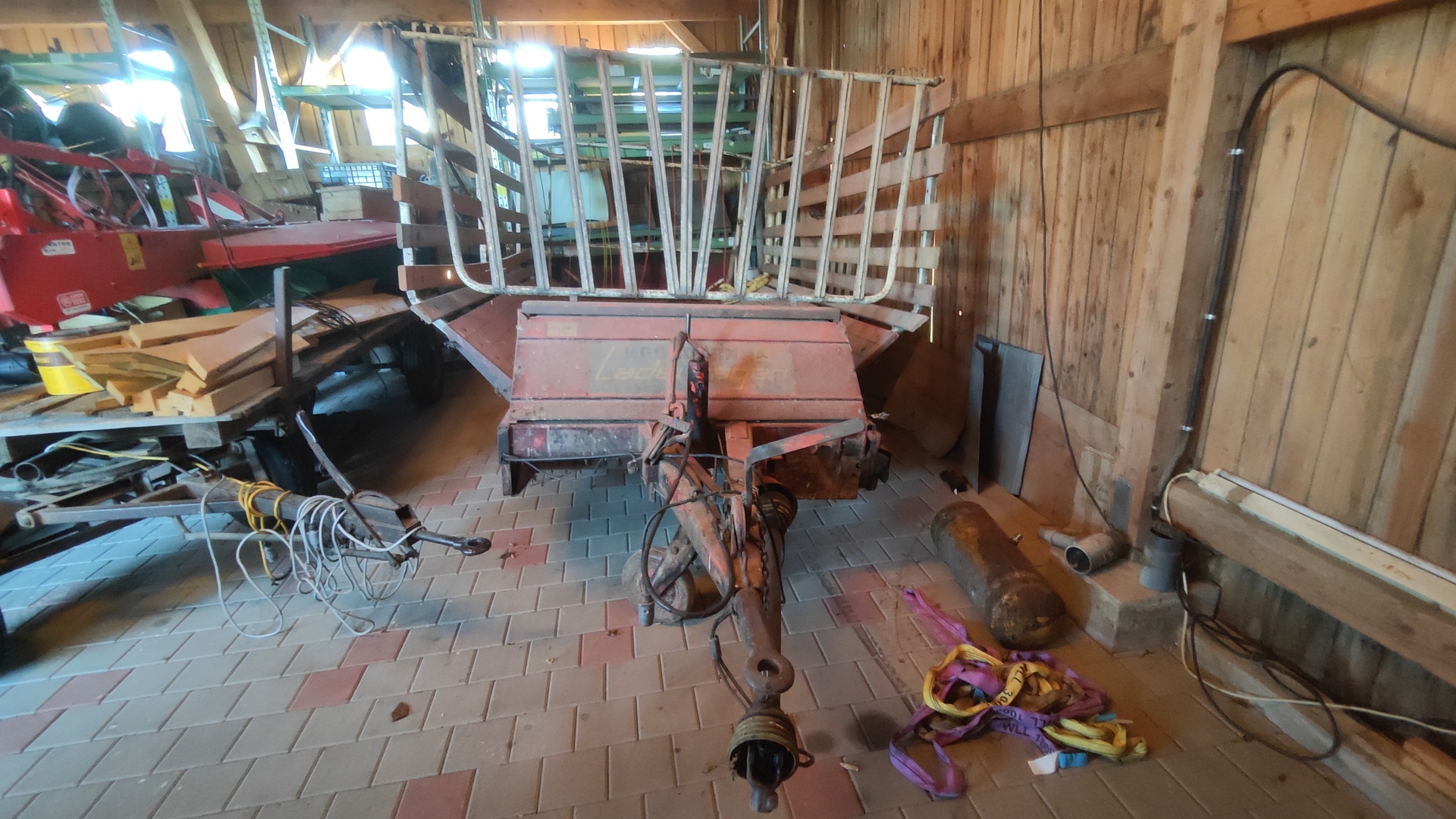
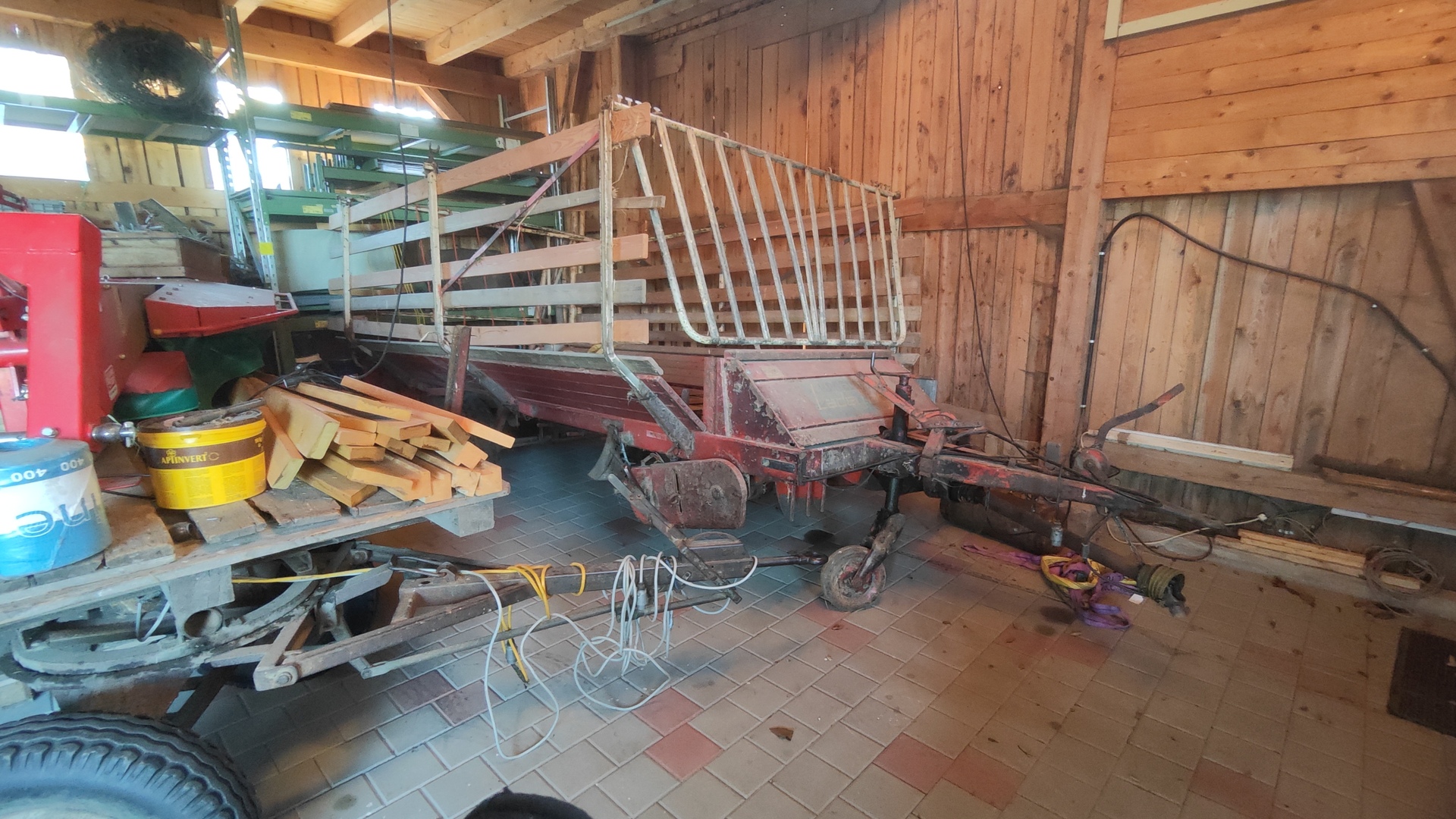
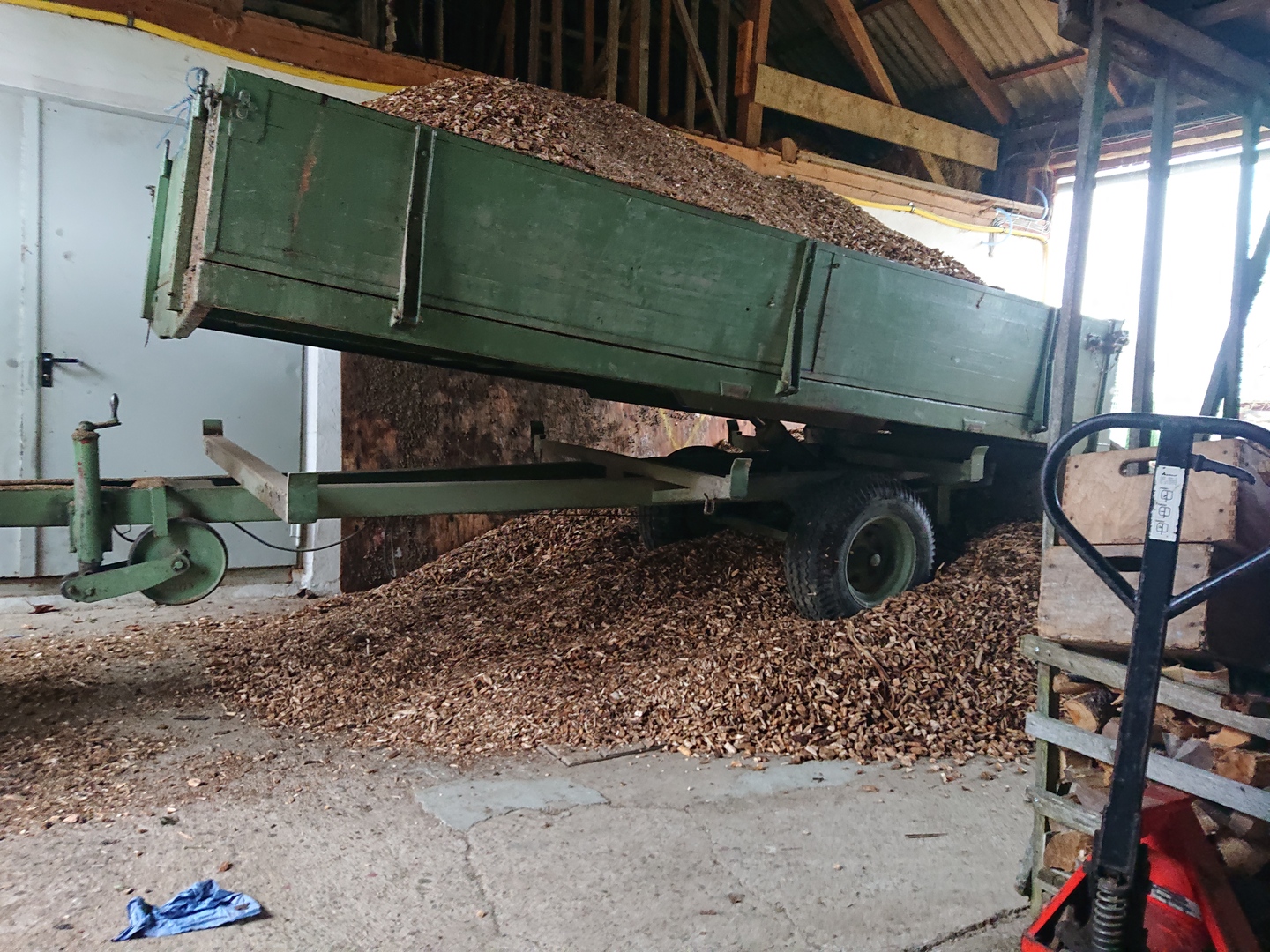
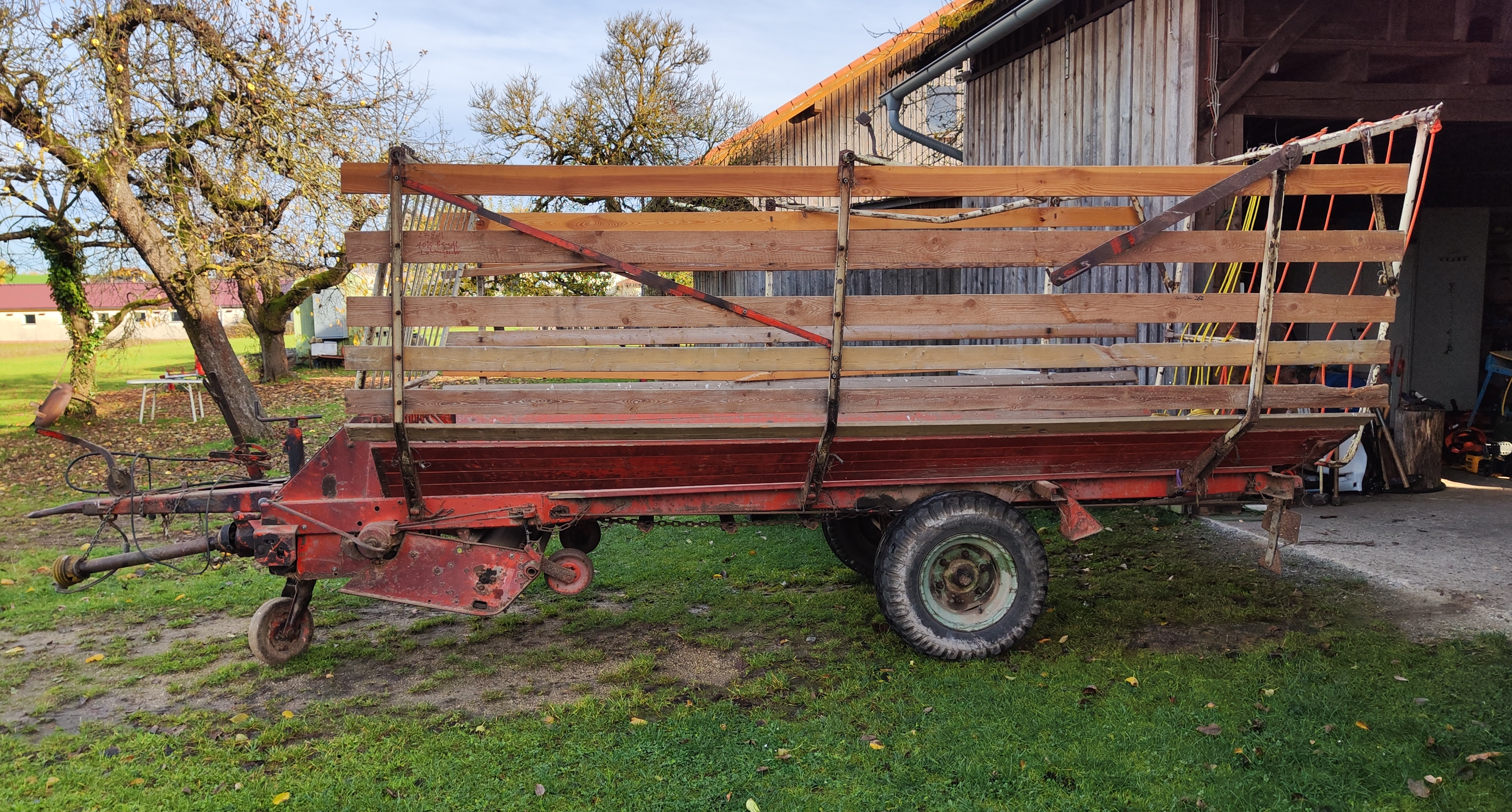 Original wagon before retrofit
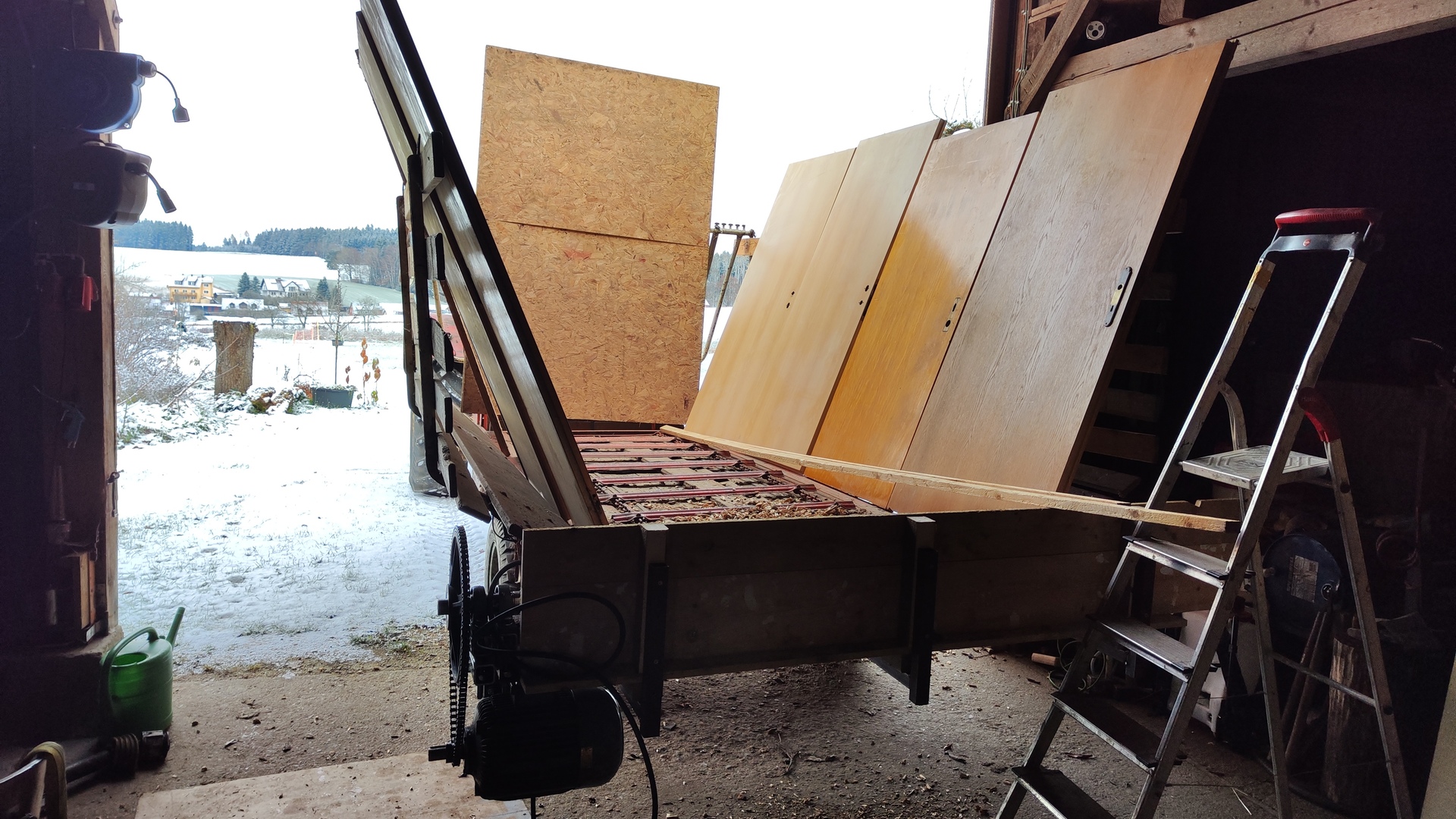
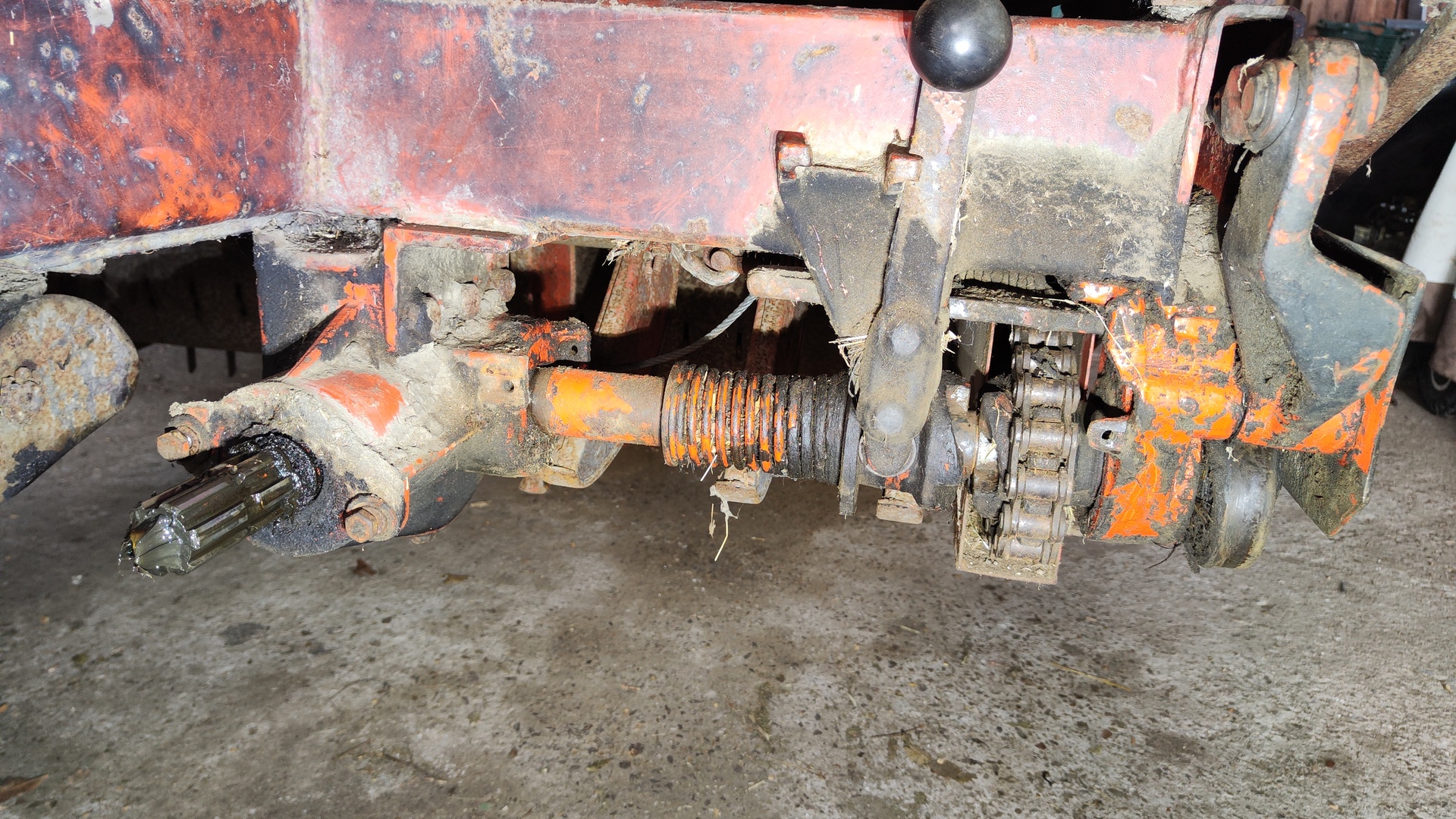
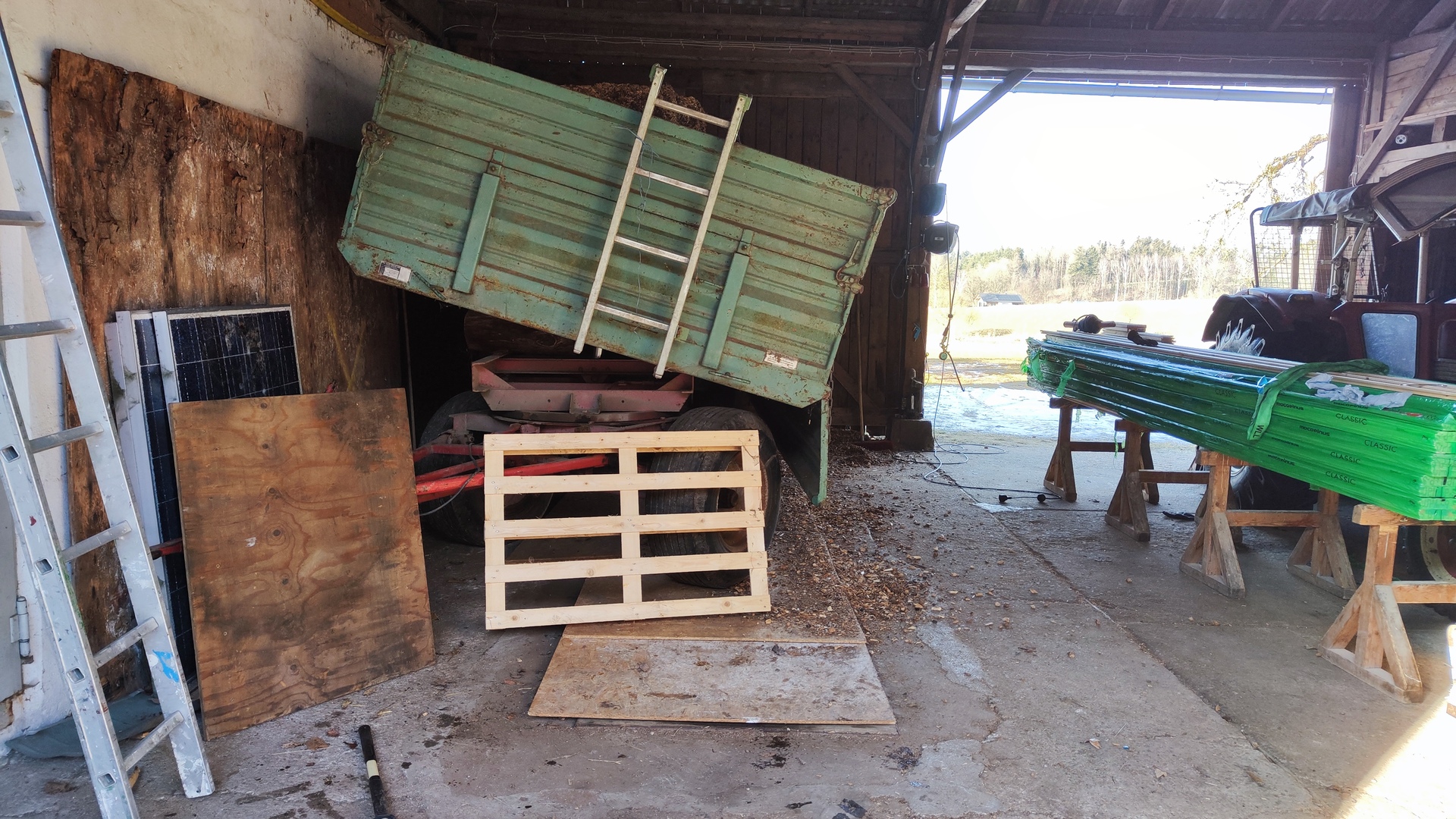
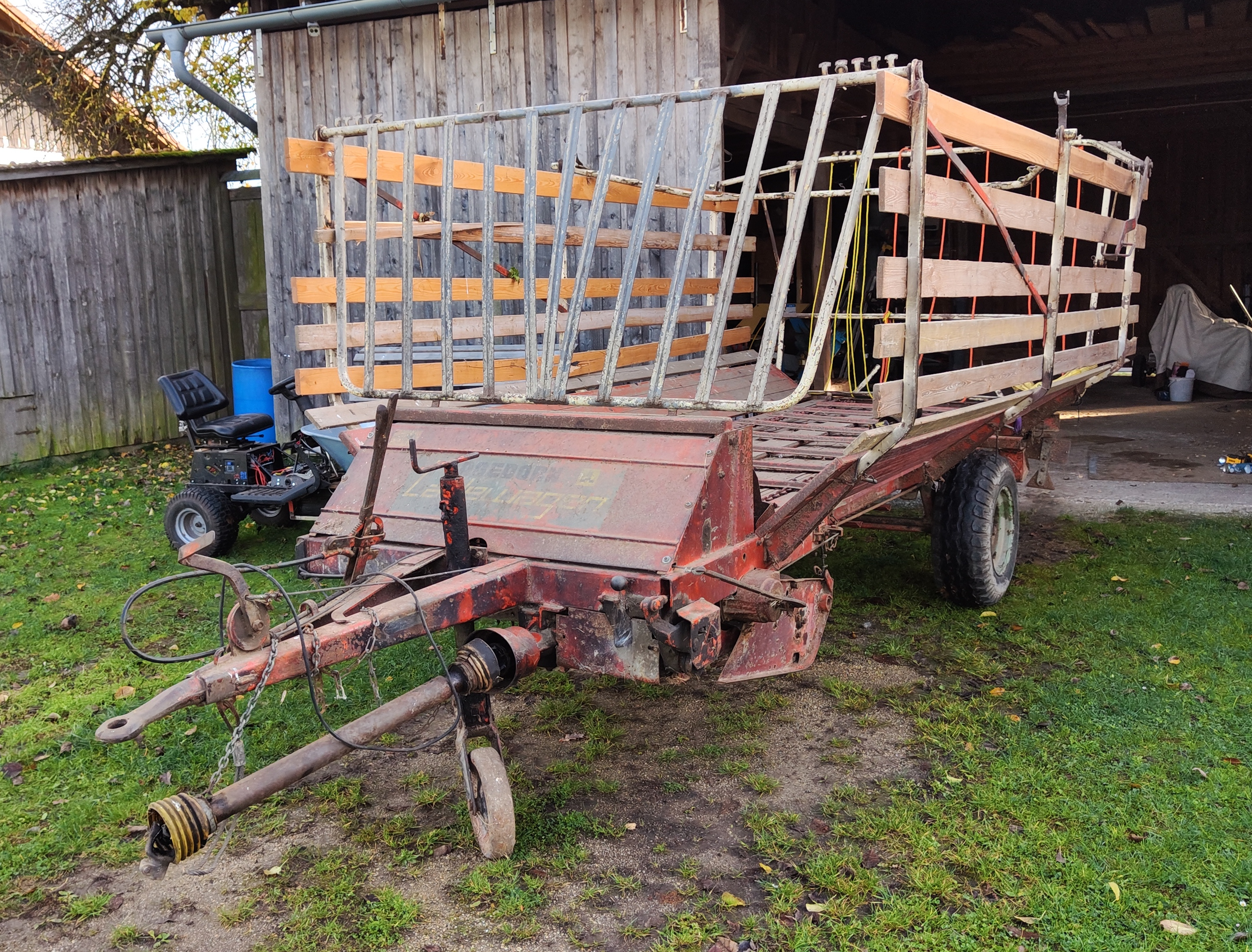 Front view of the reused wagon
Why this makes sense (for now)
- Semi-automatic and effortless → place bucket, press button
- Less dust → fills straight into the bucket; no loosening compacted chips, no shoveling
- Cleaner → no chips on the floor
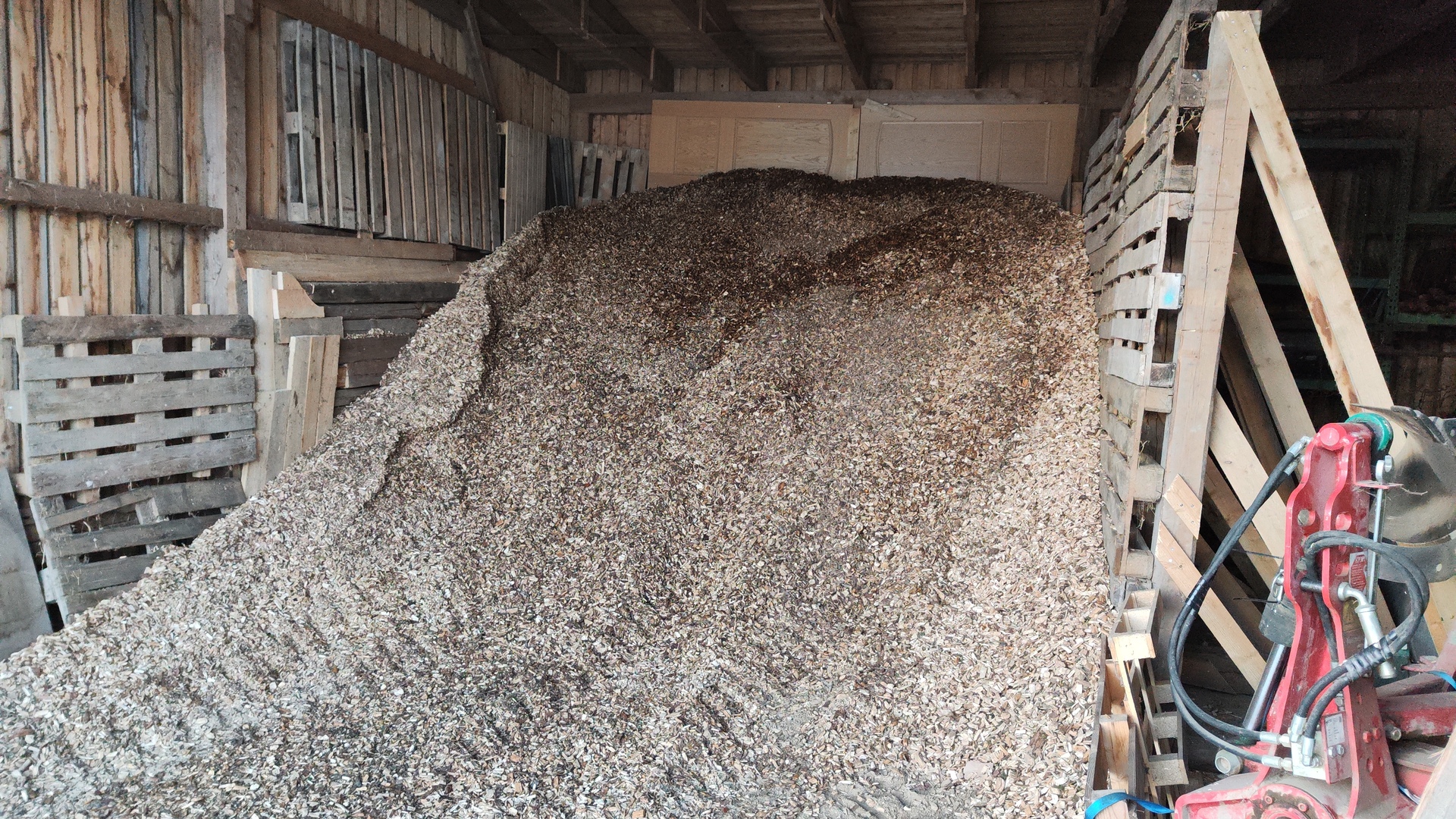
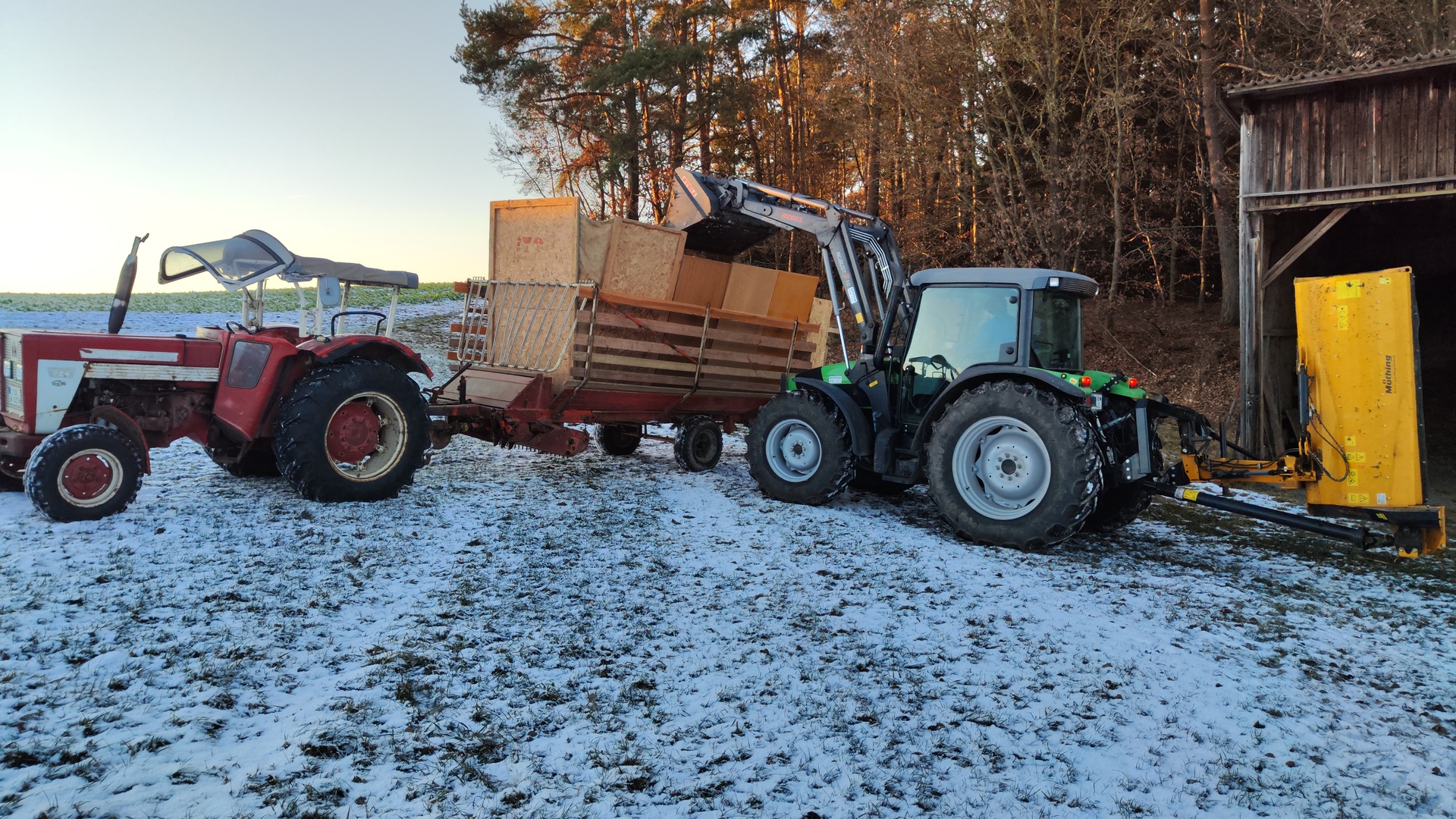
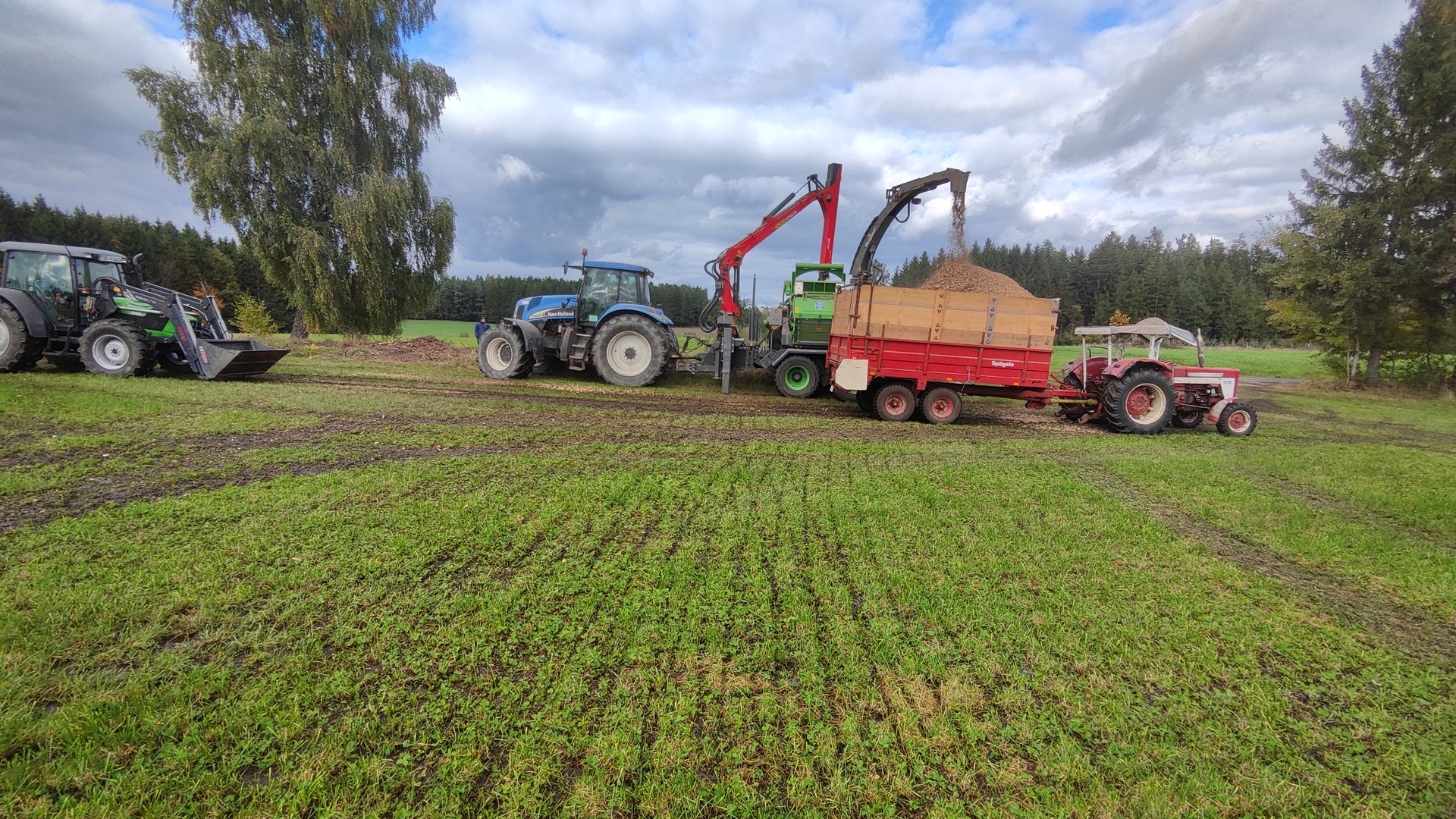
- Refillable → load at a remote pile with the front loader
- Portable → park it where it’s convenient
- Reversible → bolt-on attachment; wagon (incl. pickup) stays usable later
Result (second test):
Components & Specs
Mechanical
-
Base wagon – HAGEDORN
- Type: loader/forage wagon
- Year: ~1966
- Capacity: 4 t
- Features: scraper floor, pickup (kept)
-
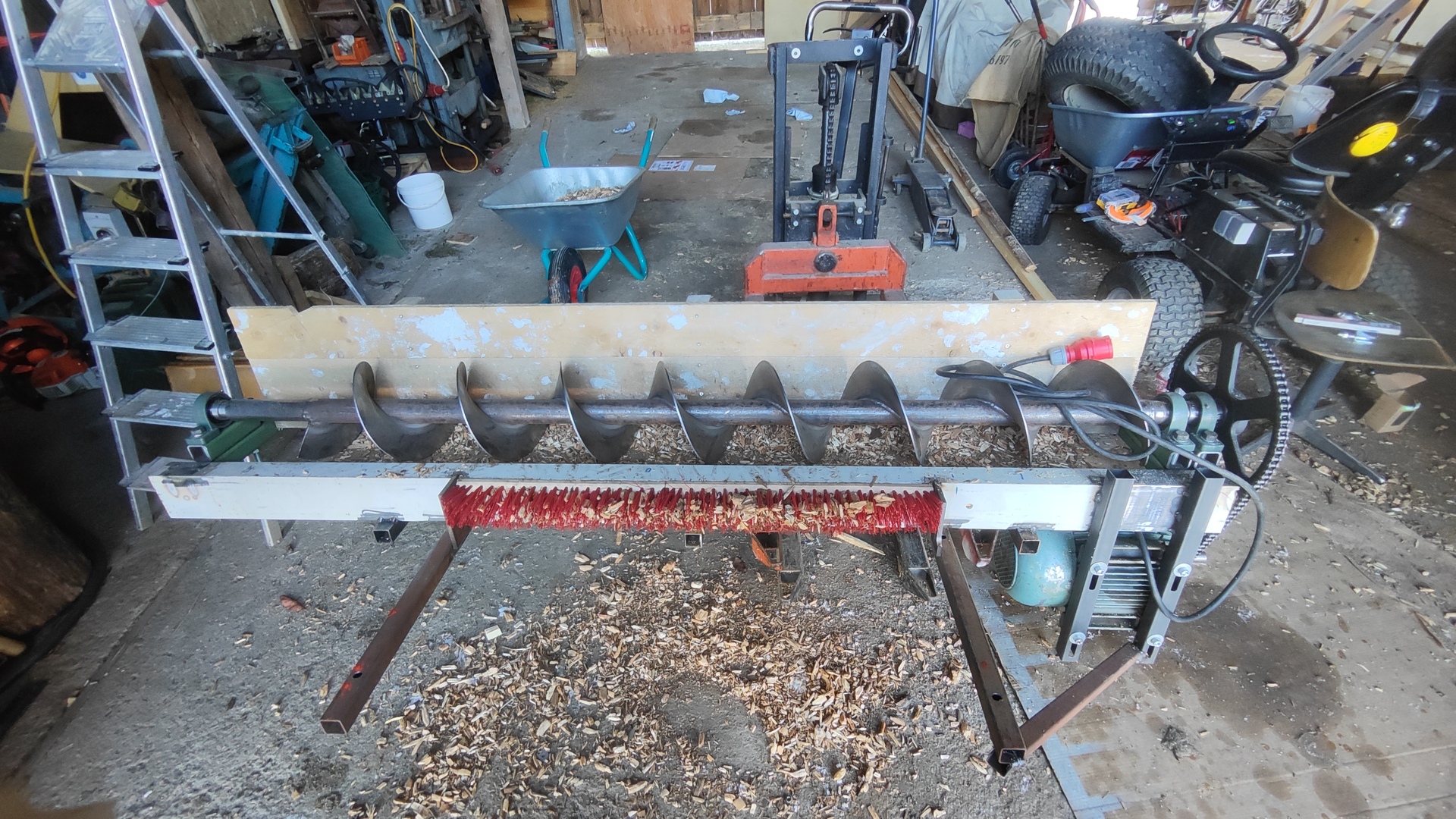
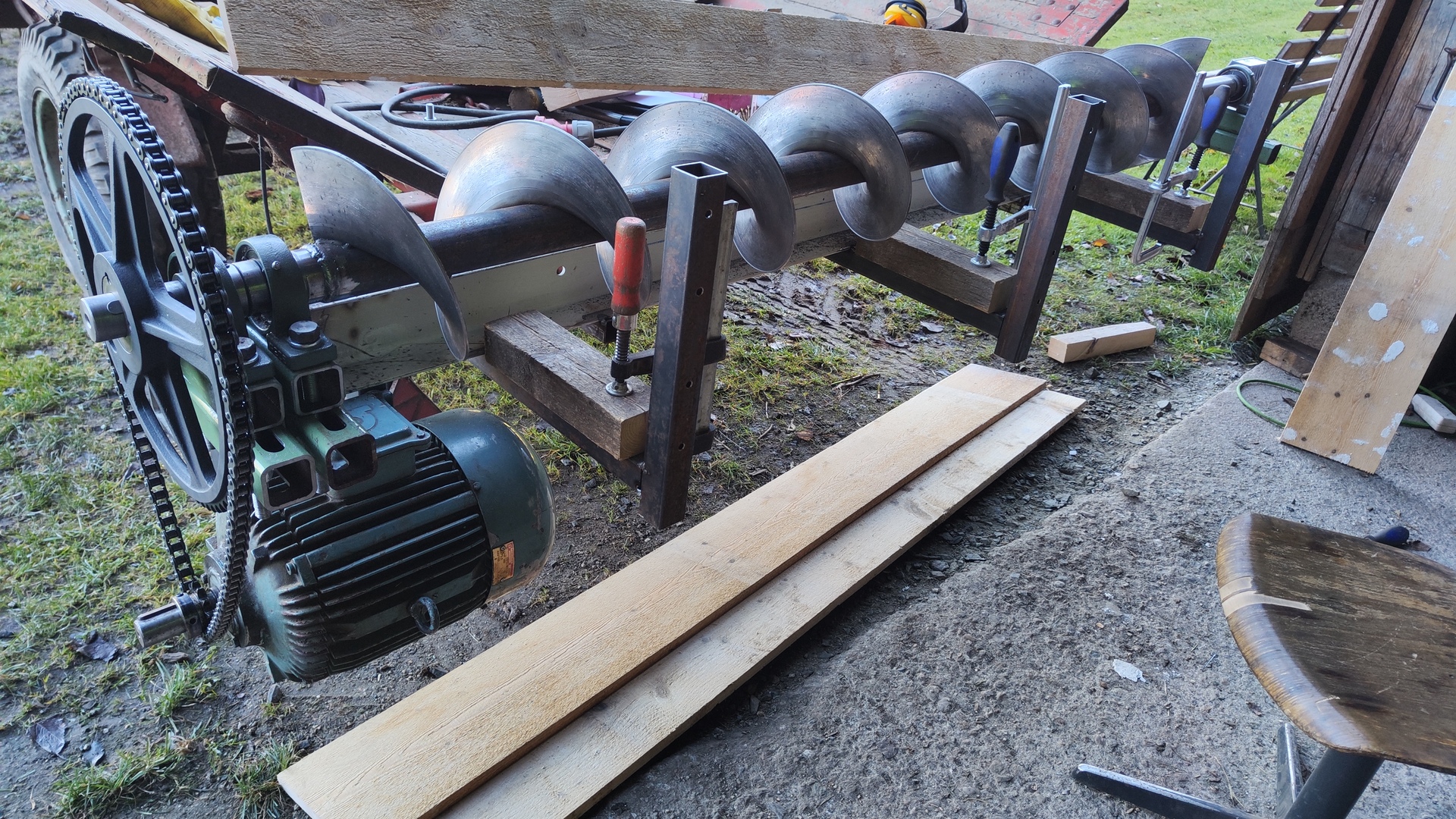
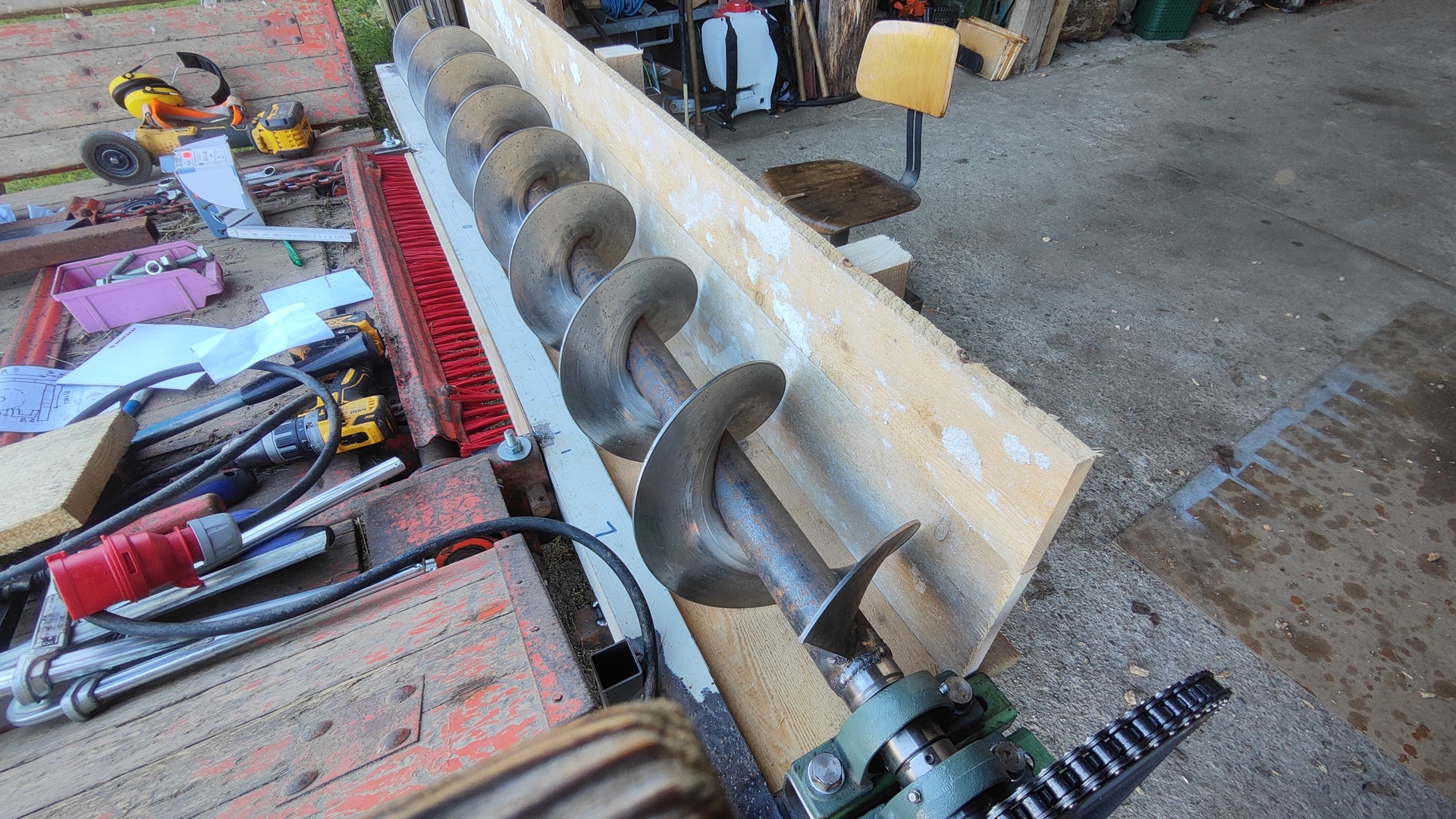
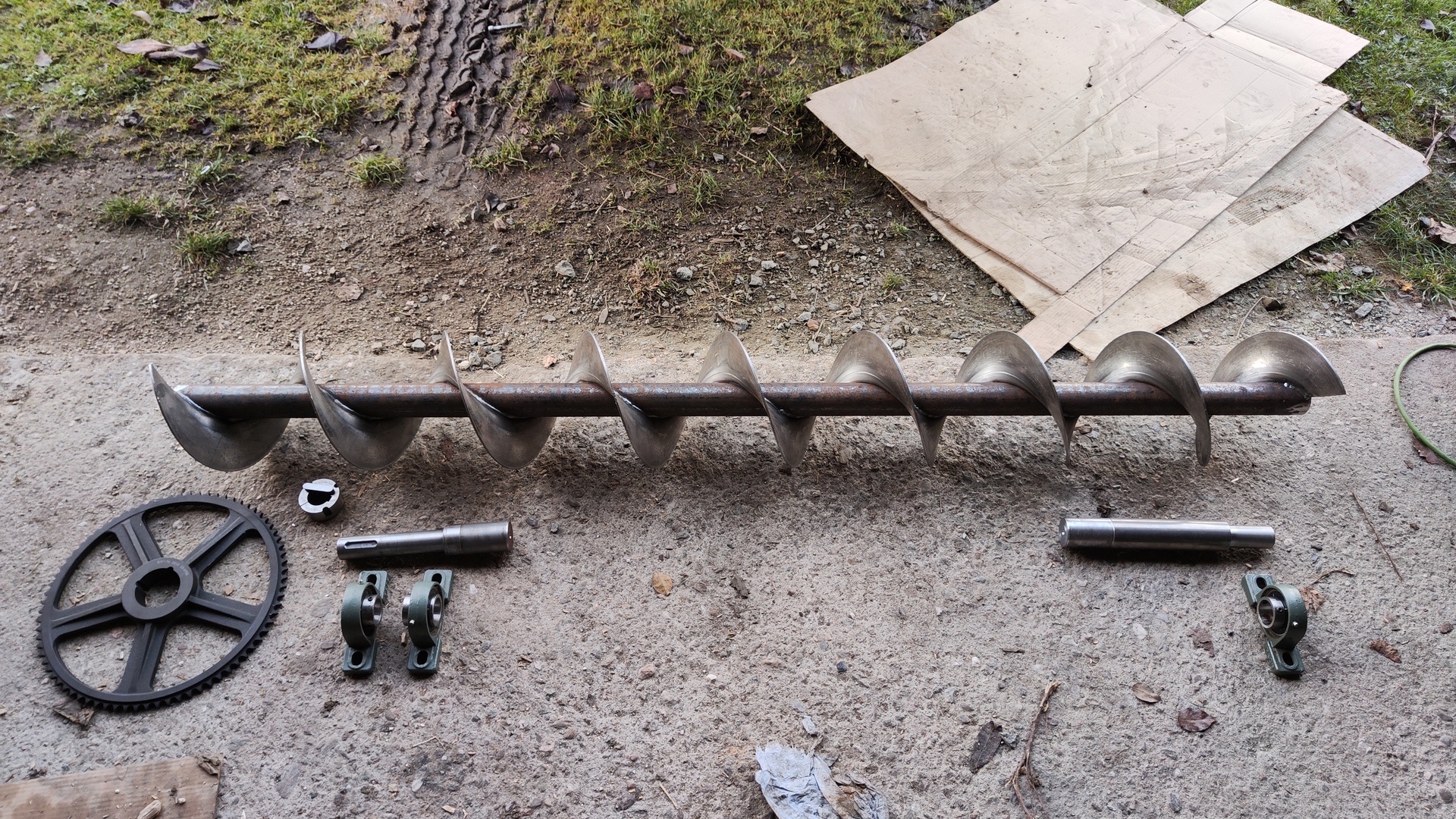
Auger
- Diameter: Ø 250 mm
- Pitch: 250 mm
- Length: 2 m
- Flight: right-hand (R)
- Inner pipe: 60.3 × 3.65 mm (2″ OD)
- Price: 260 EUR
-
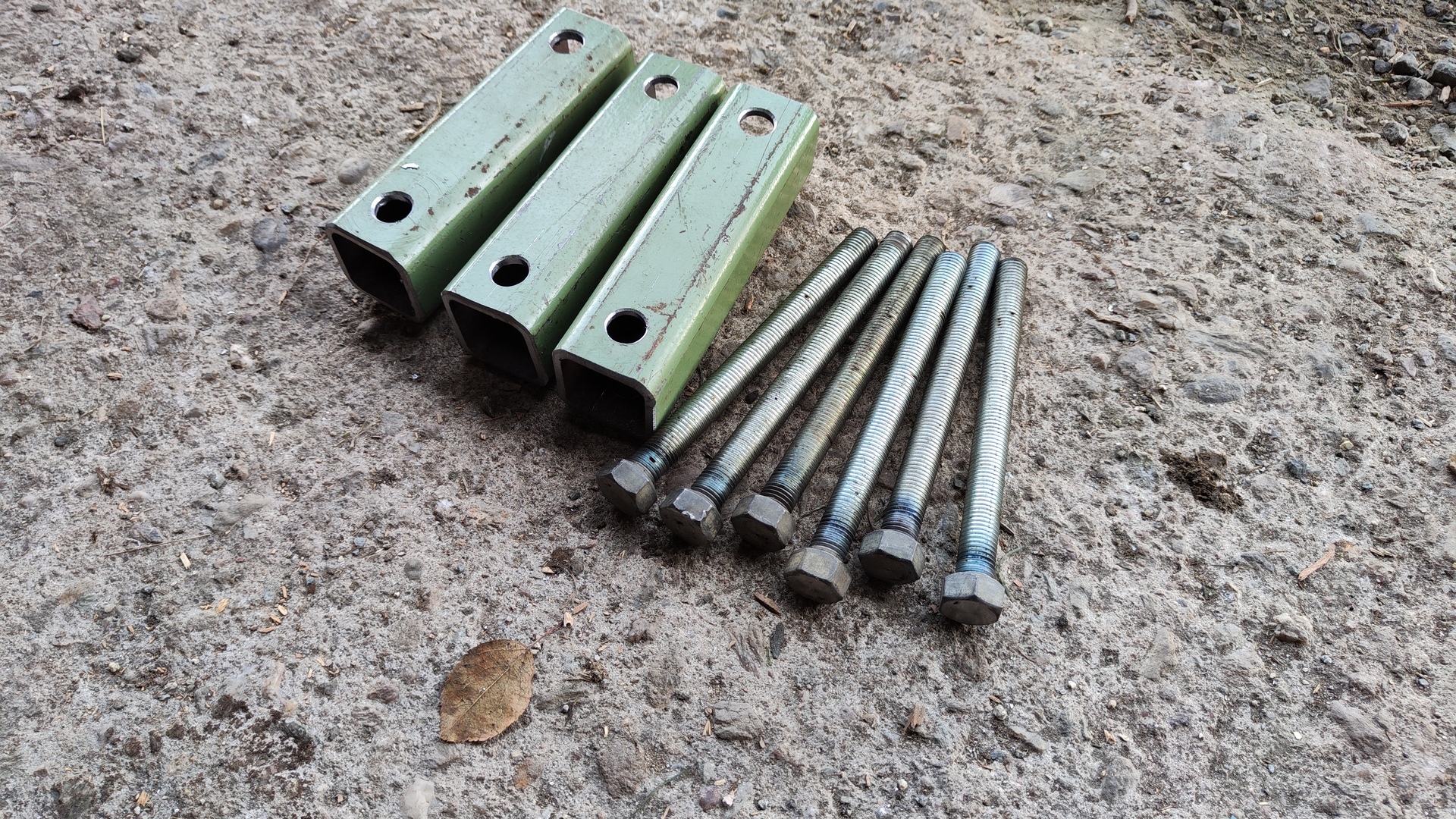
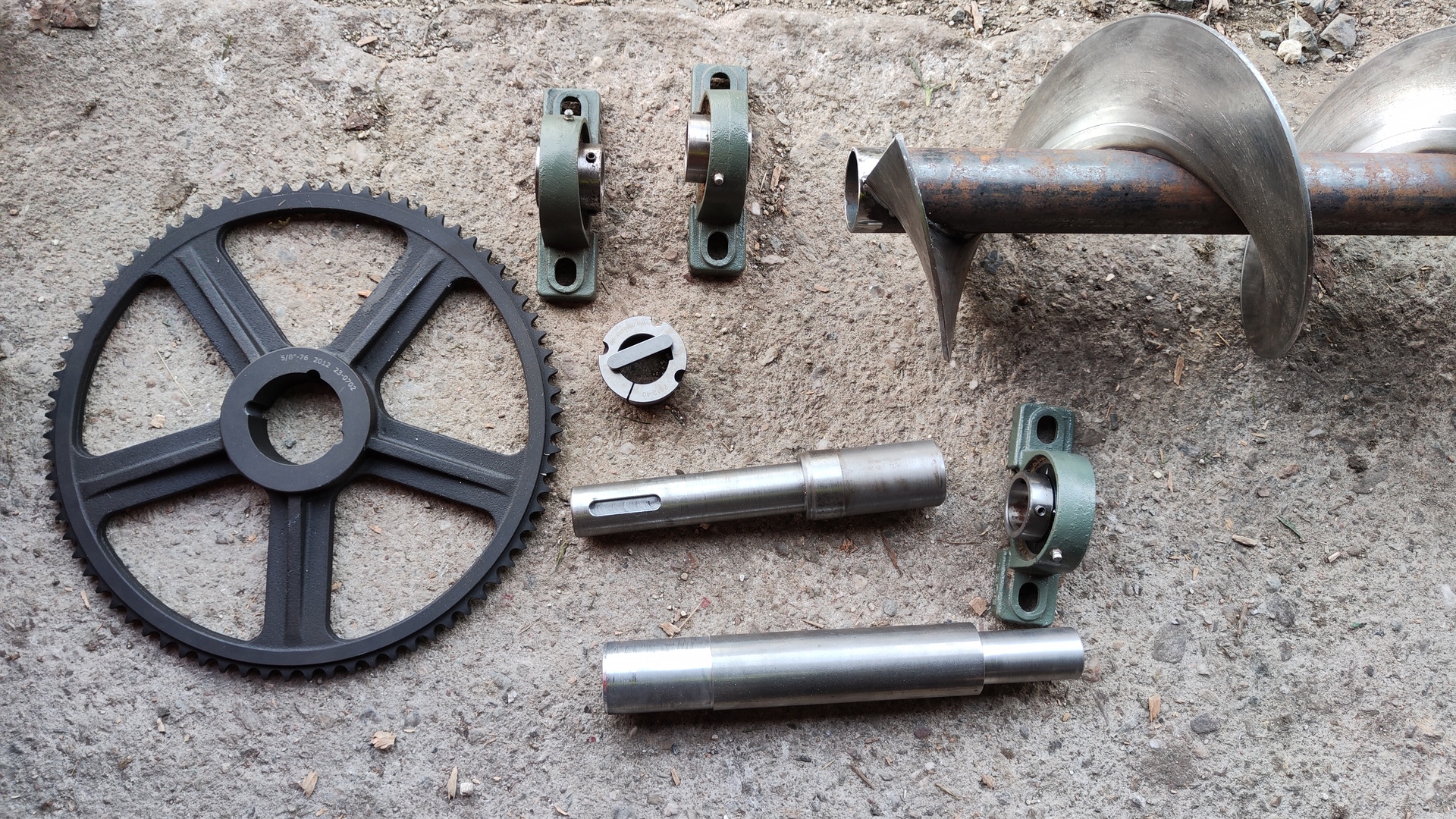
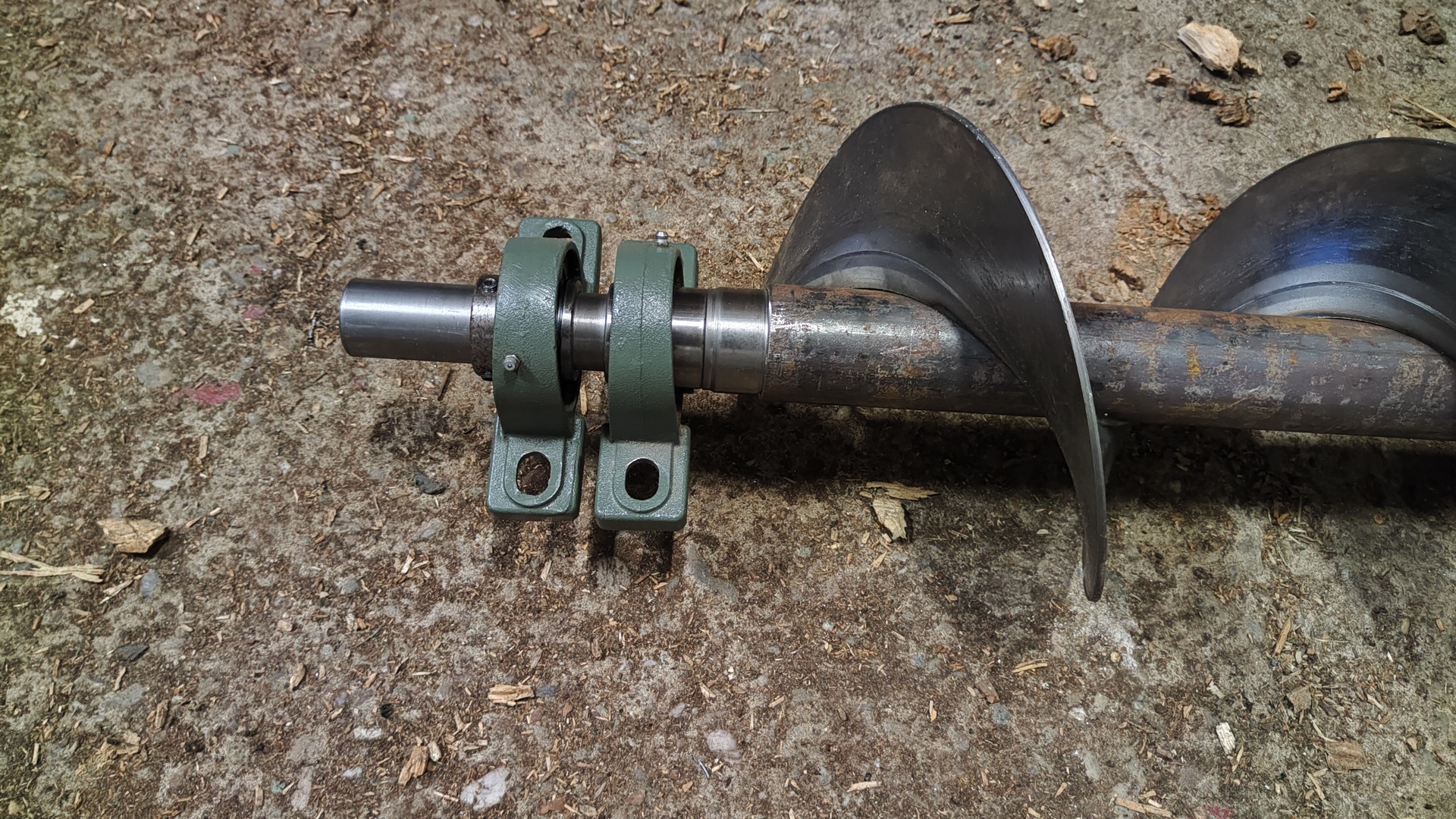
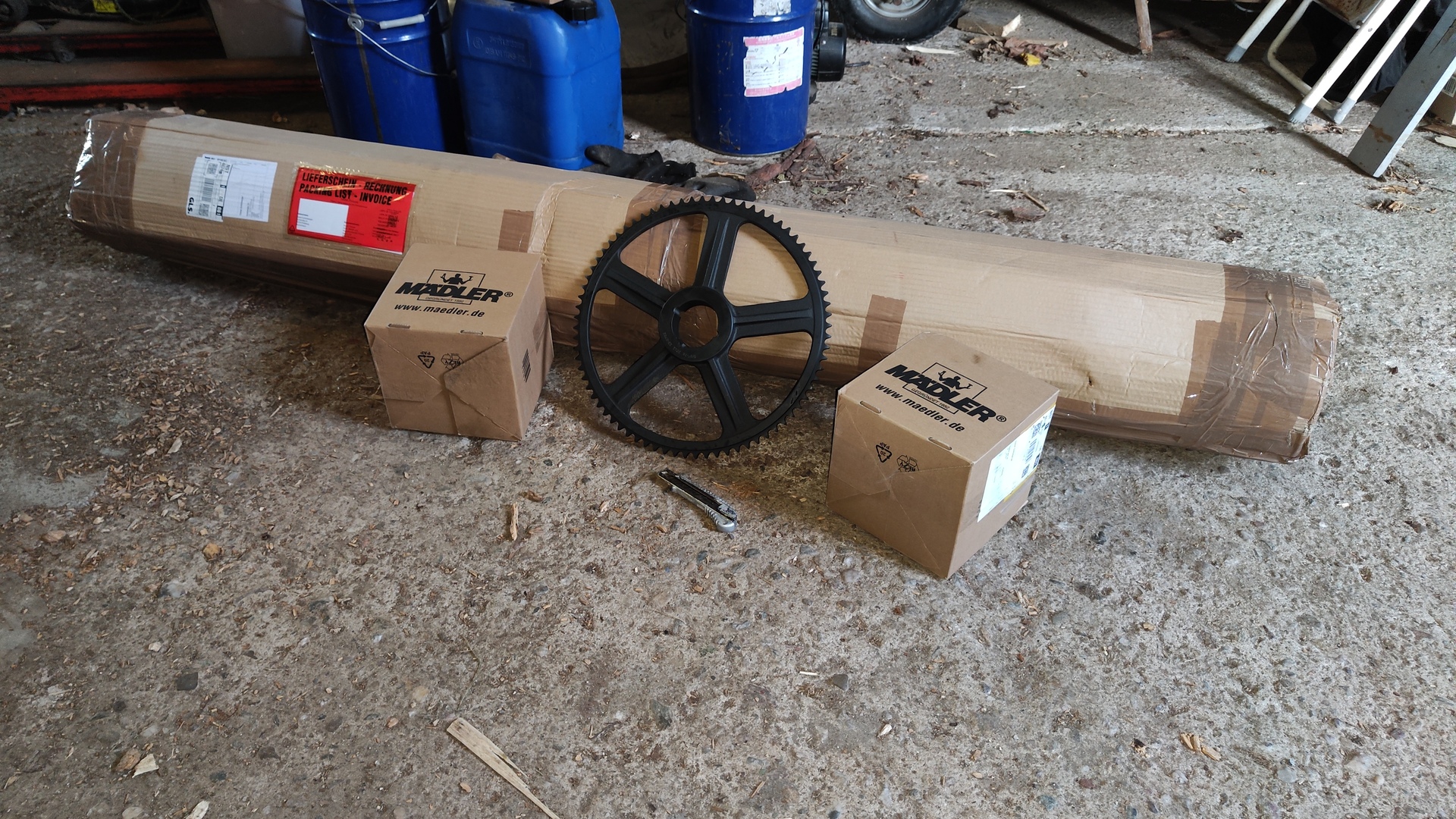
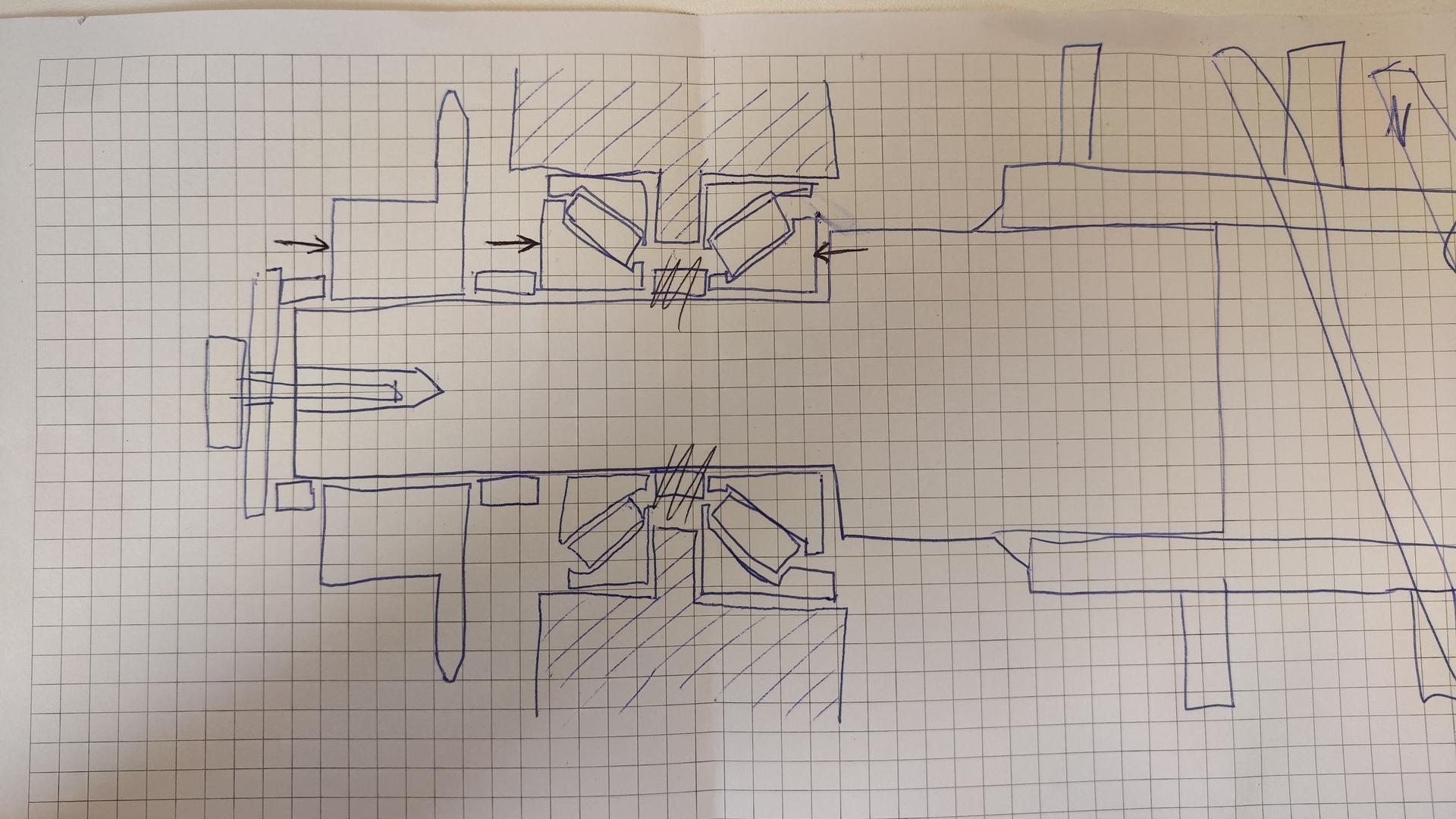
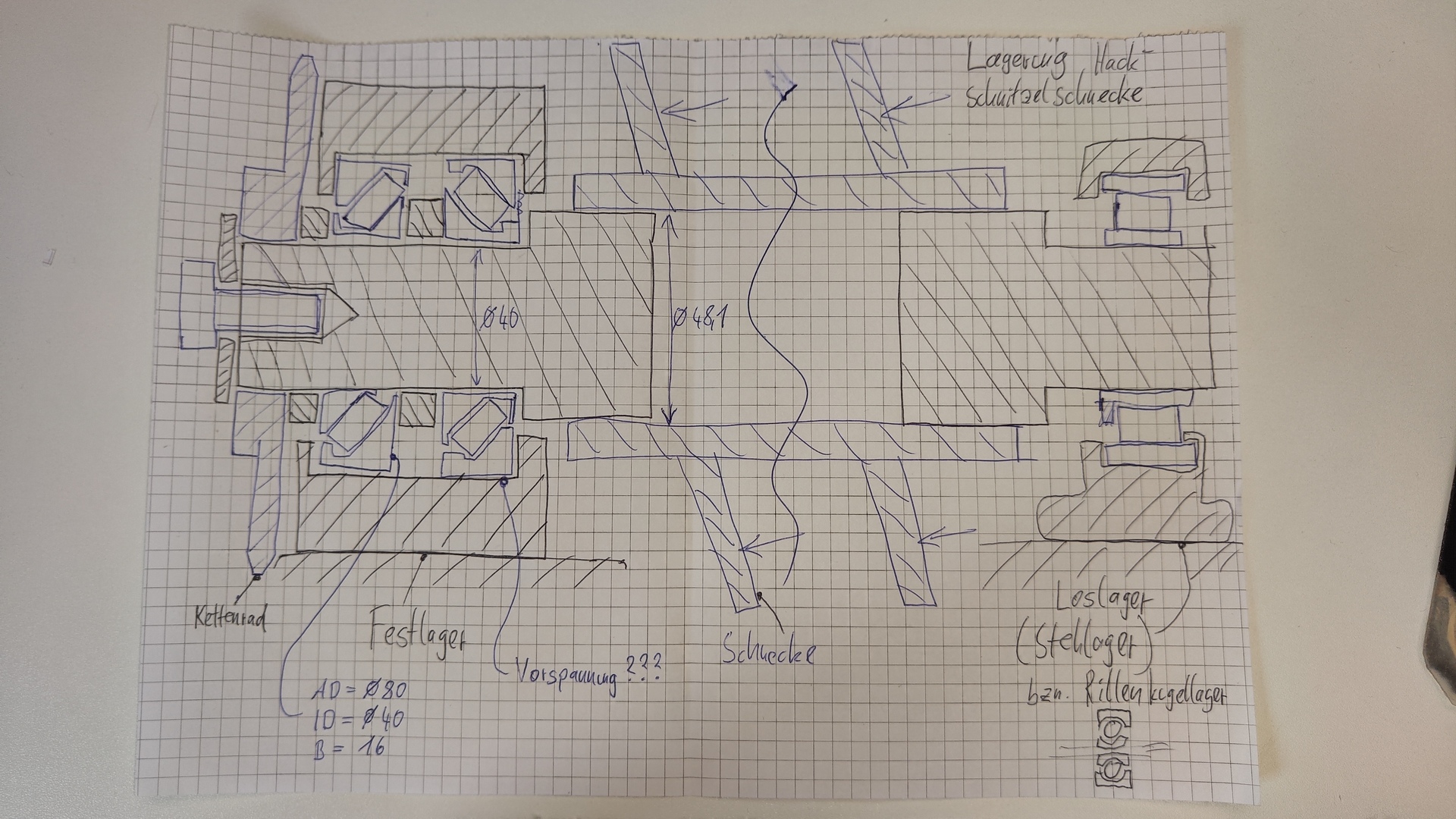
Bearing blocks (40 mm UCP)
- Count: 3× total → 2× fixed, 1× floating
- Radial rating (each): 23 kN dyn / 16 kN stat
- Axial capability (each): 3–4 kN (≈20% of radial)
-
Turning parts
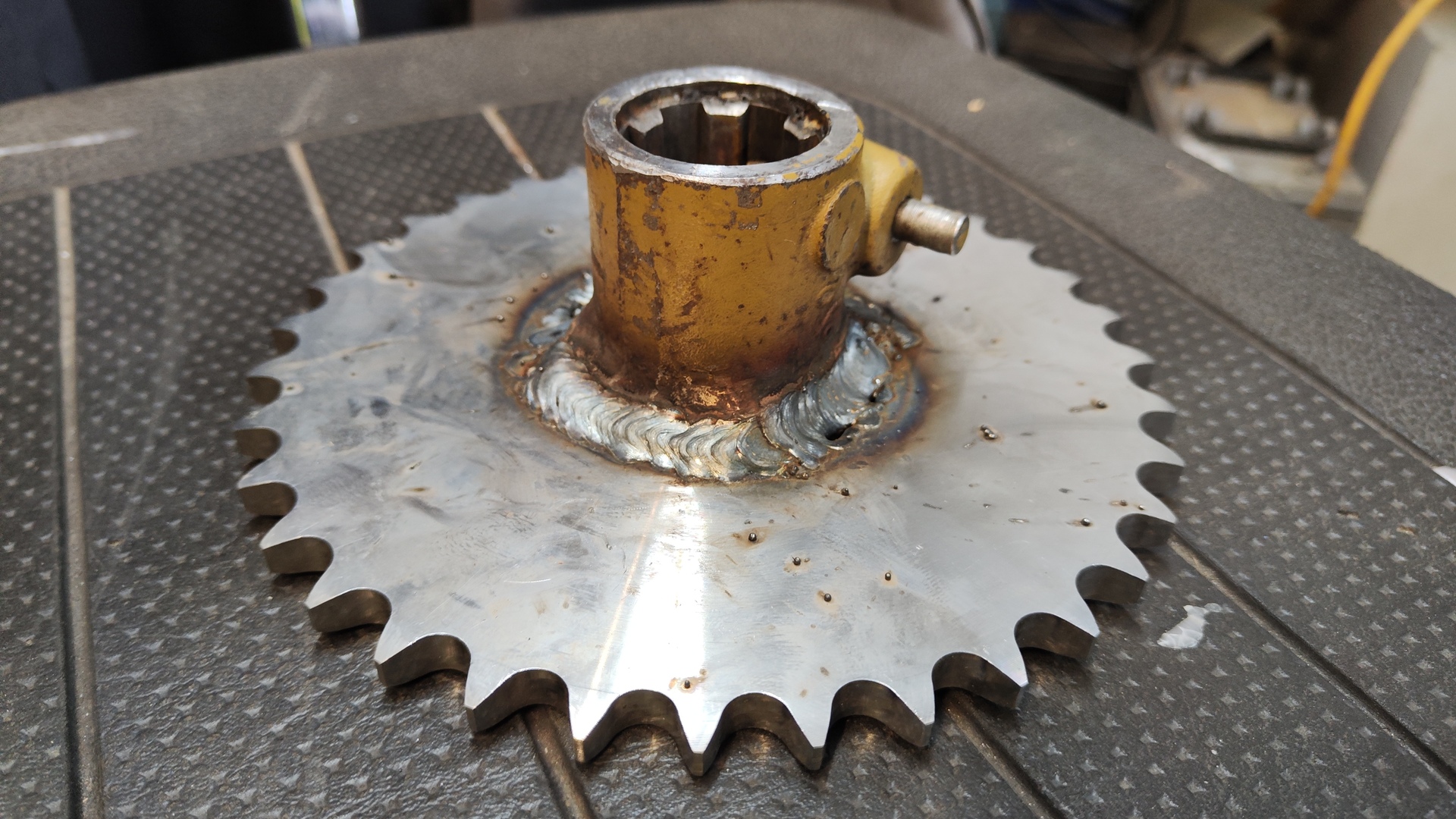
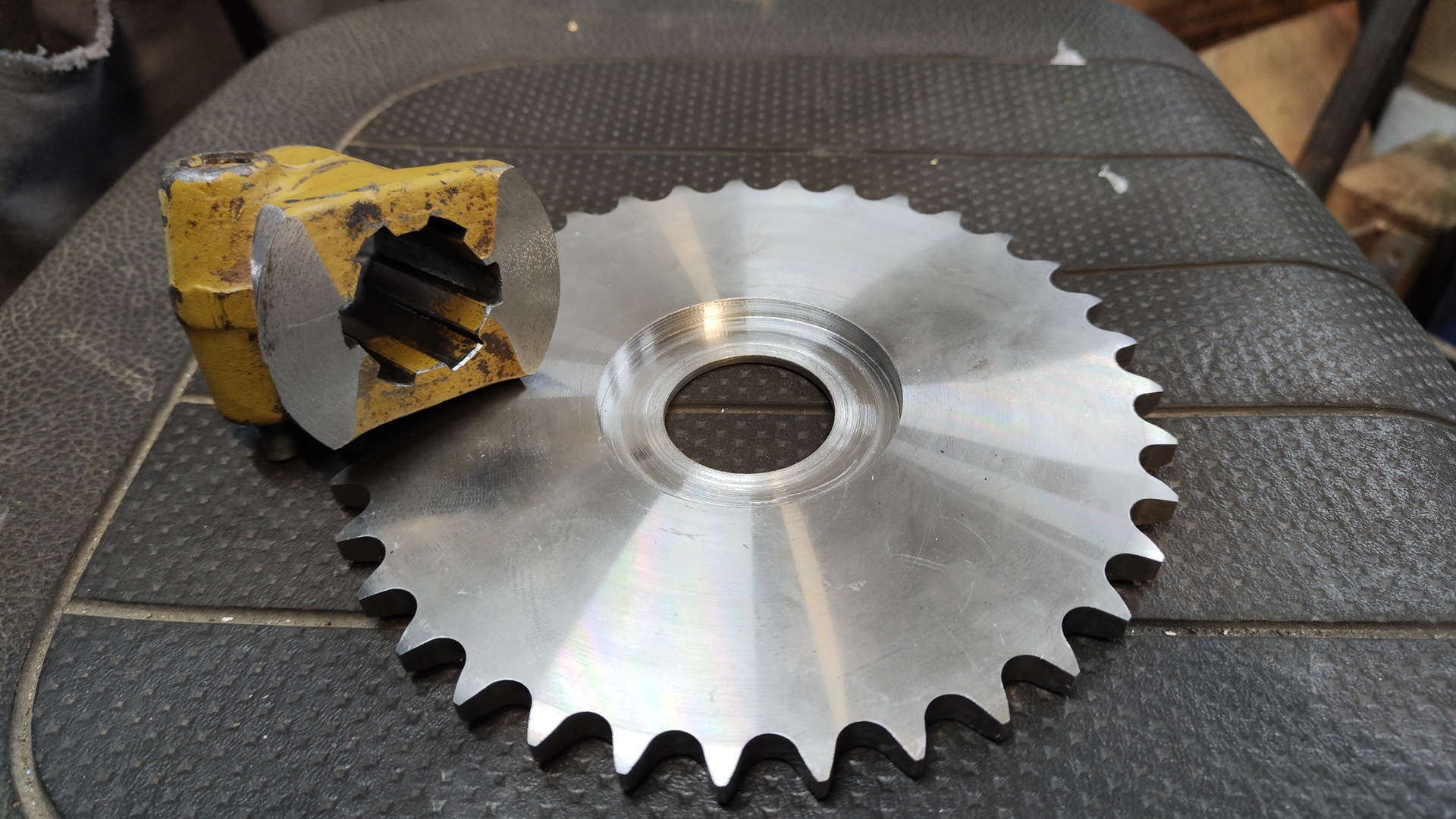
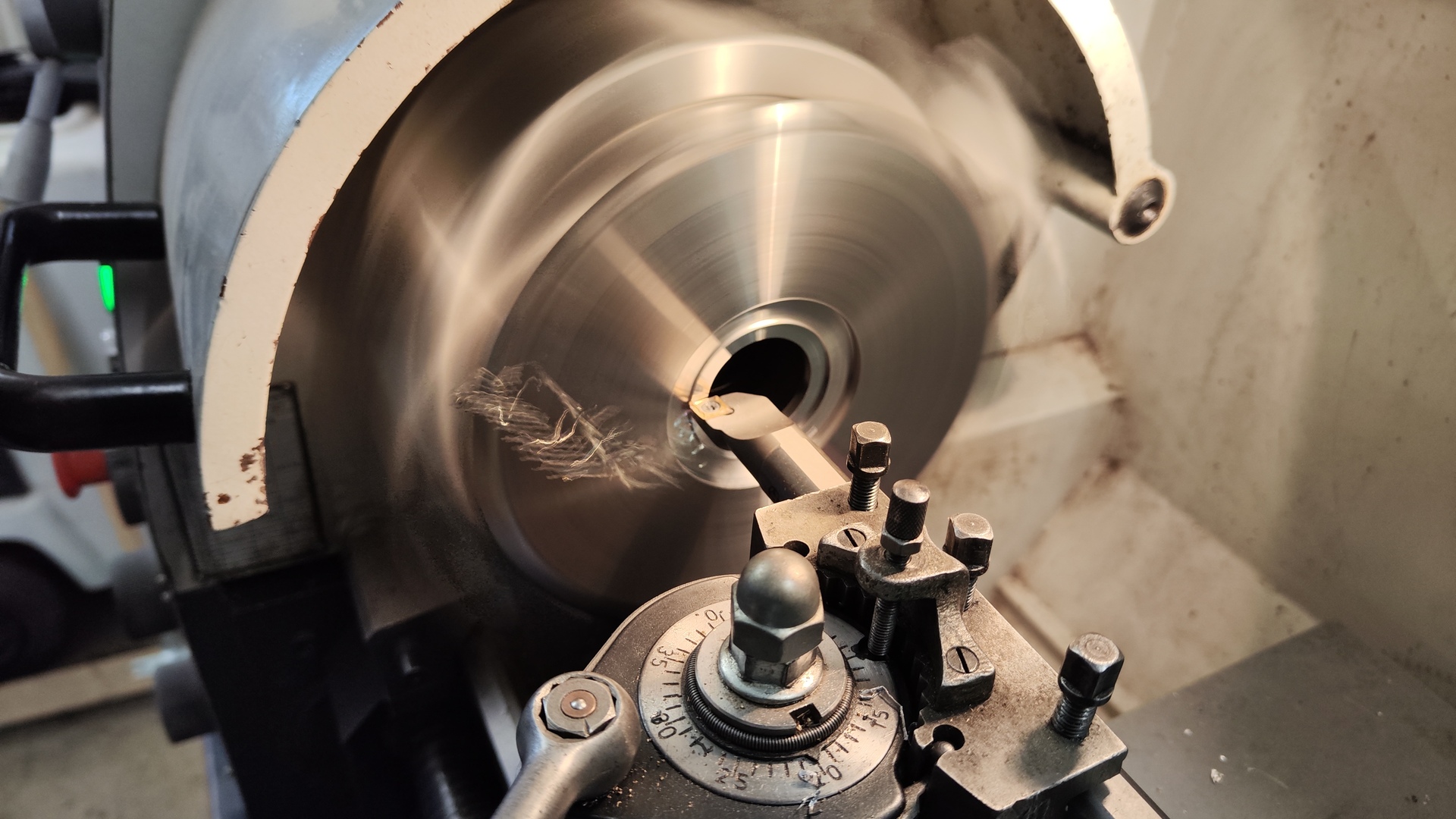
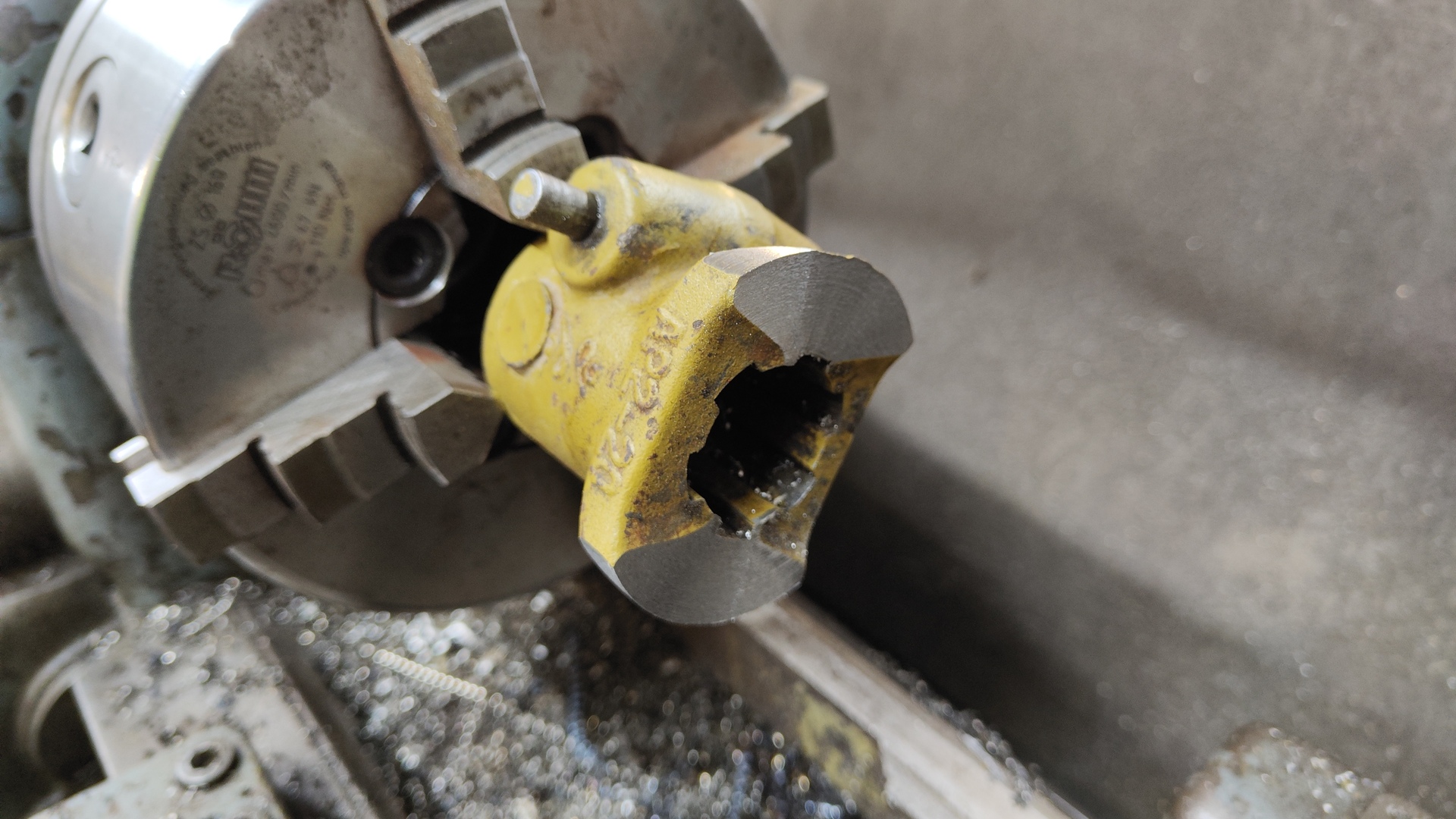
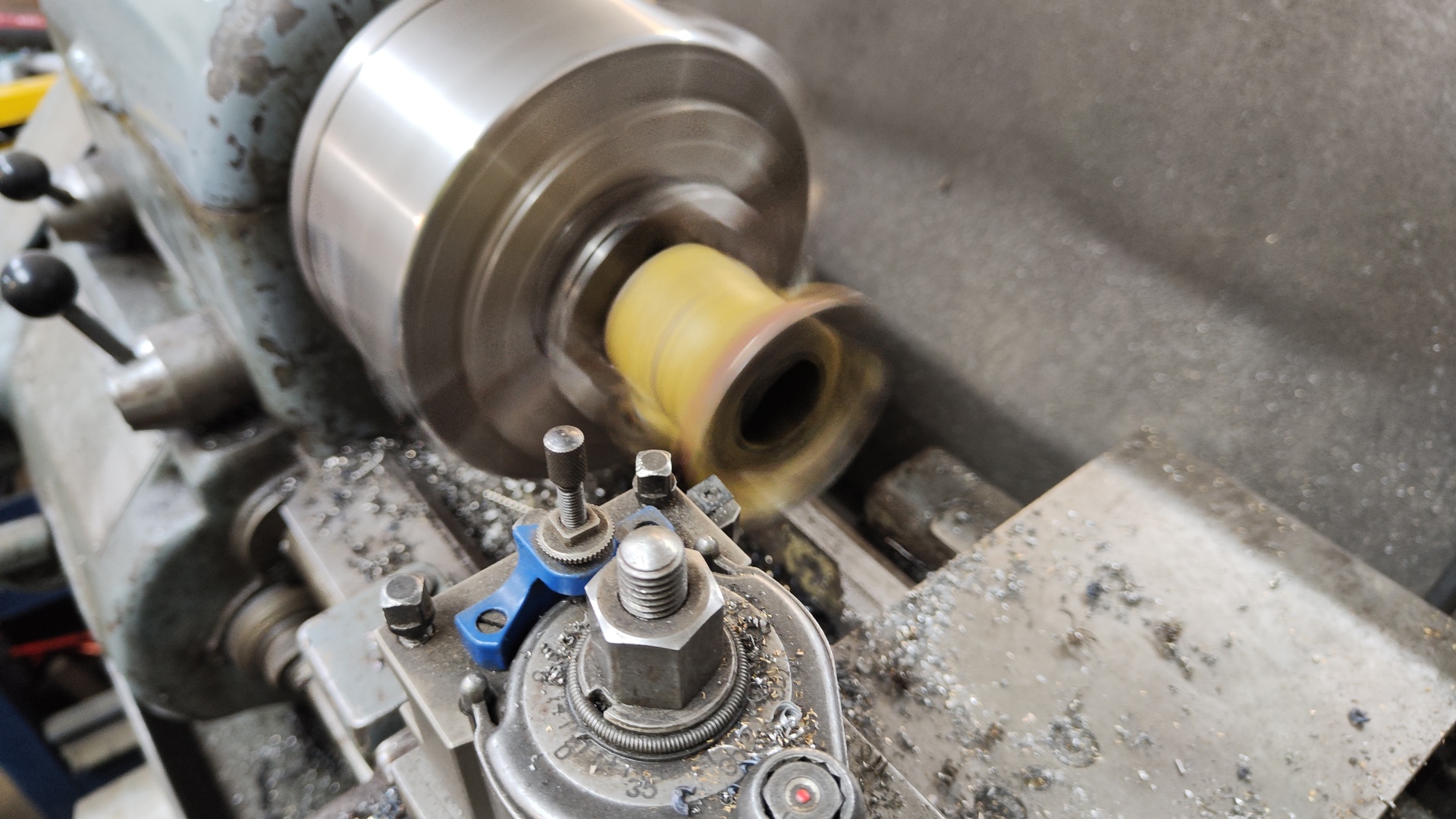
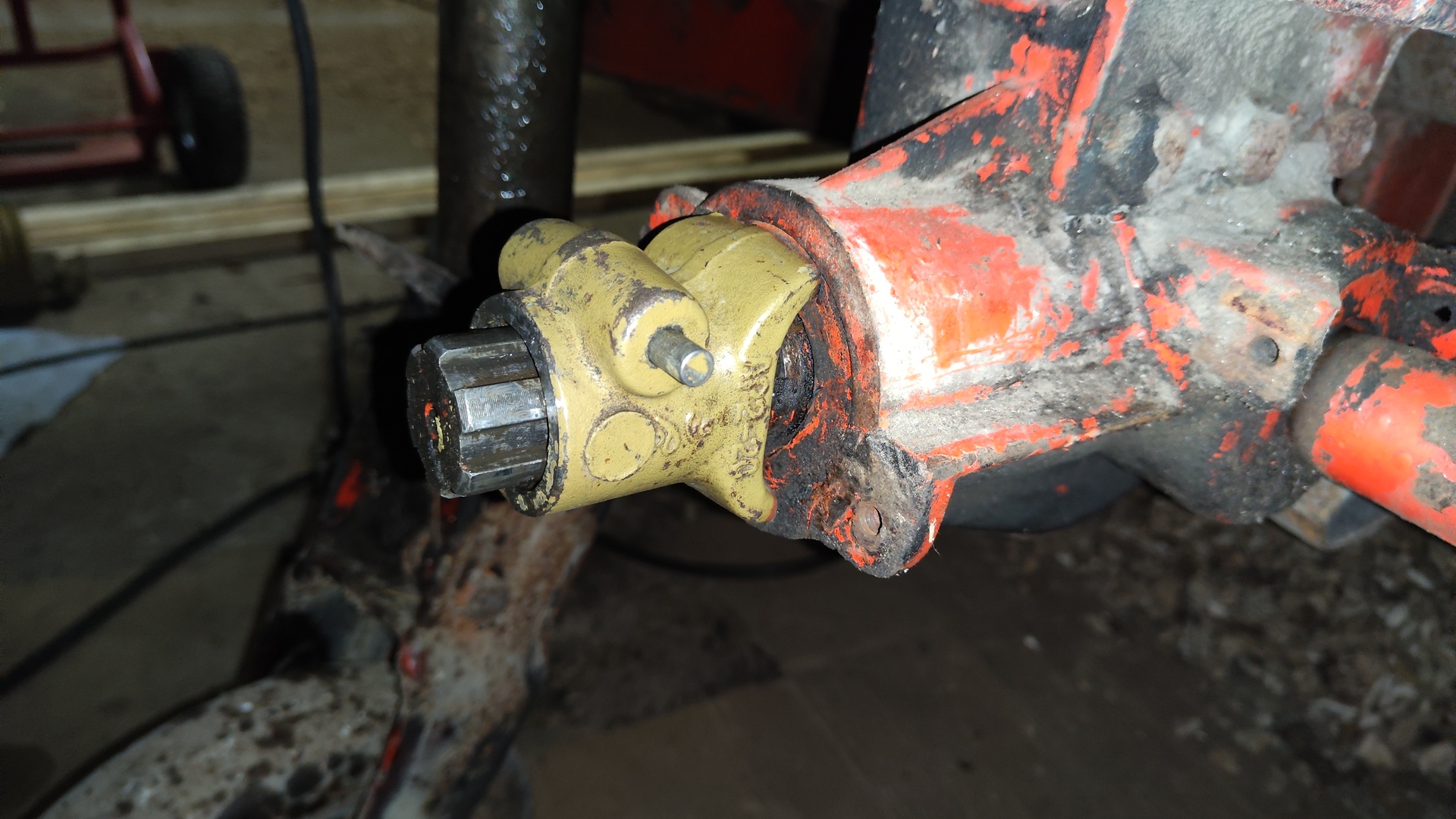
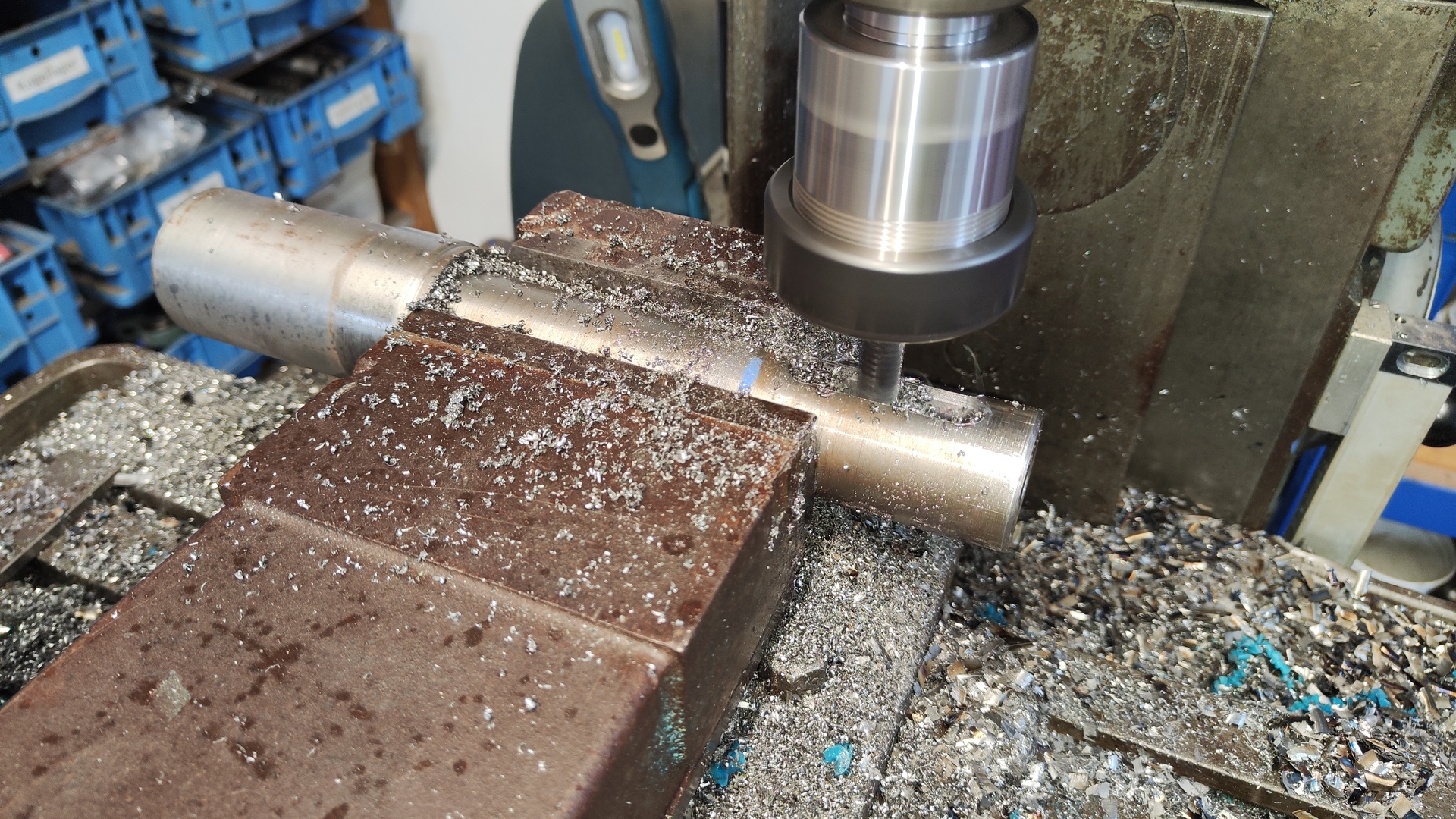
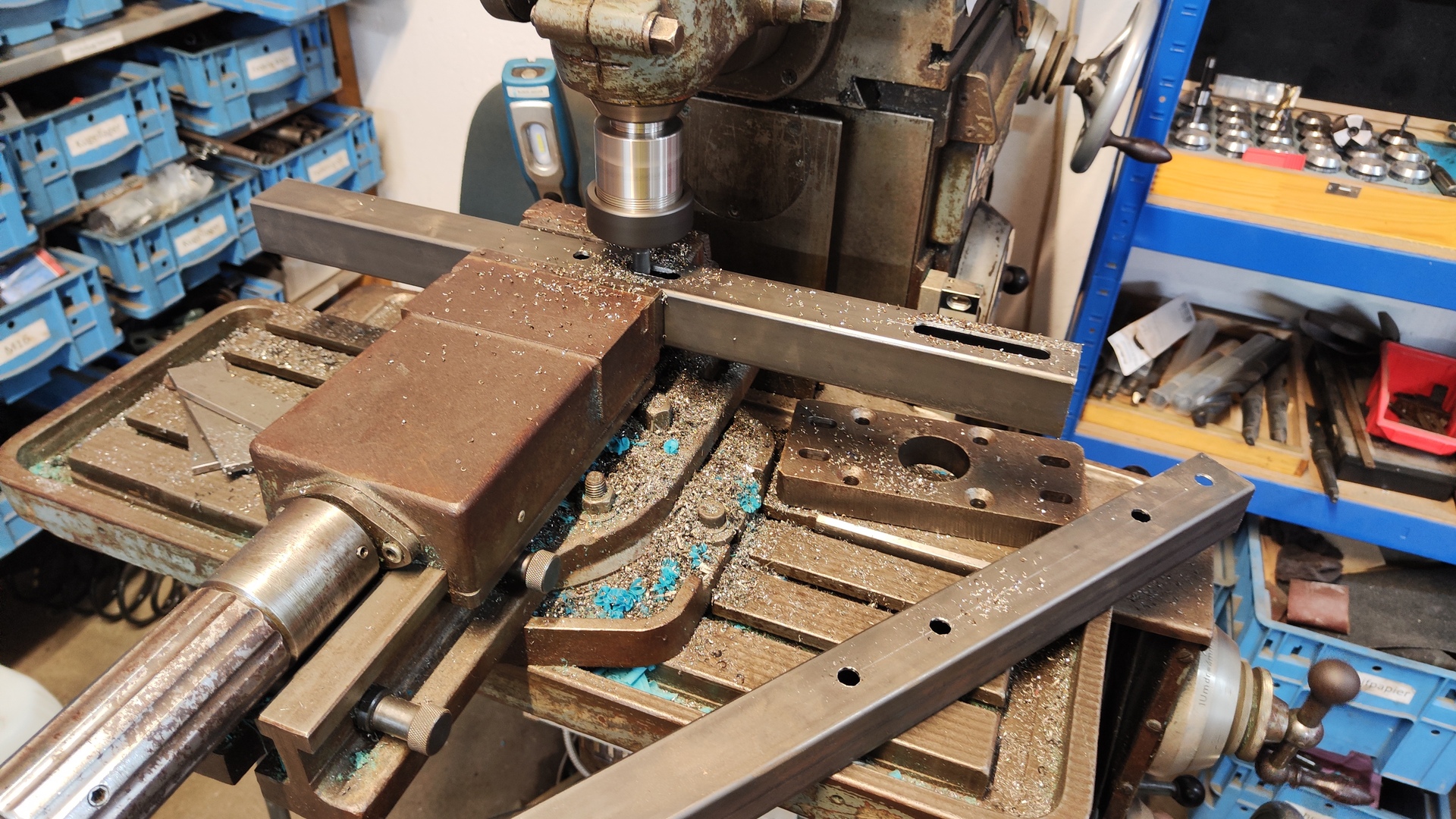
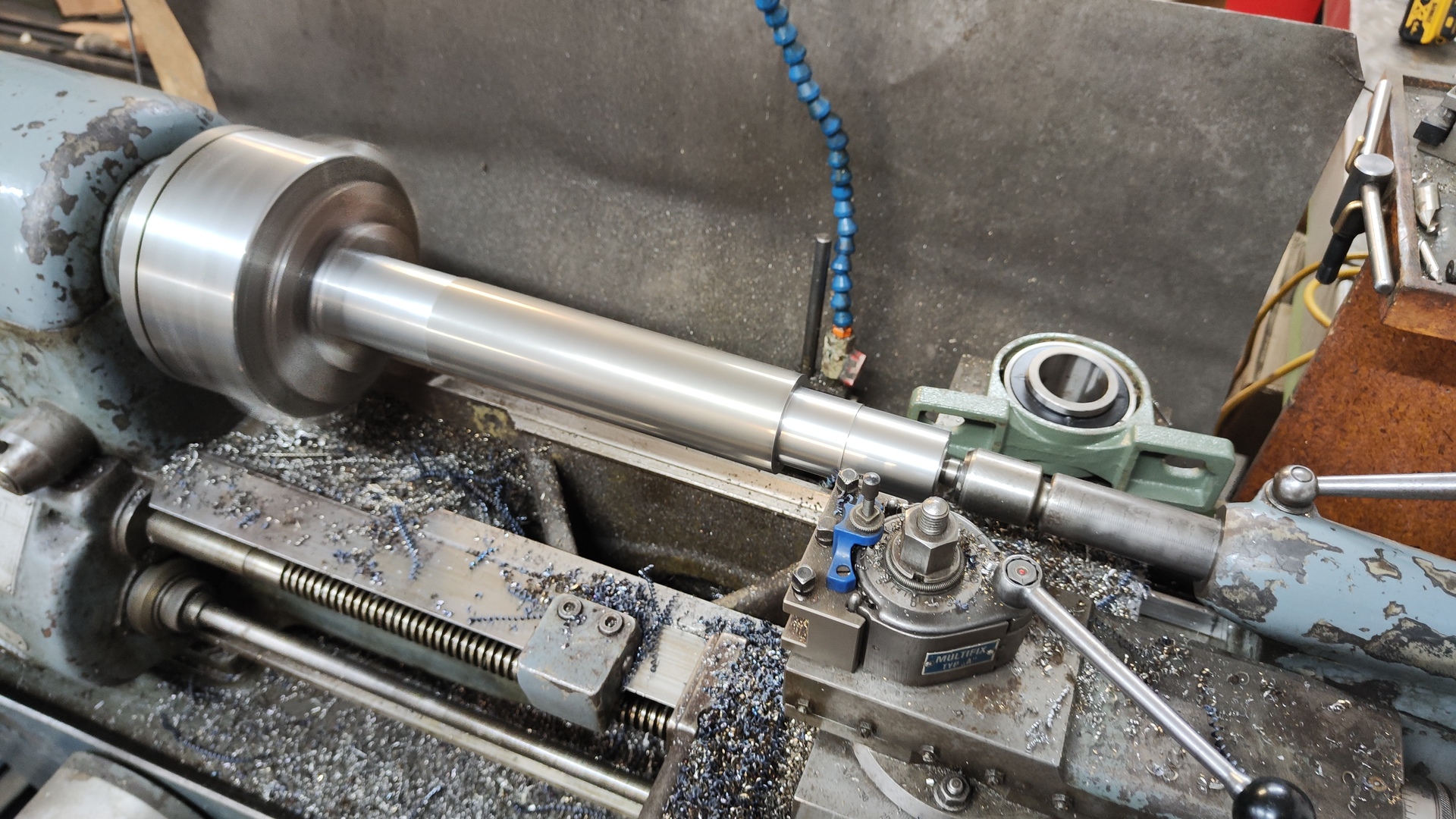
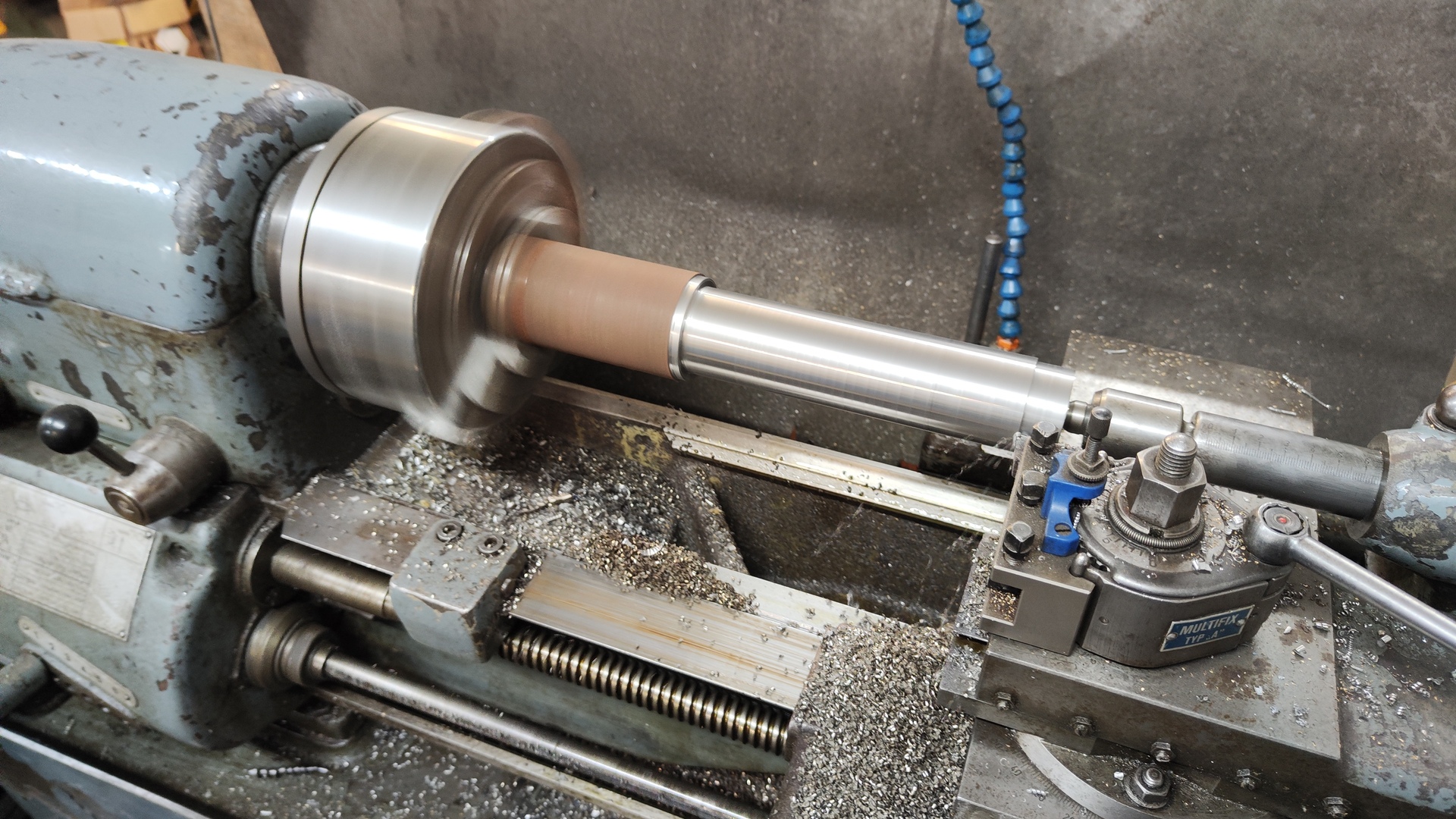
- Custom drive shafts and adapters (motor, auger, PTO)
- Taper-lock seats and 40 mm bearing journals
-
Side walls & sealing
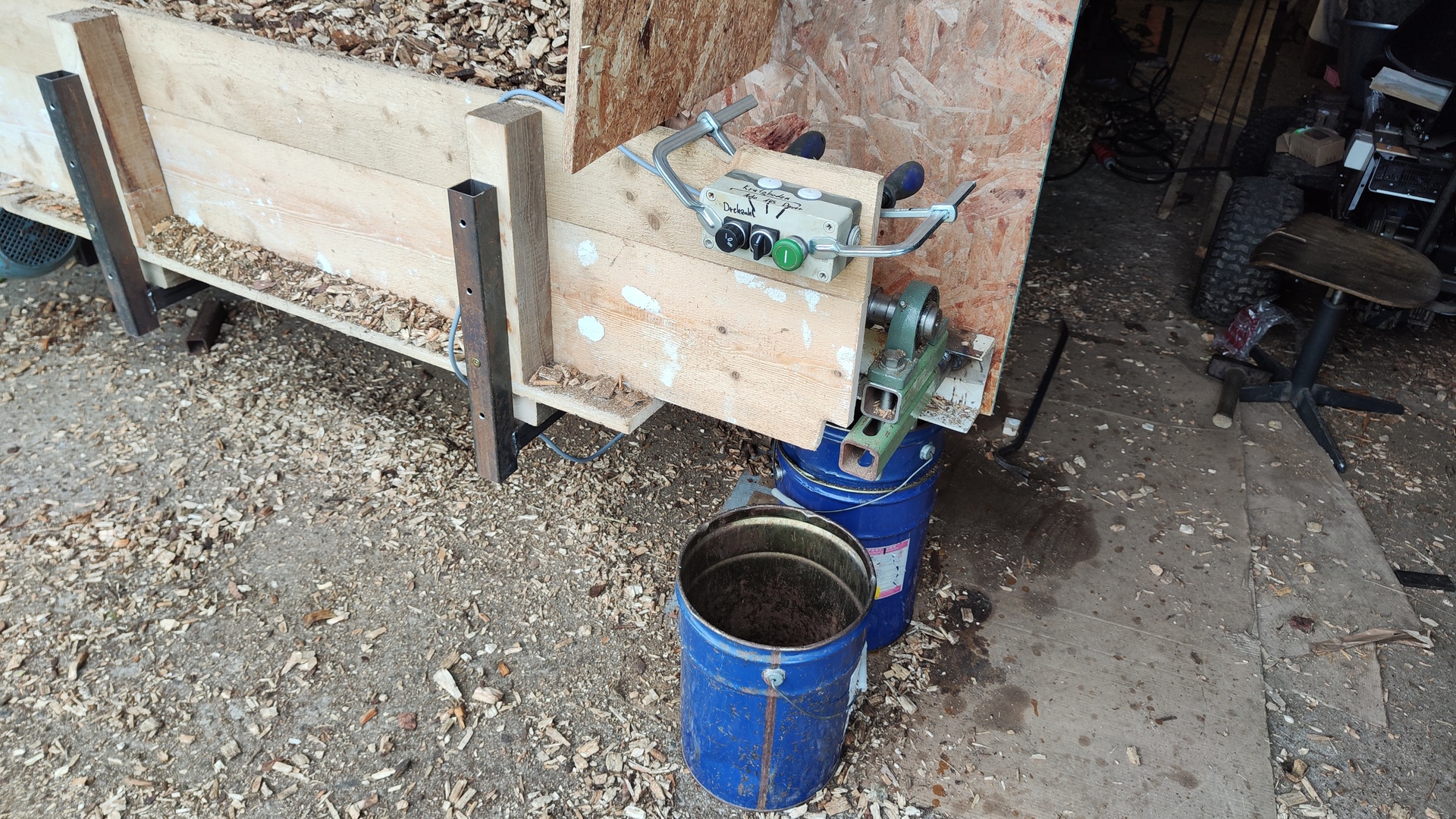
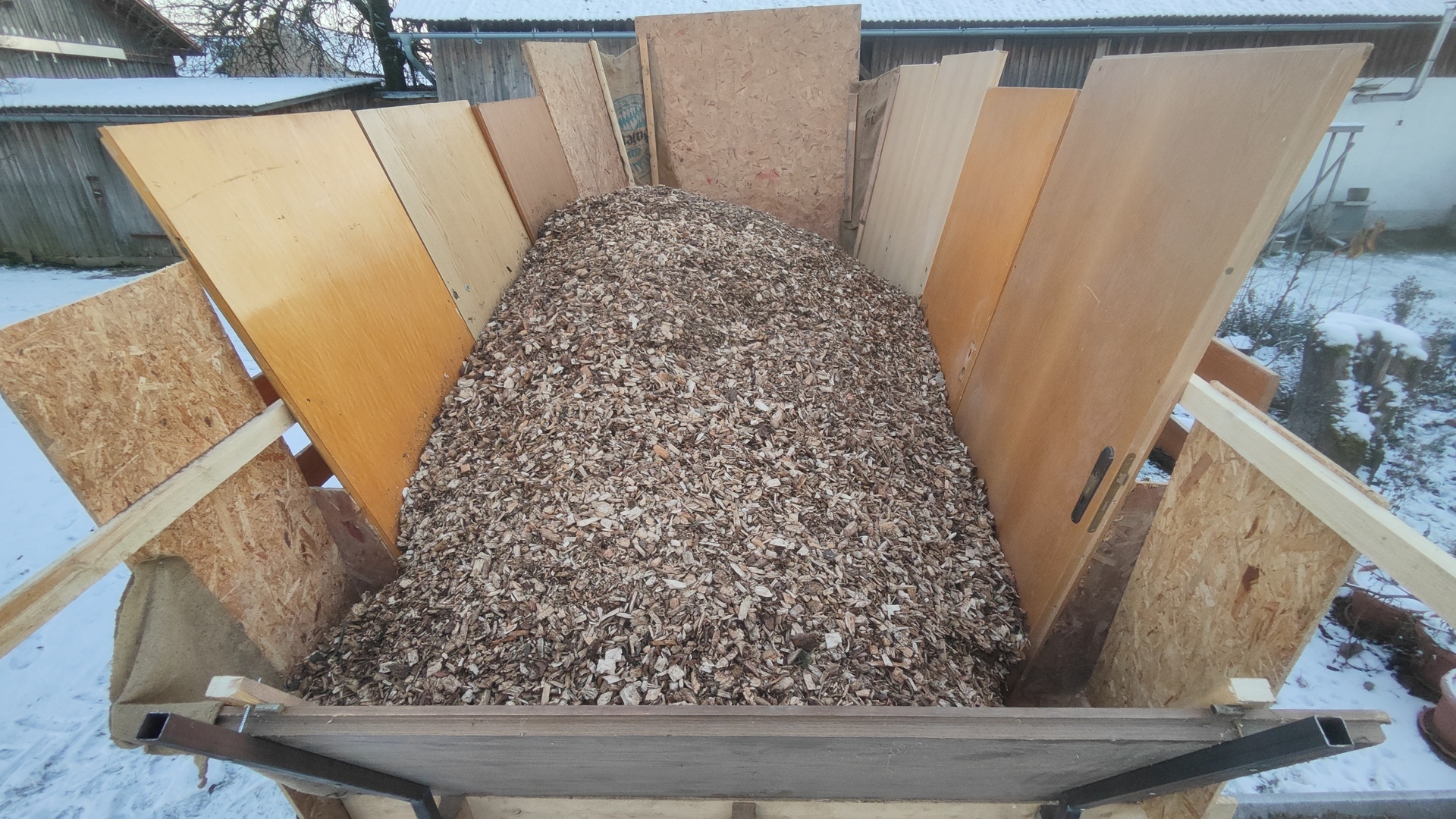
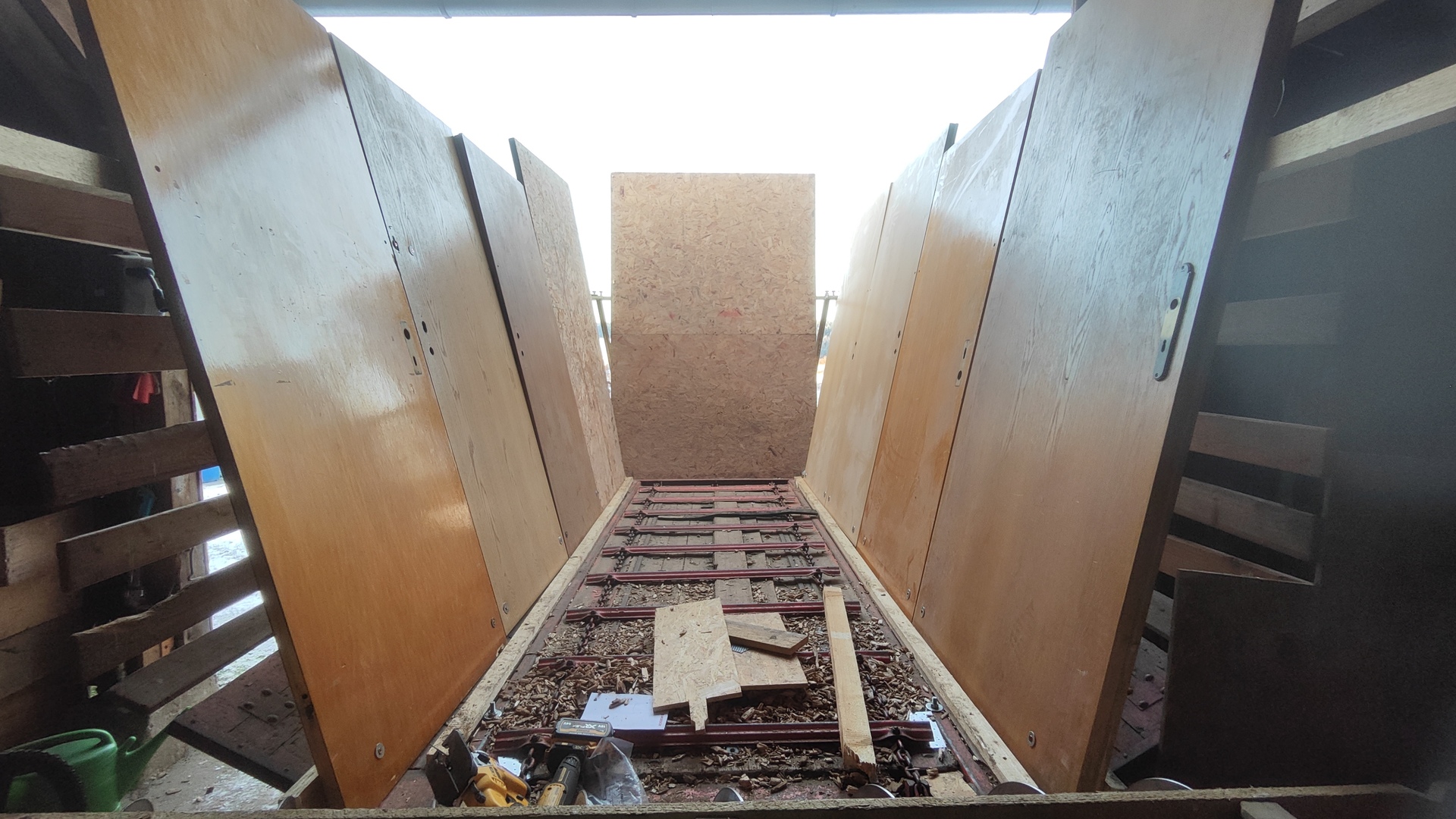
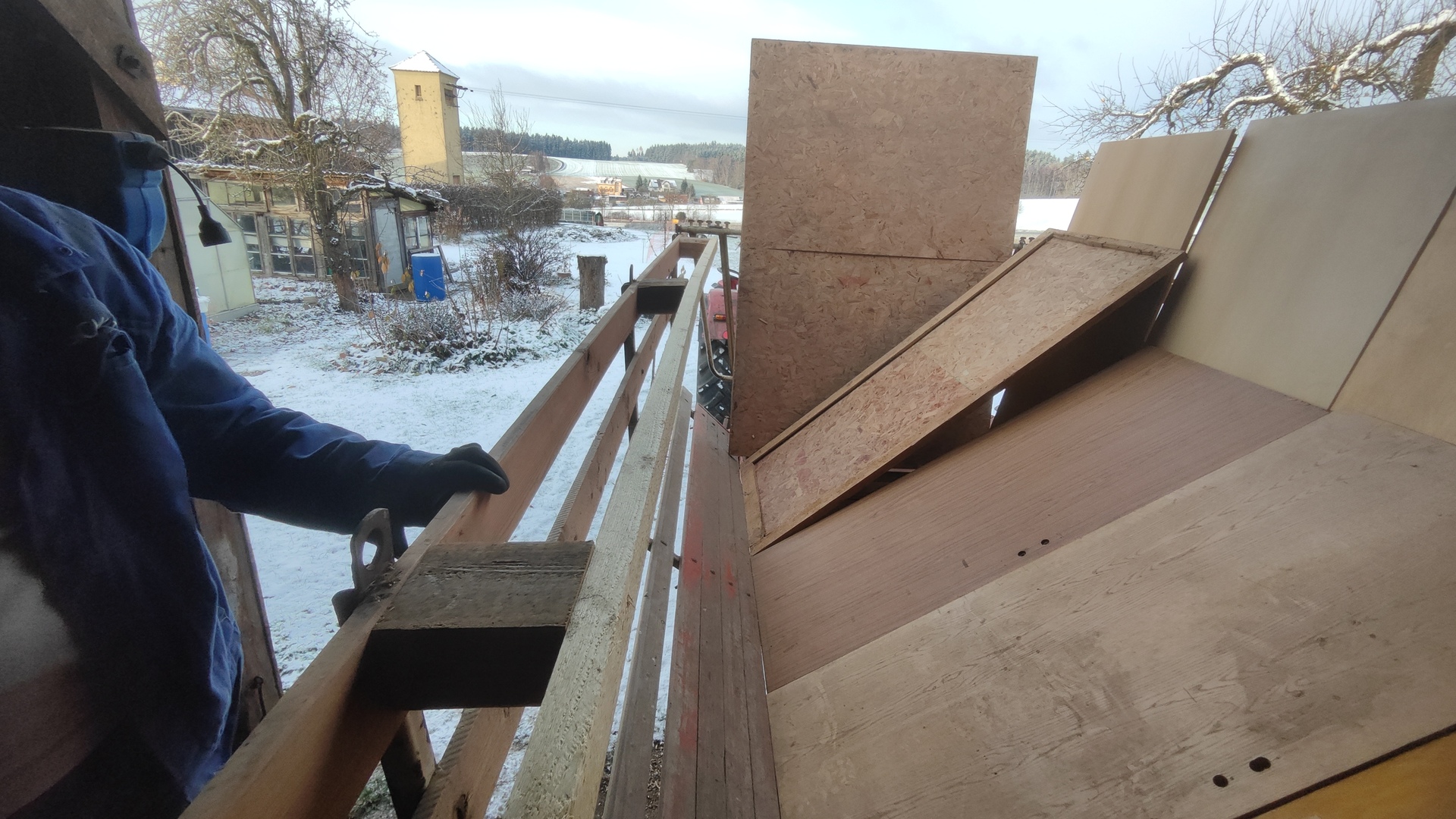
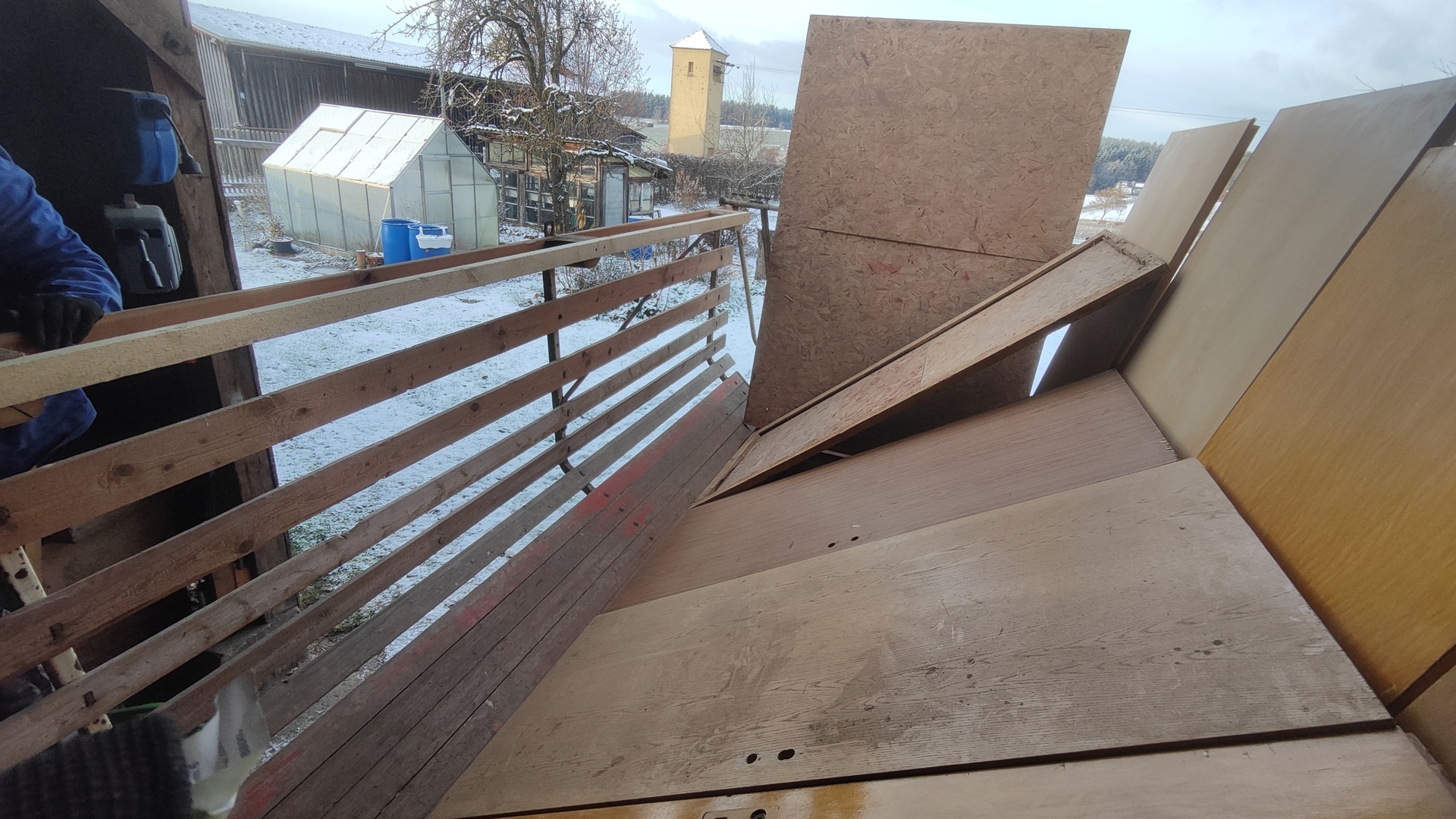
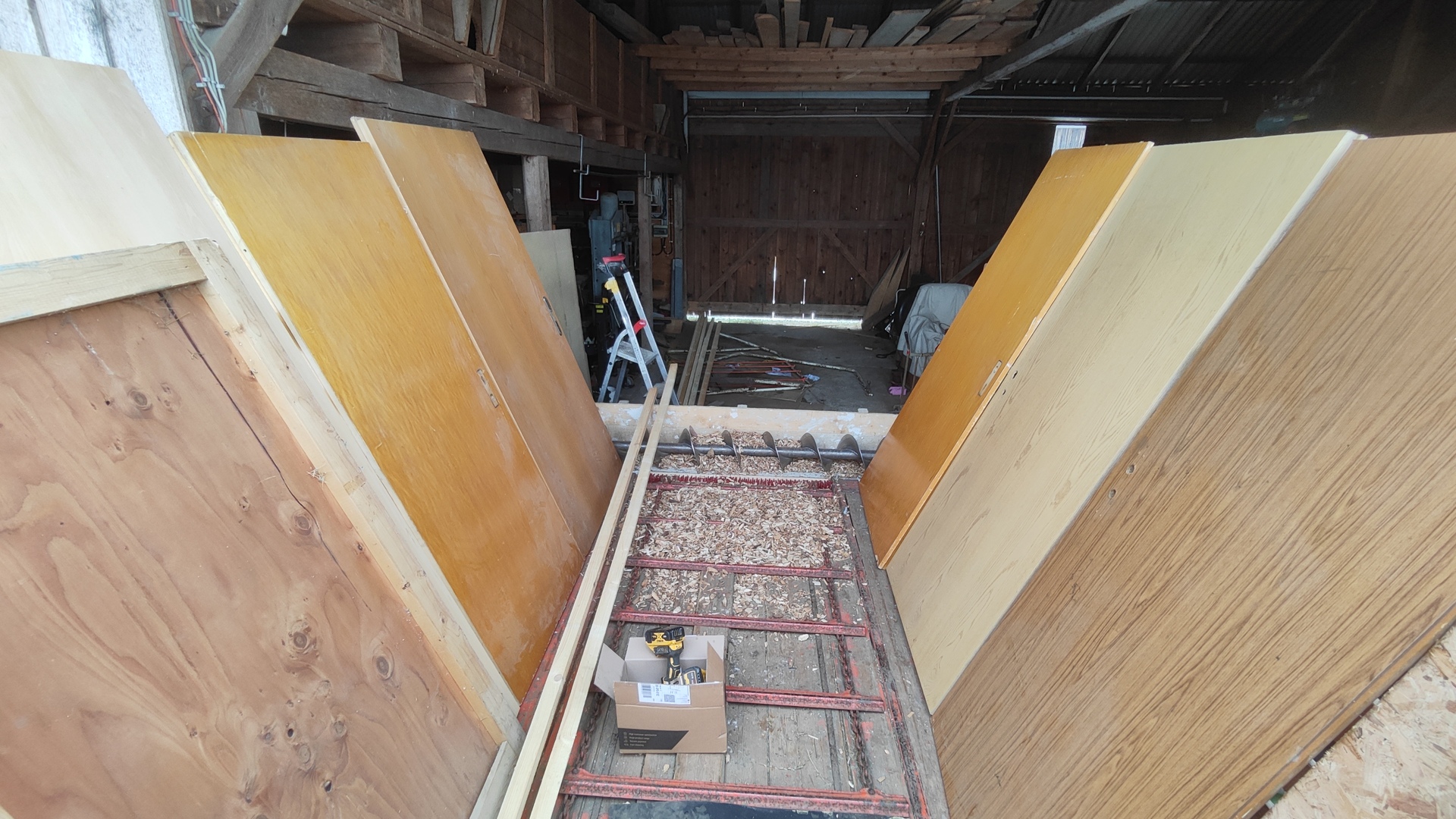
- 8× reclaimed wooden interior doors + OSB panels for side wall paneling (chip-tight)
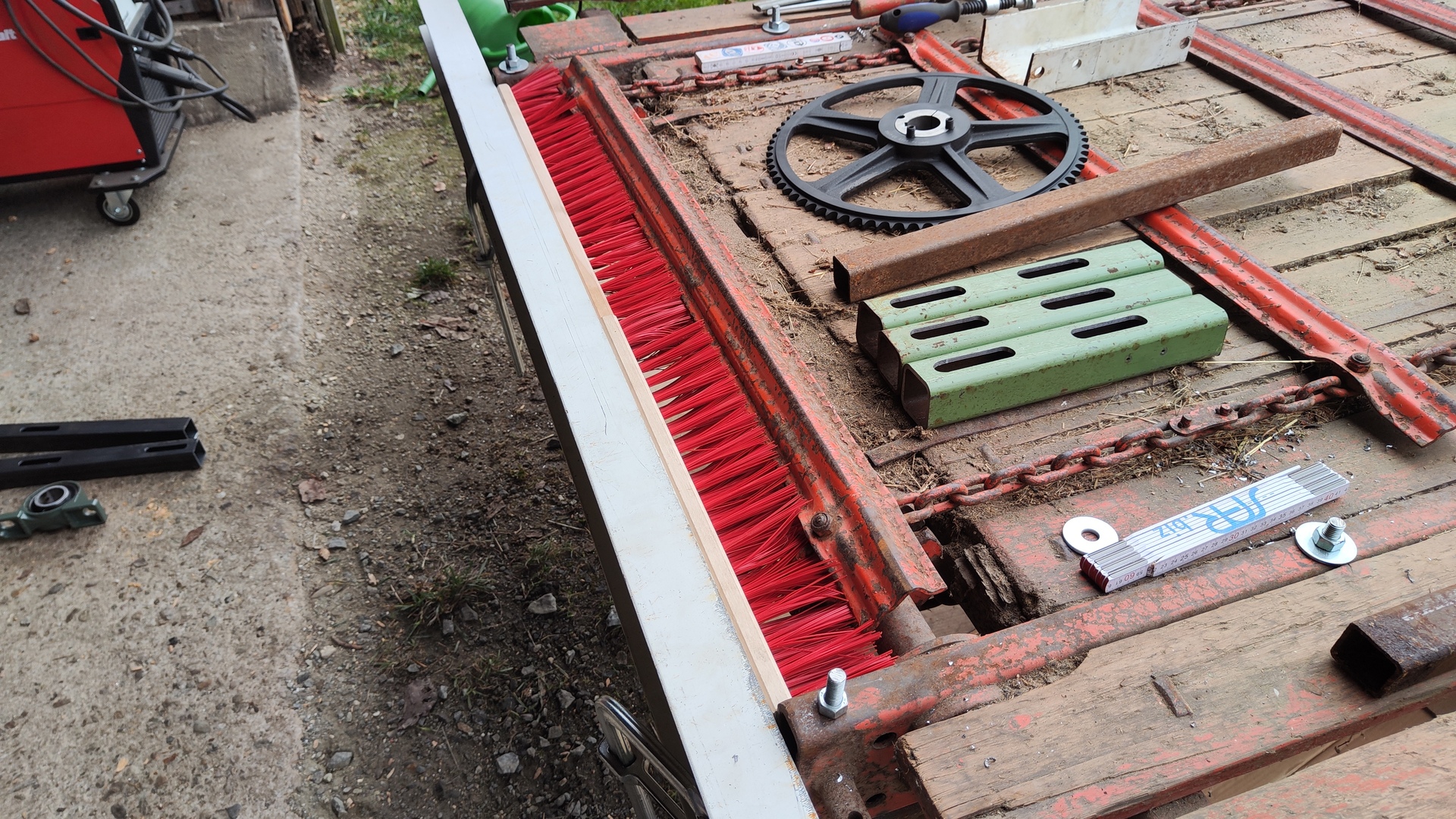
- 2× 60 cm red street broom brushes as rear scrapers/seals where the scraper bars pass
- Old potato sacks packed into the corners for additional sealing
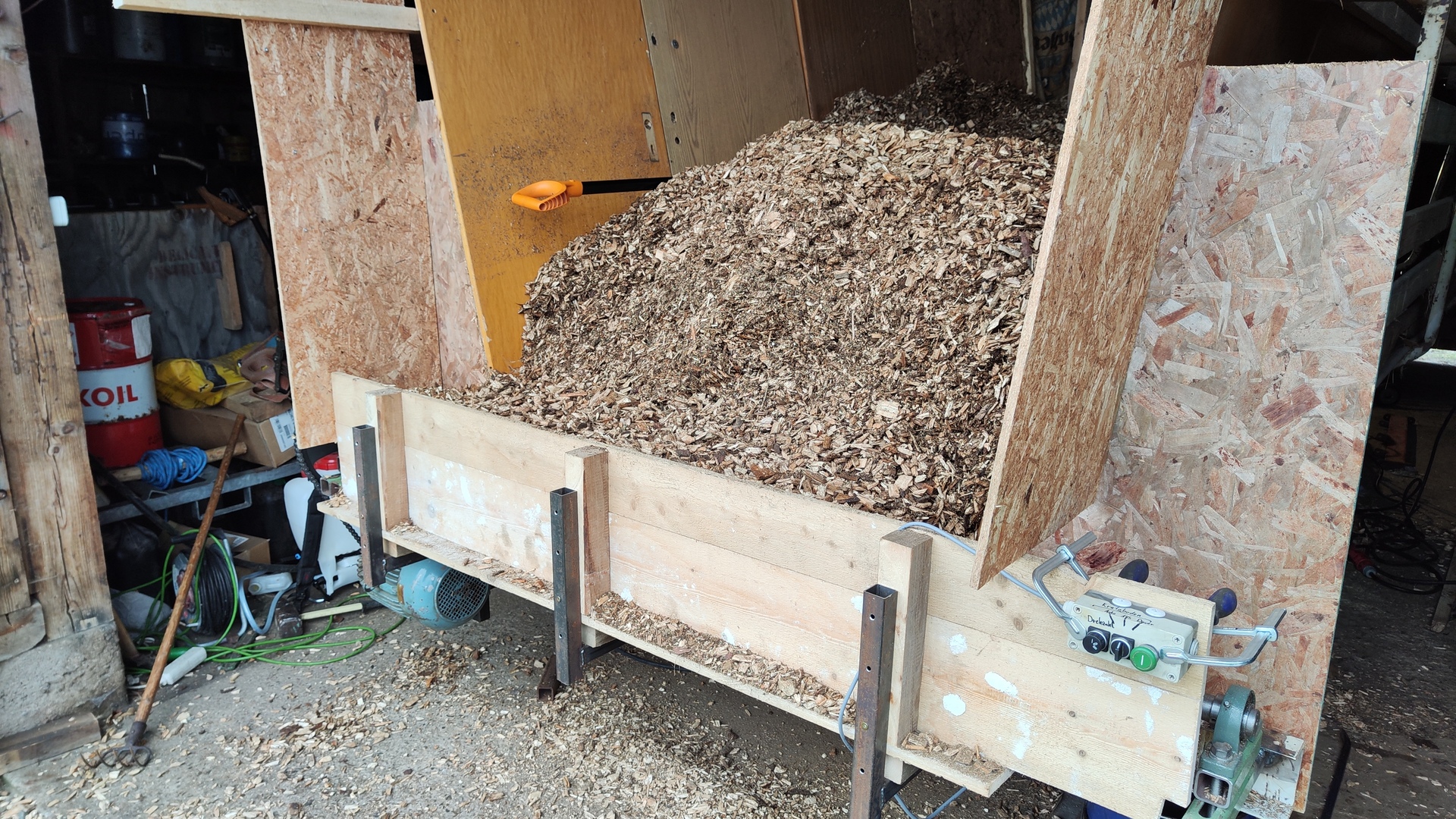
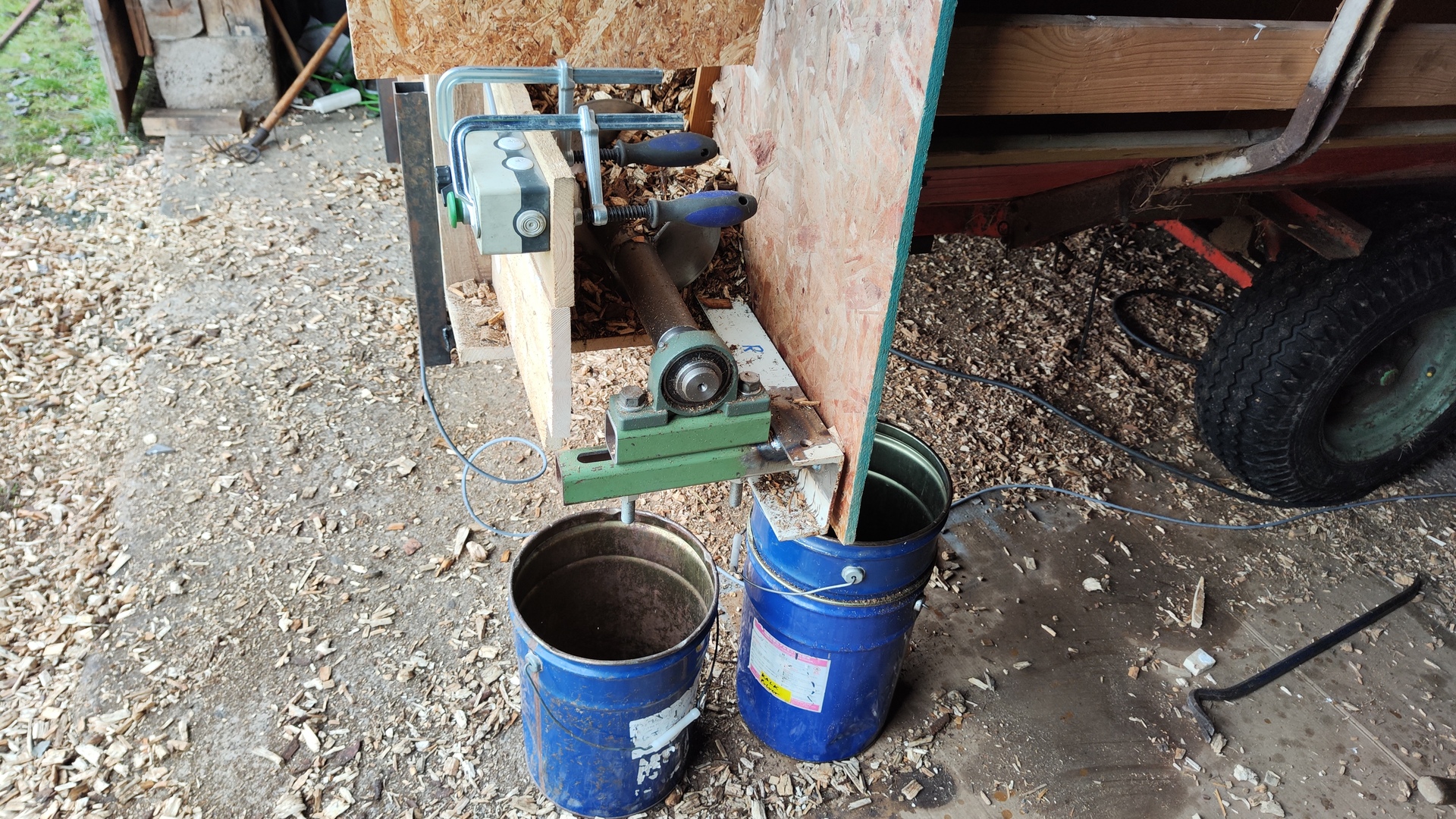
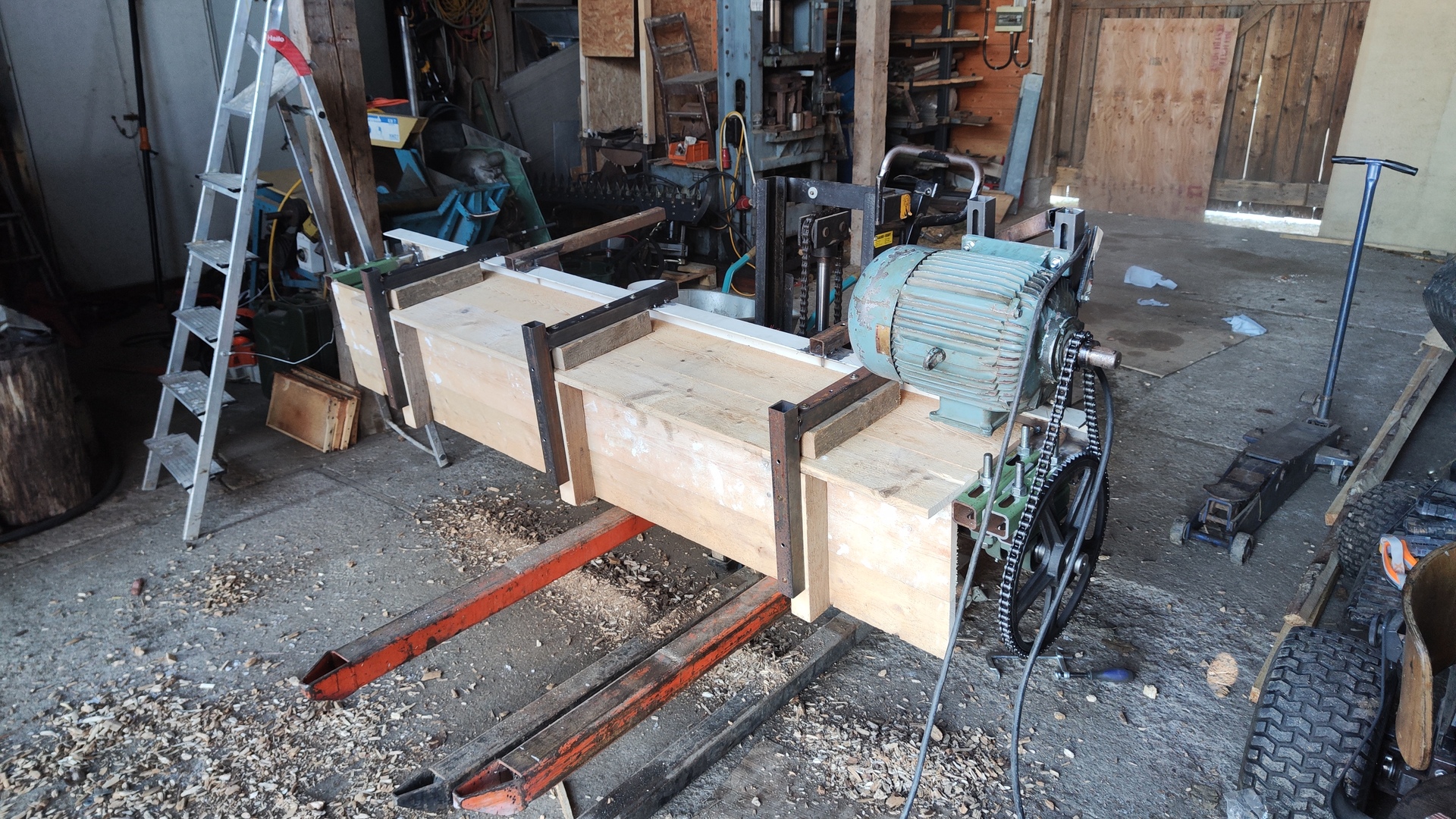
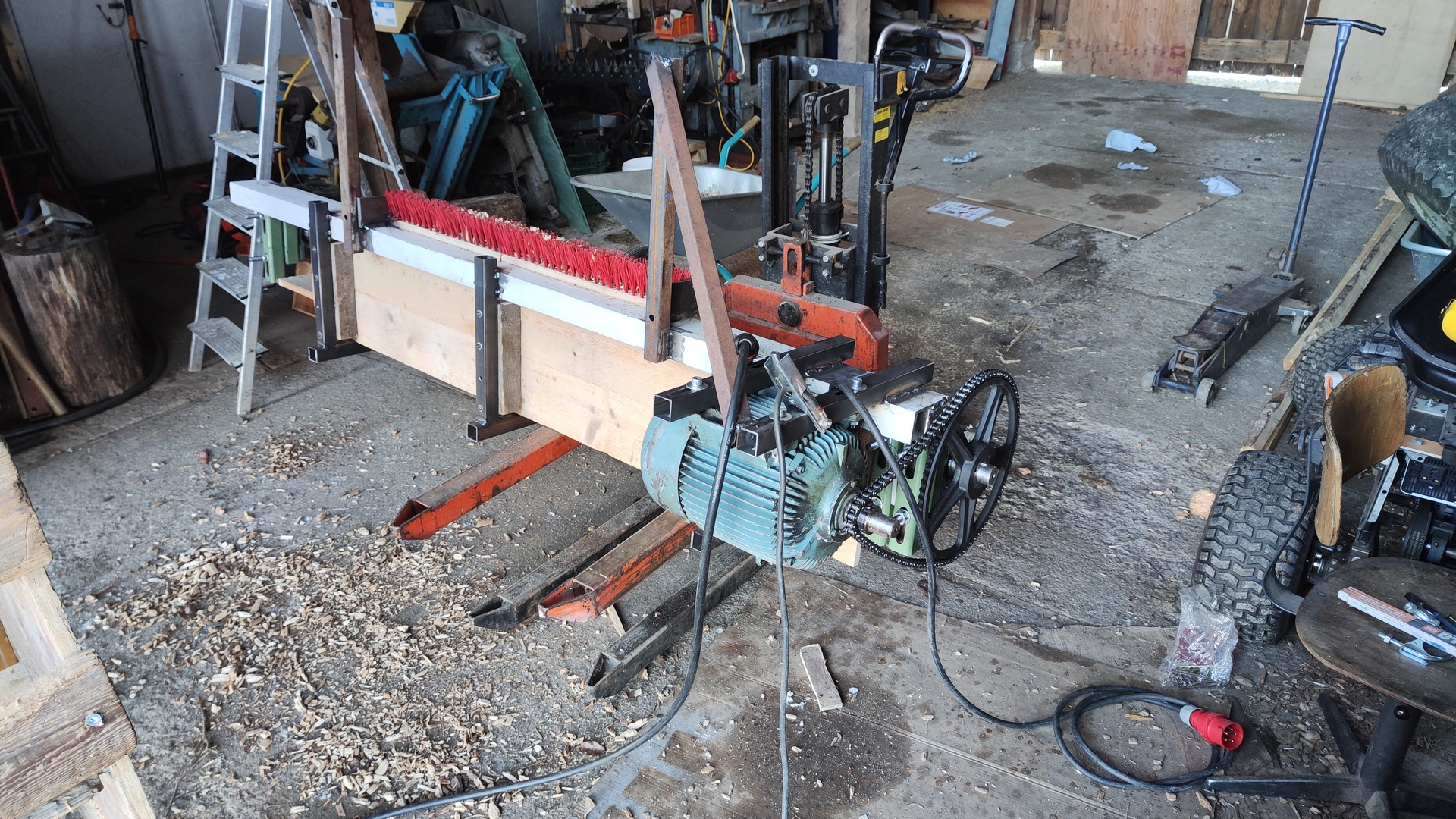
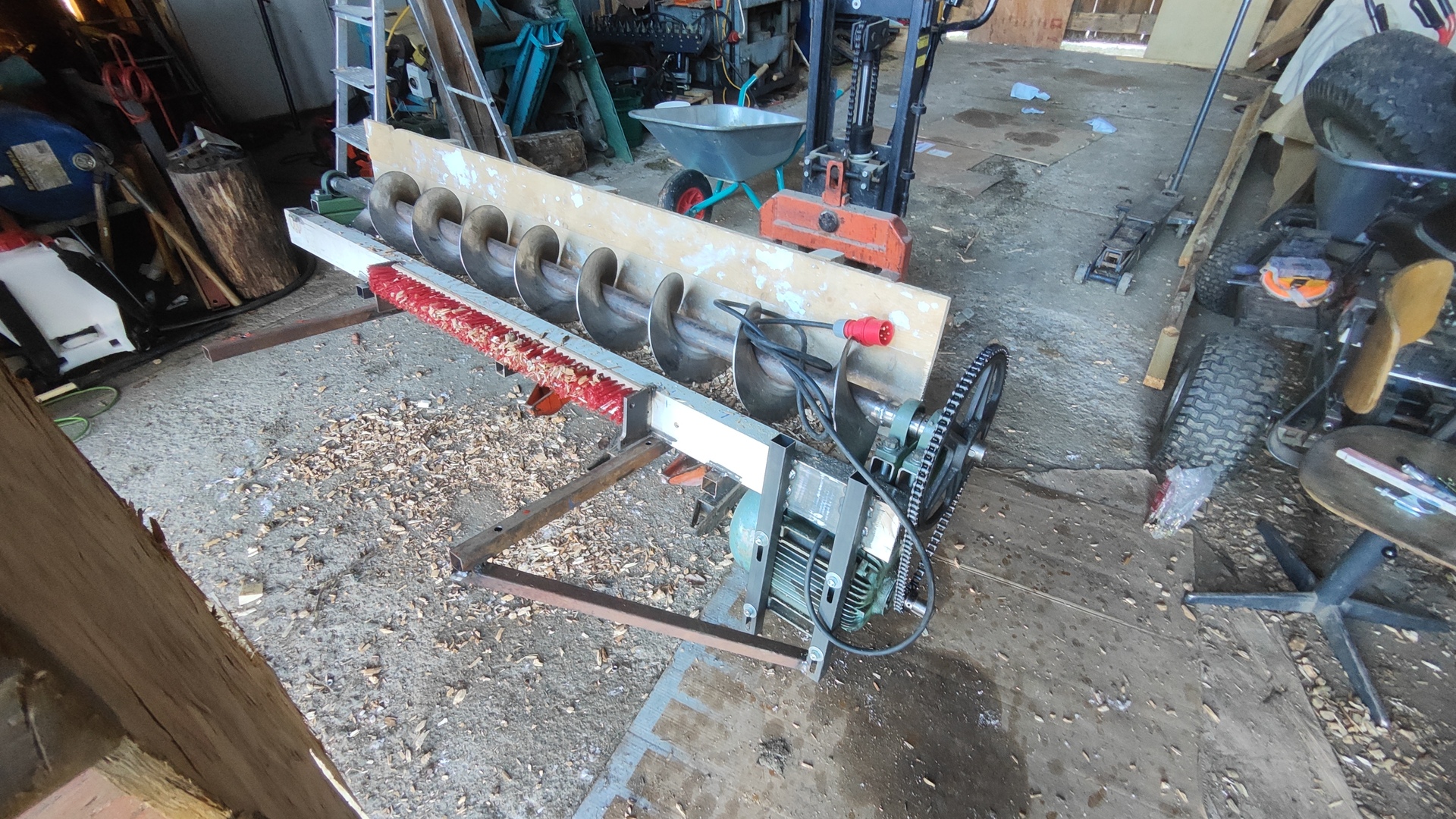
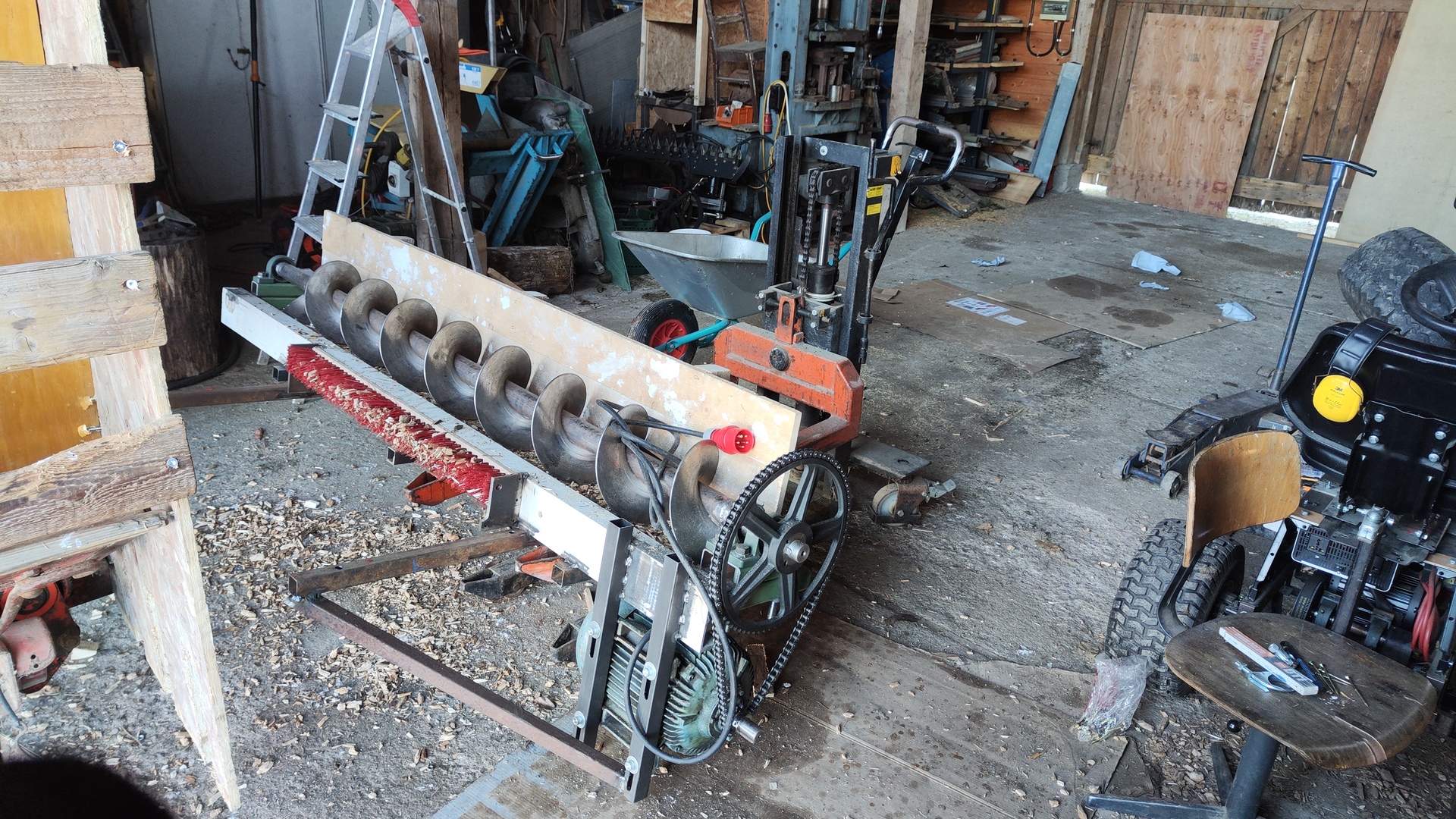
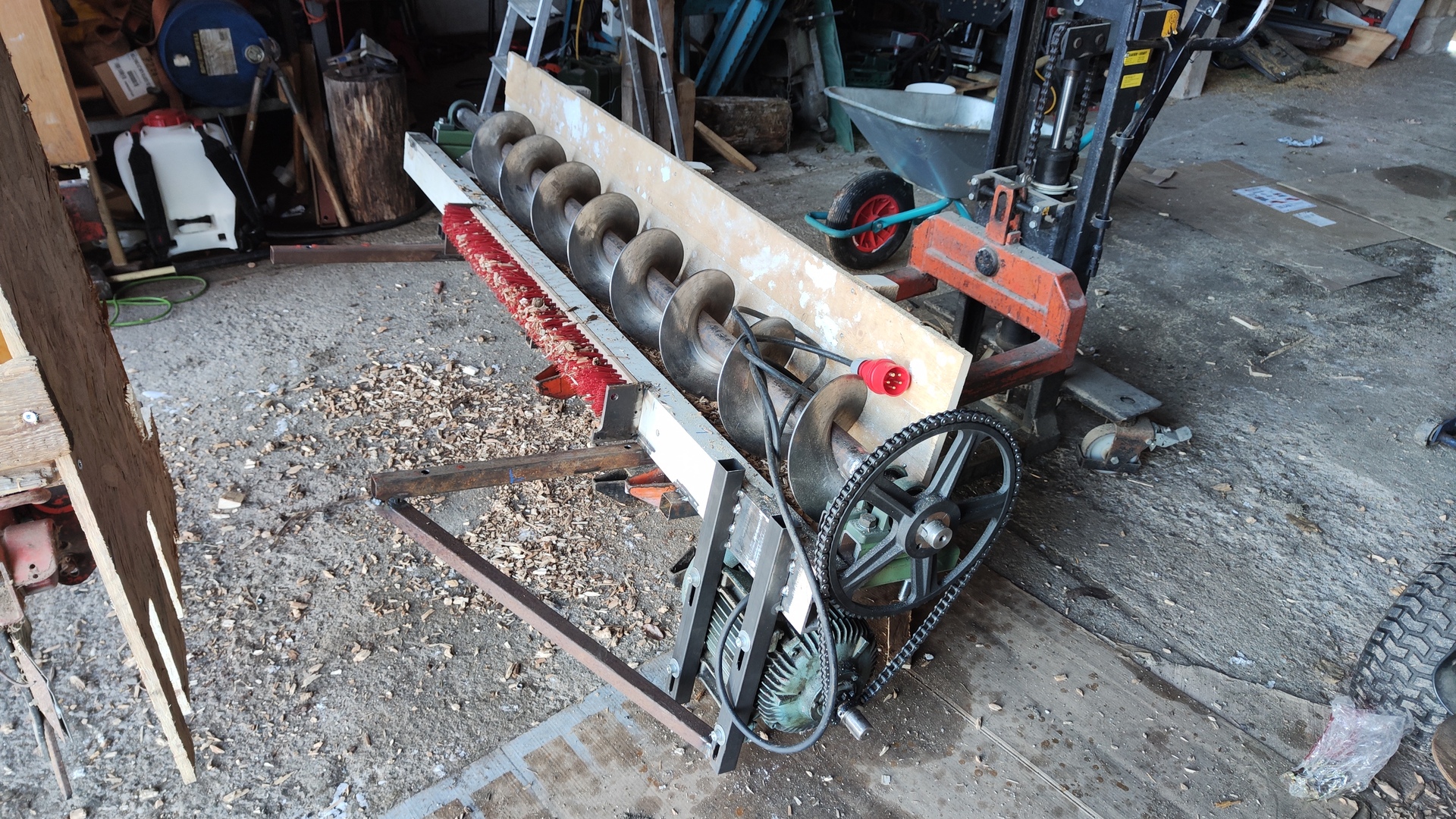
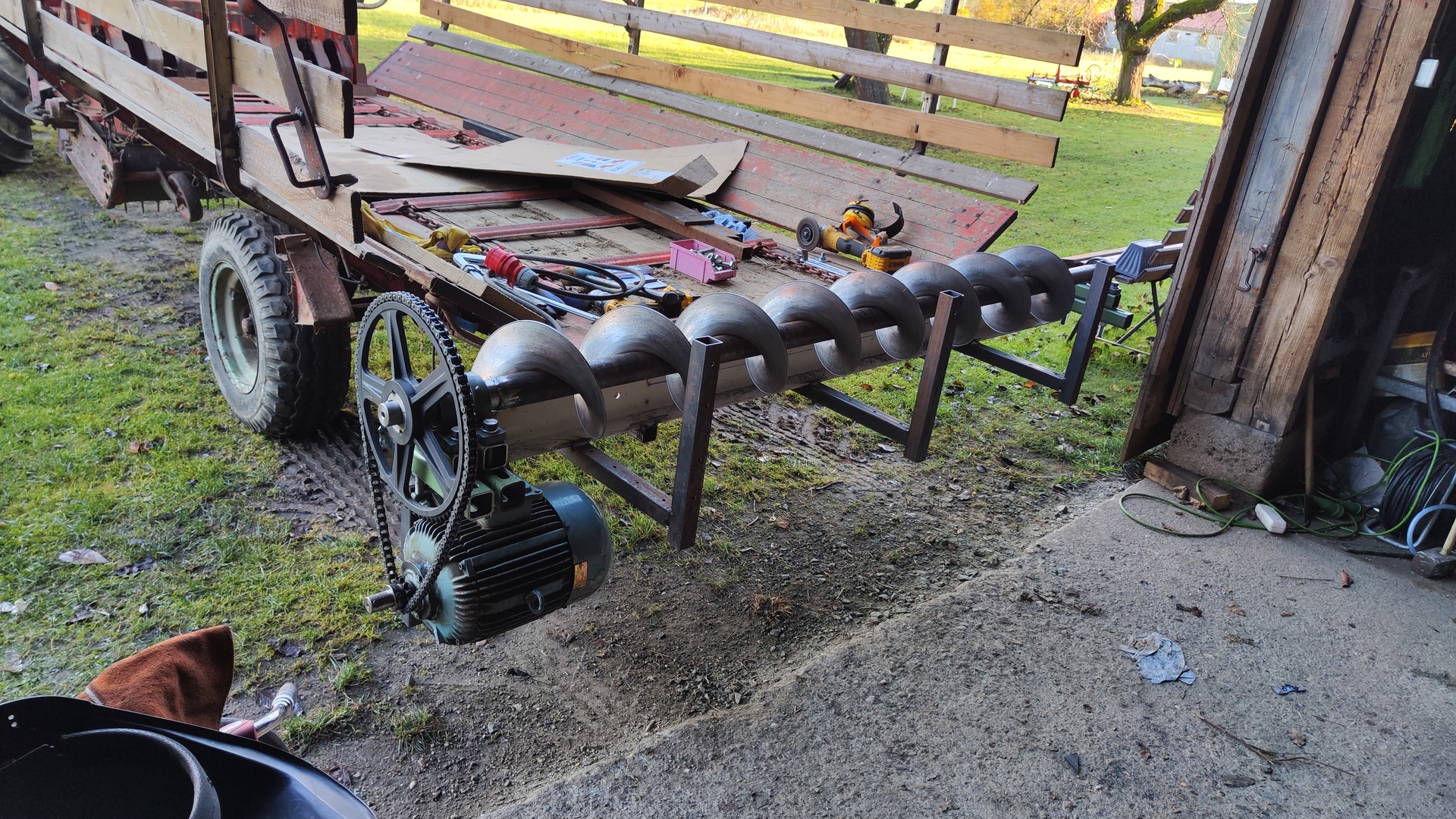
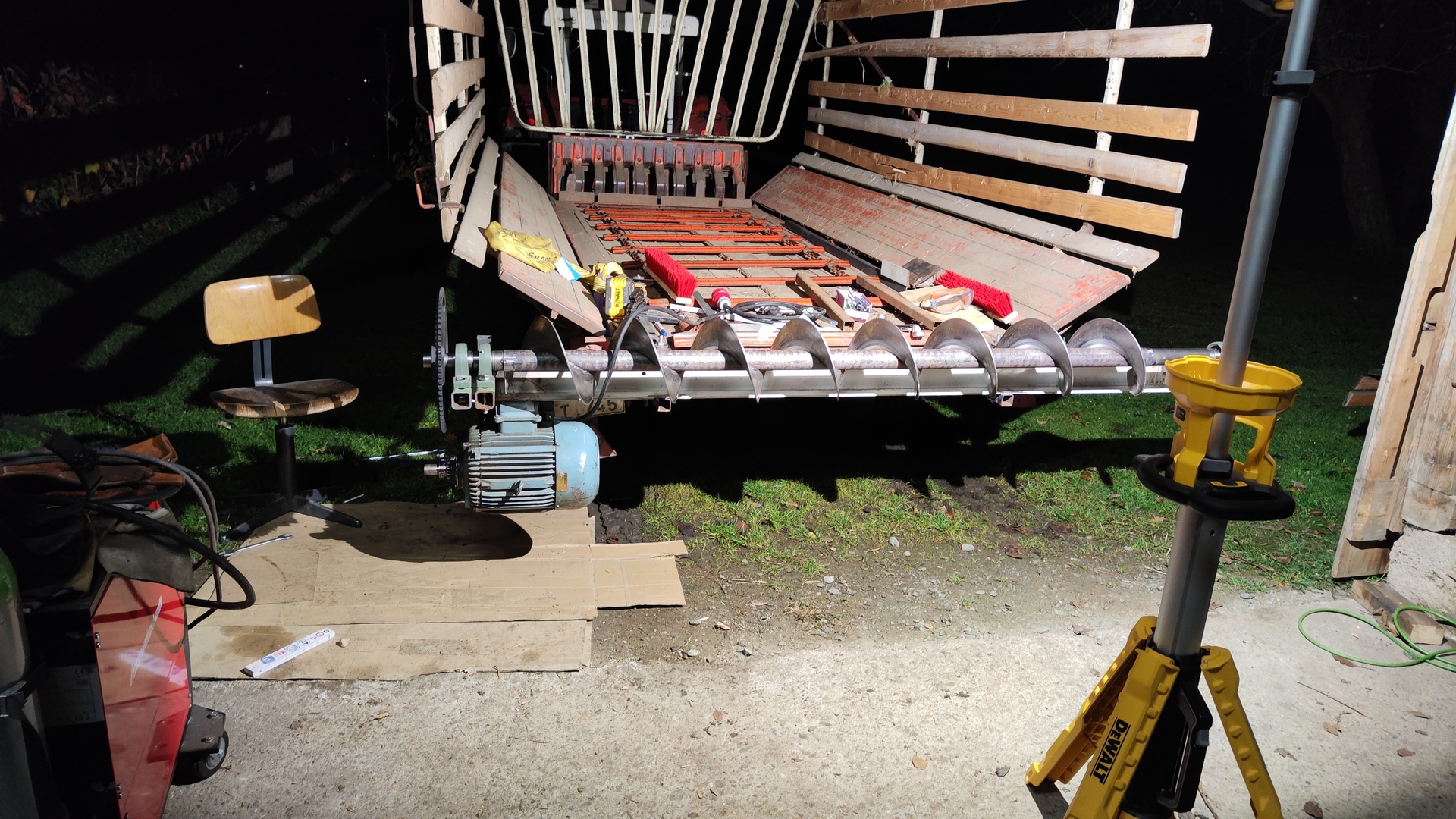
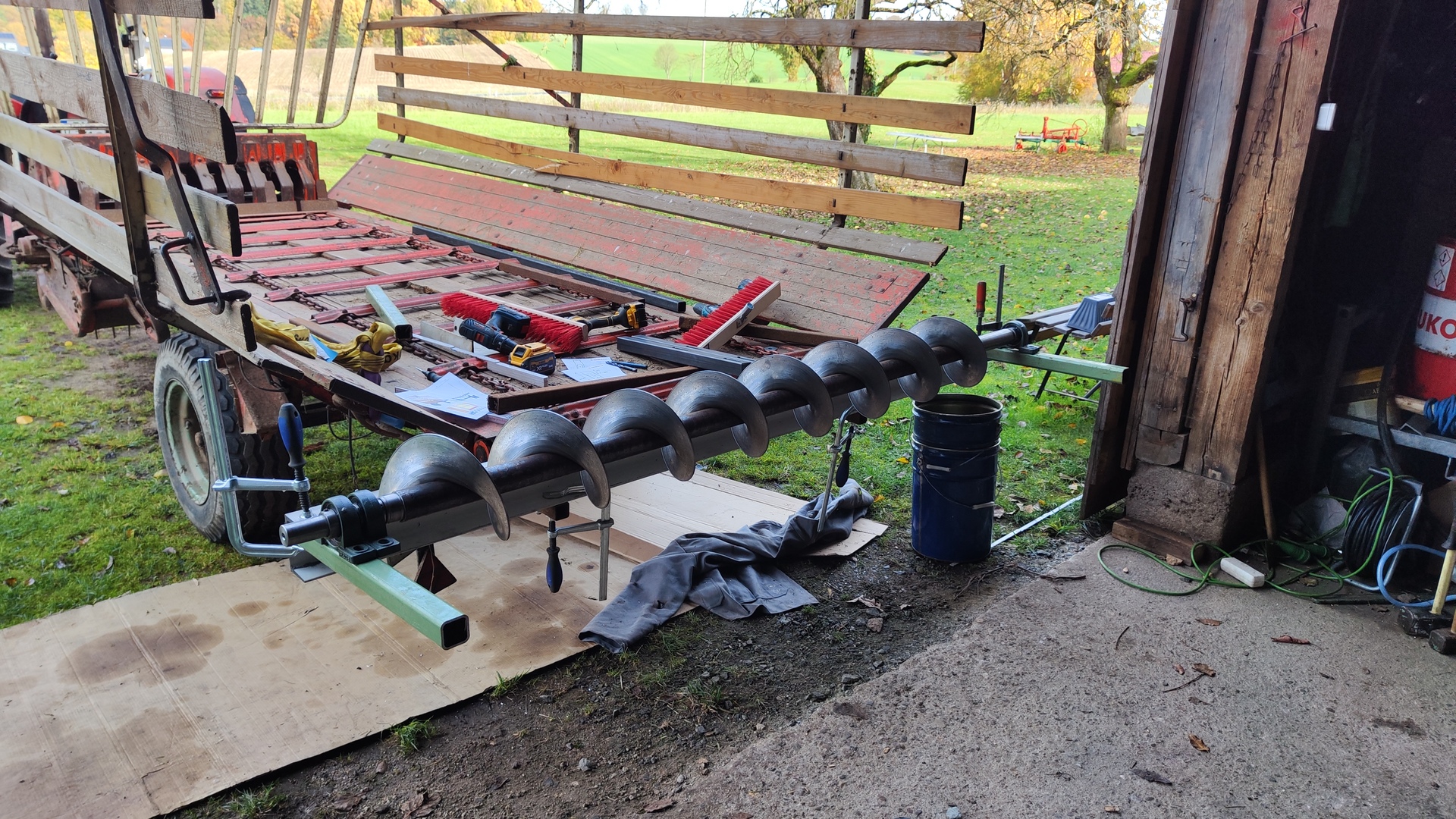
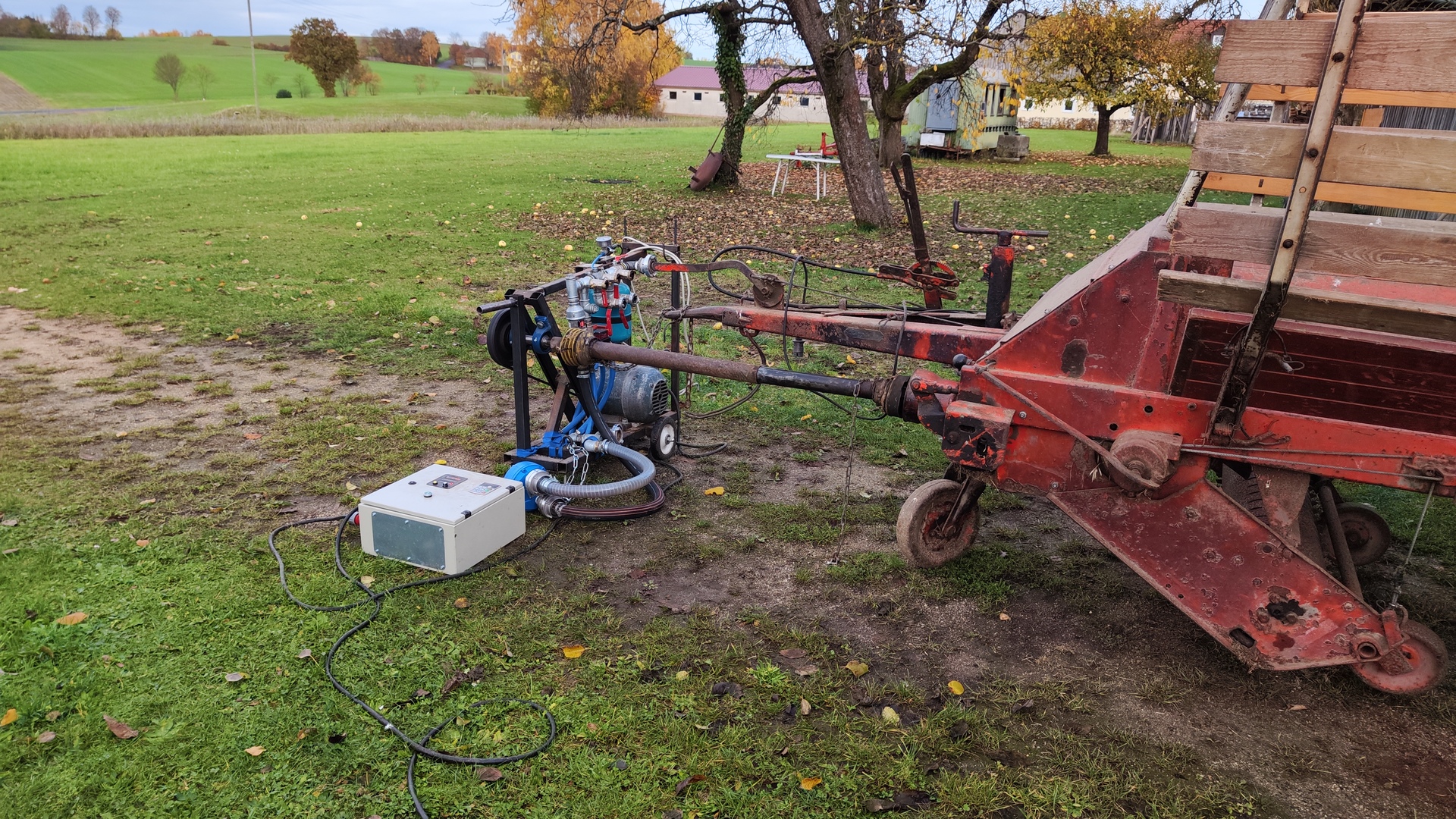
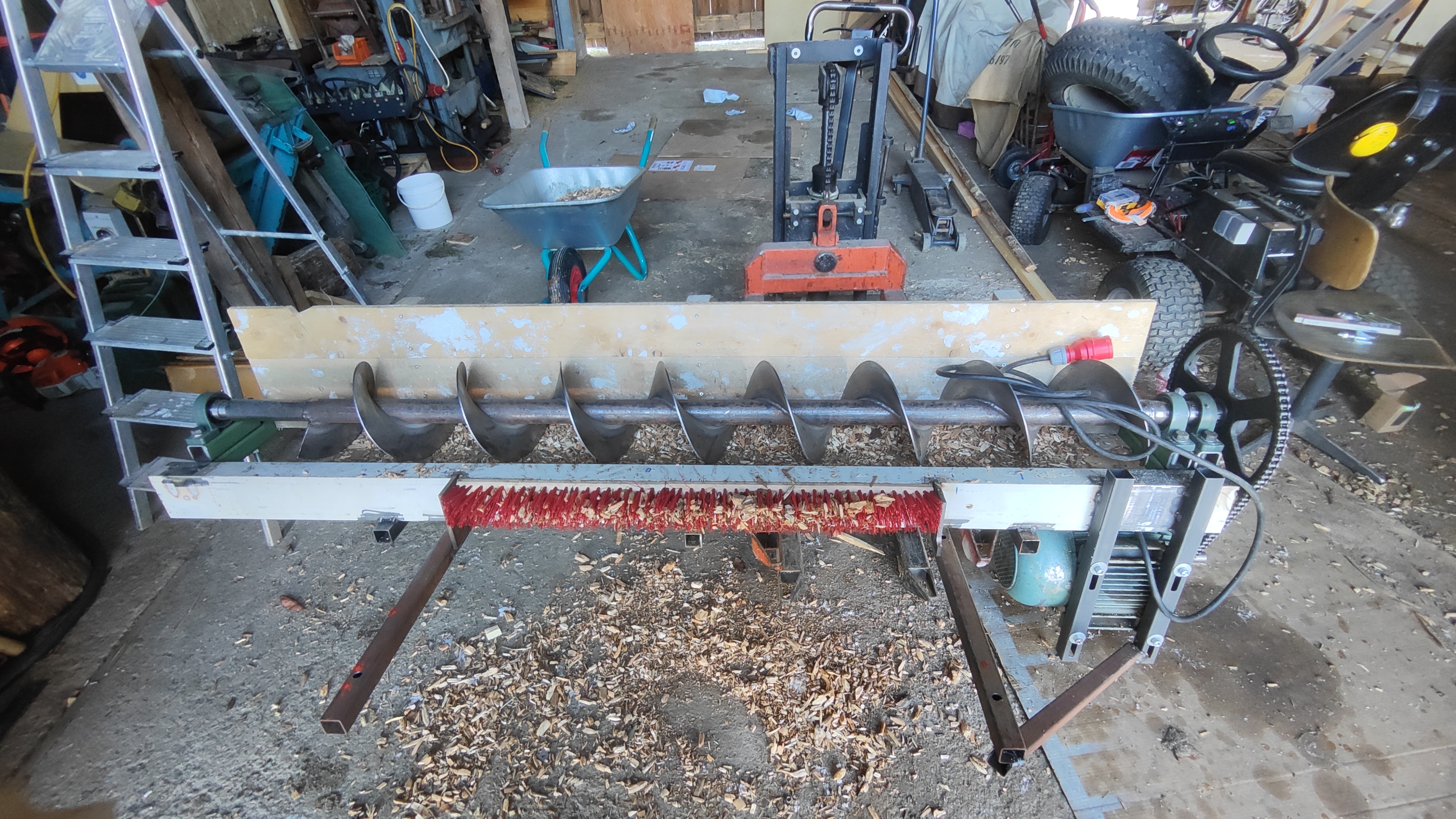 Built rear assembly attachment with auger and broom
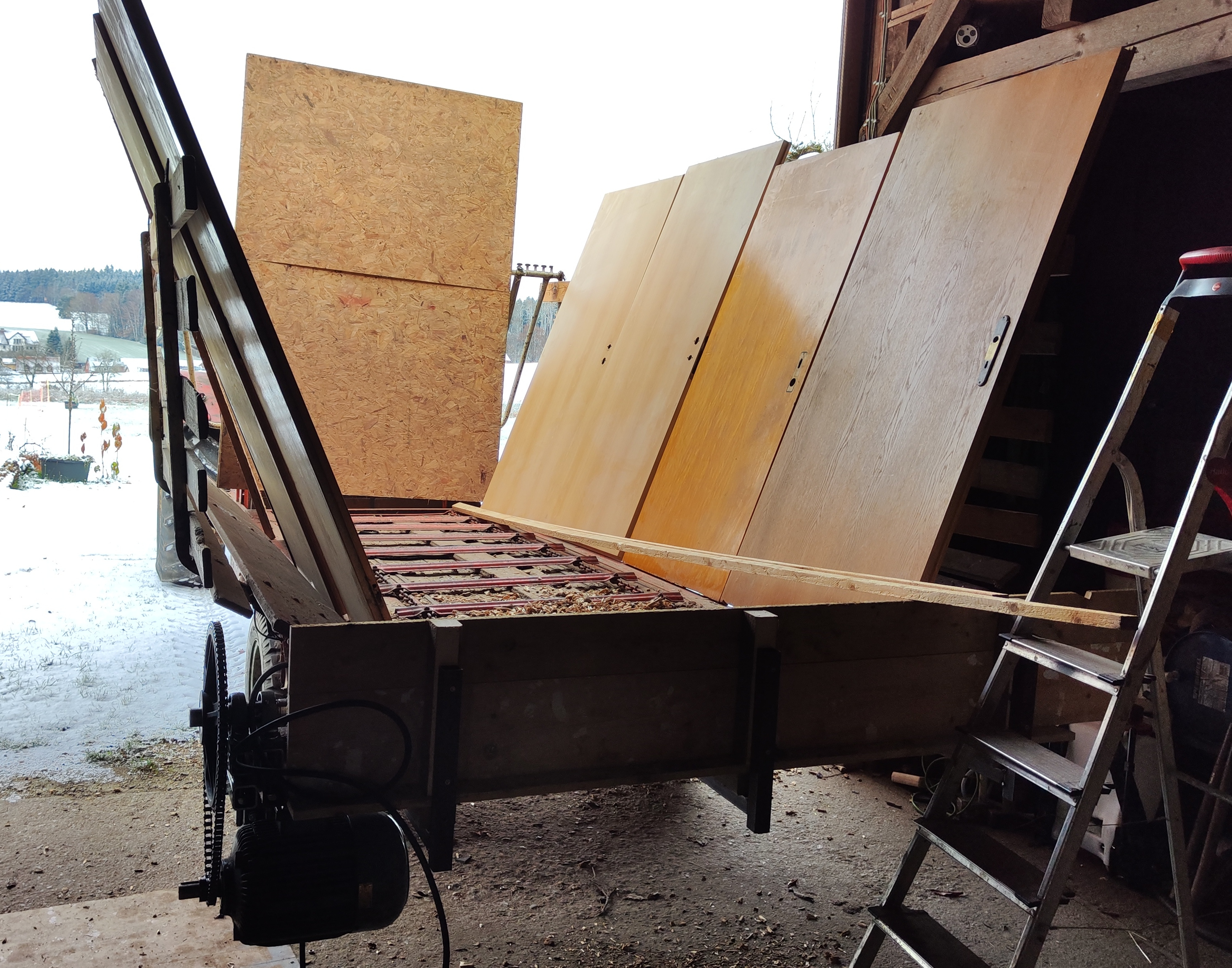 Walls lined with reclaimed wooden doors
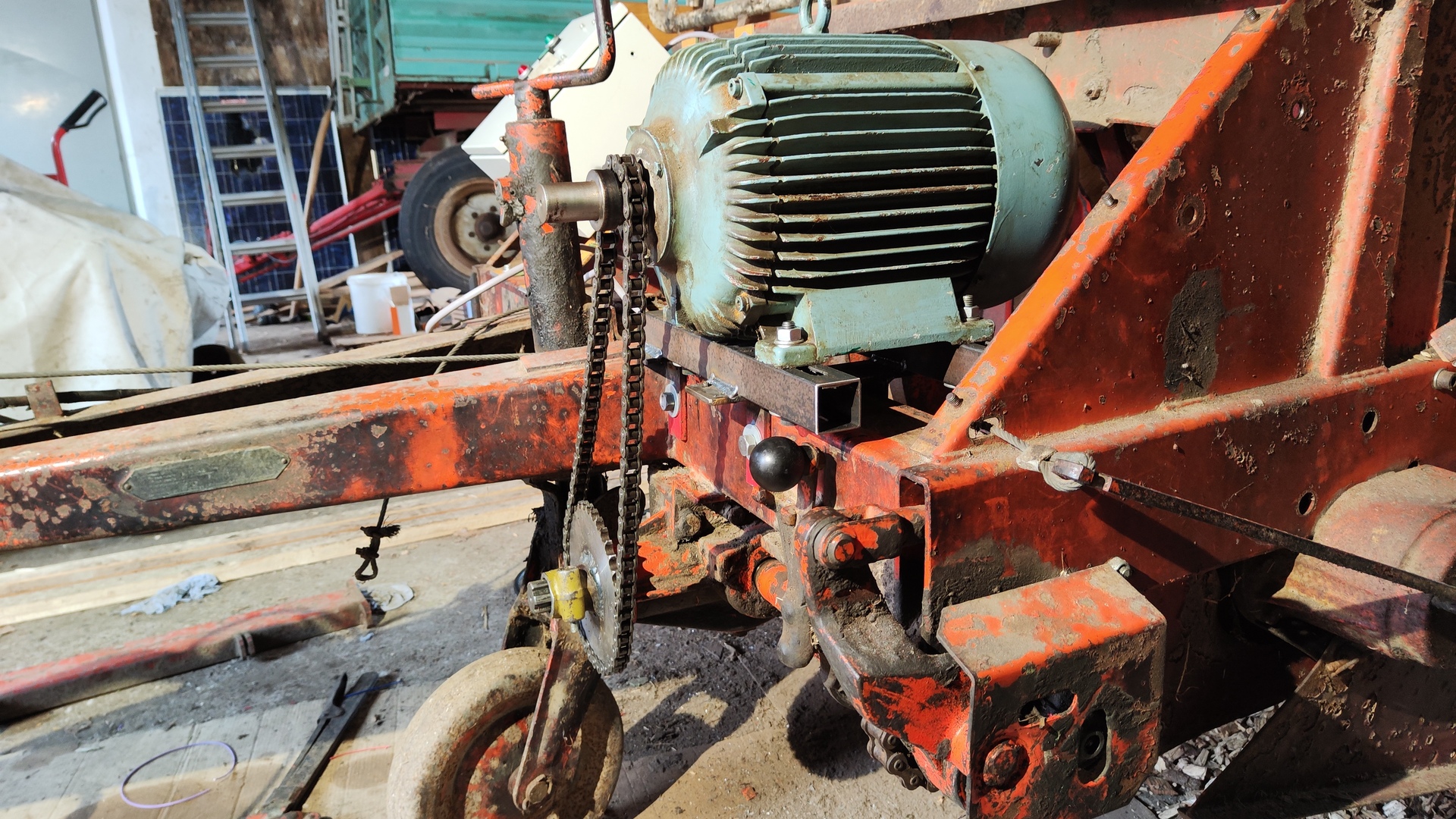
Drivetrain - Scraper-floor drive
-
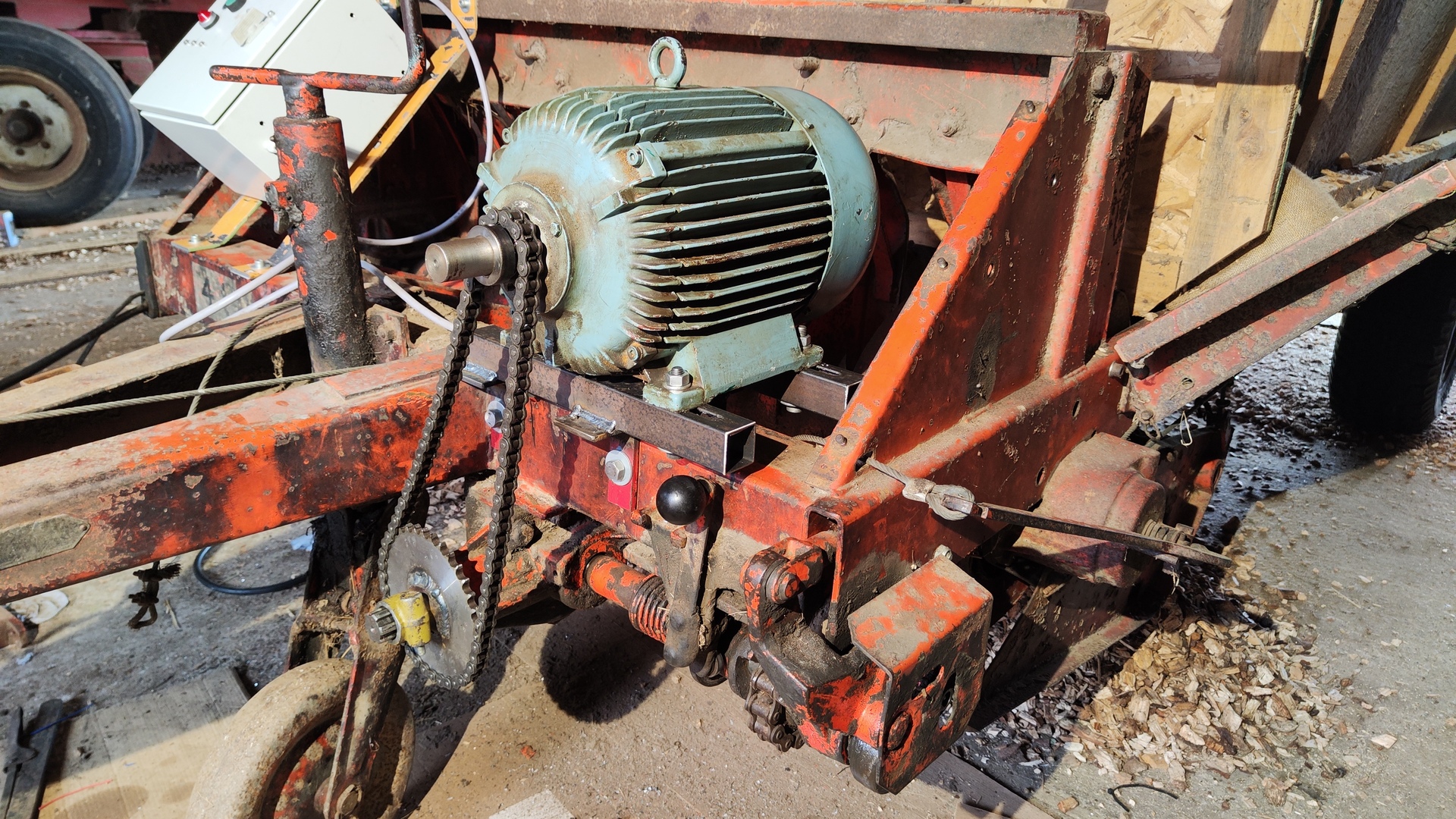
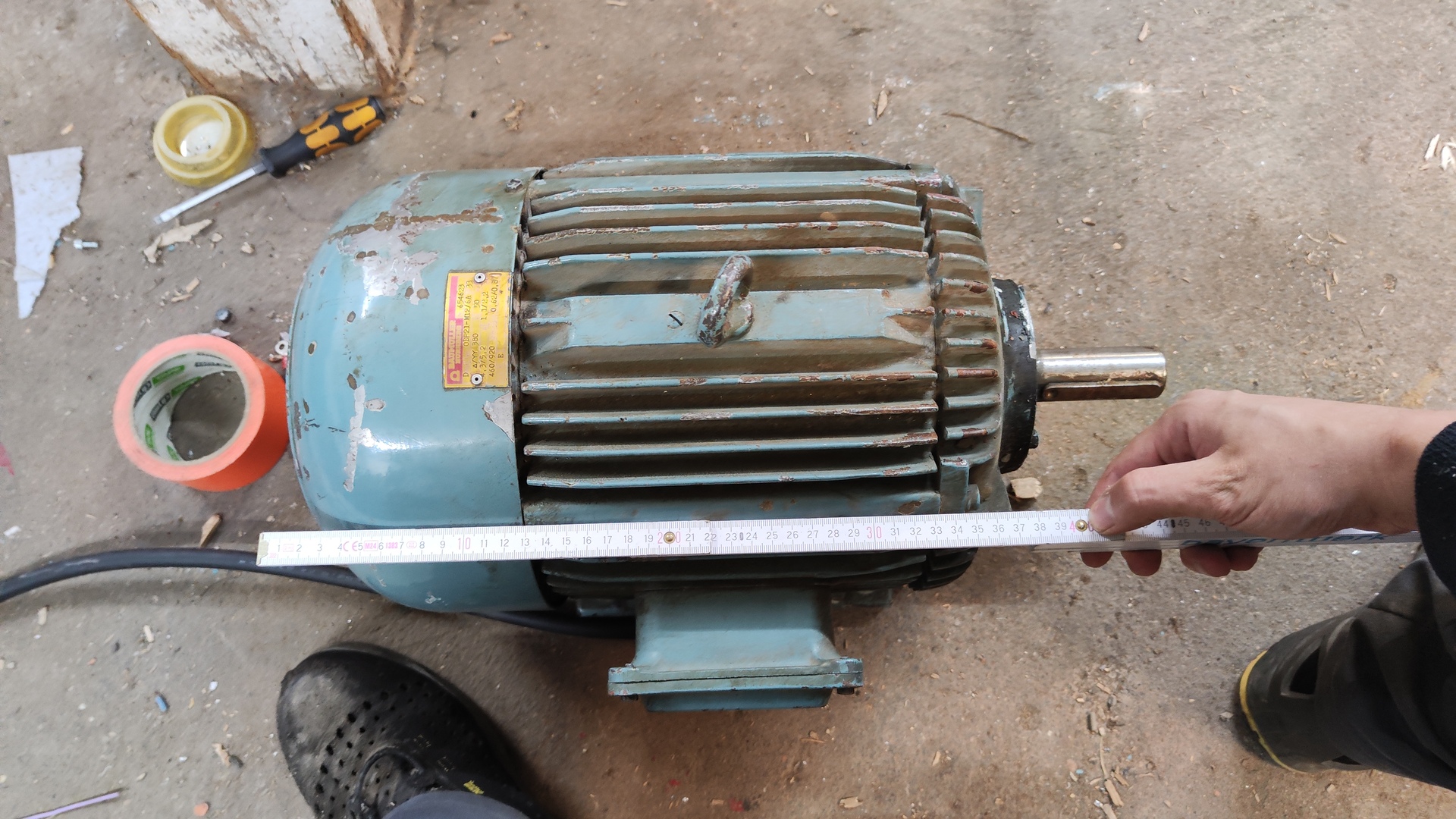
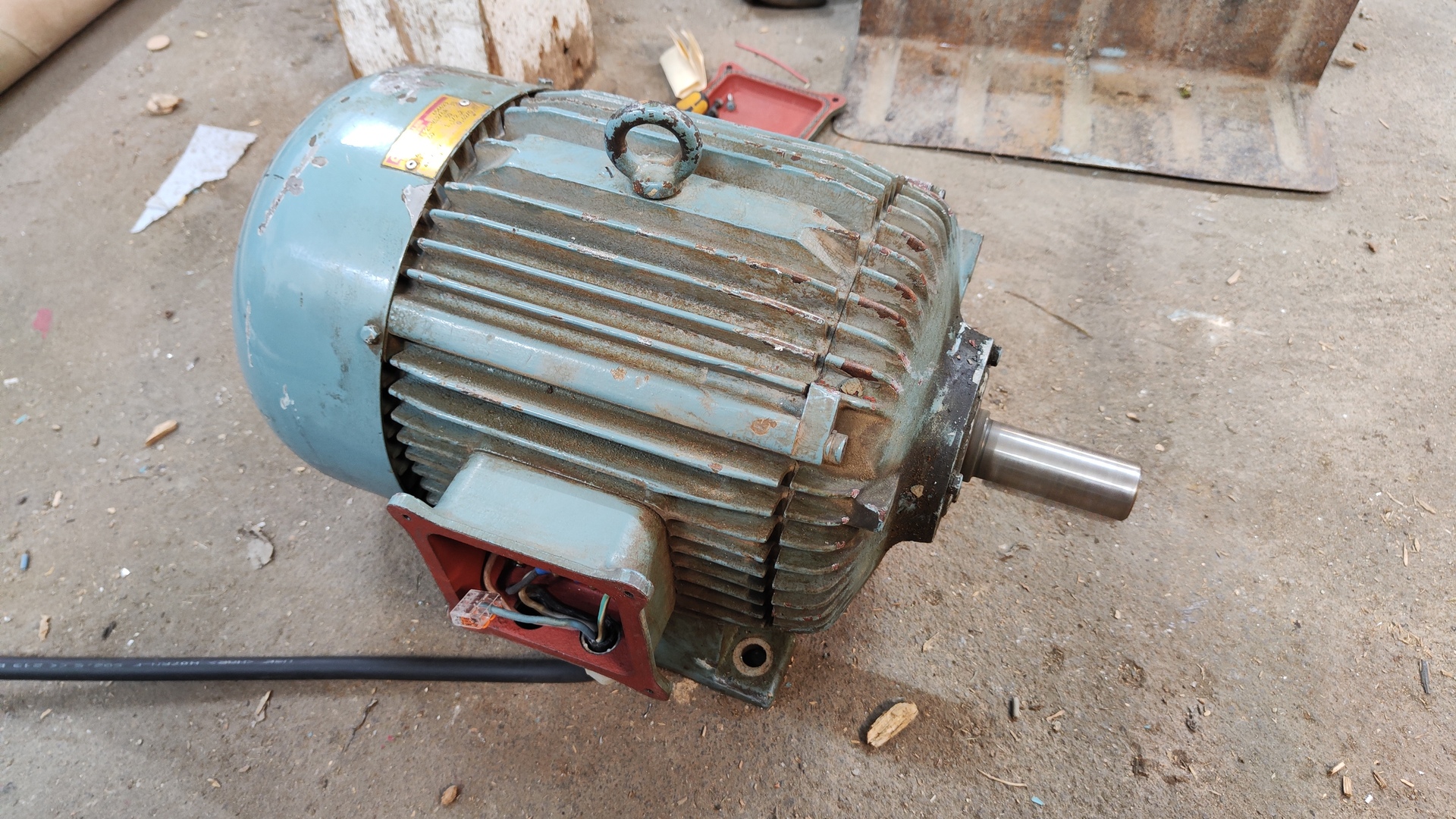
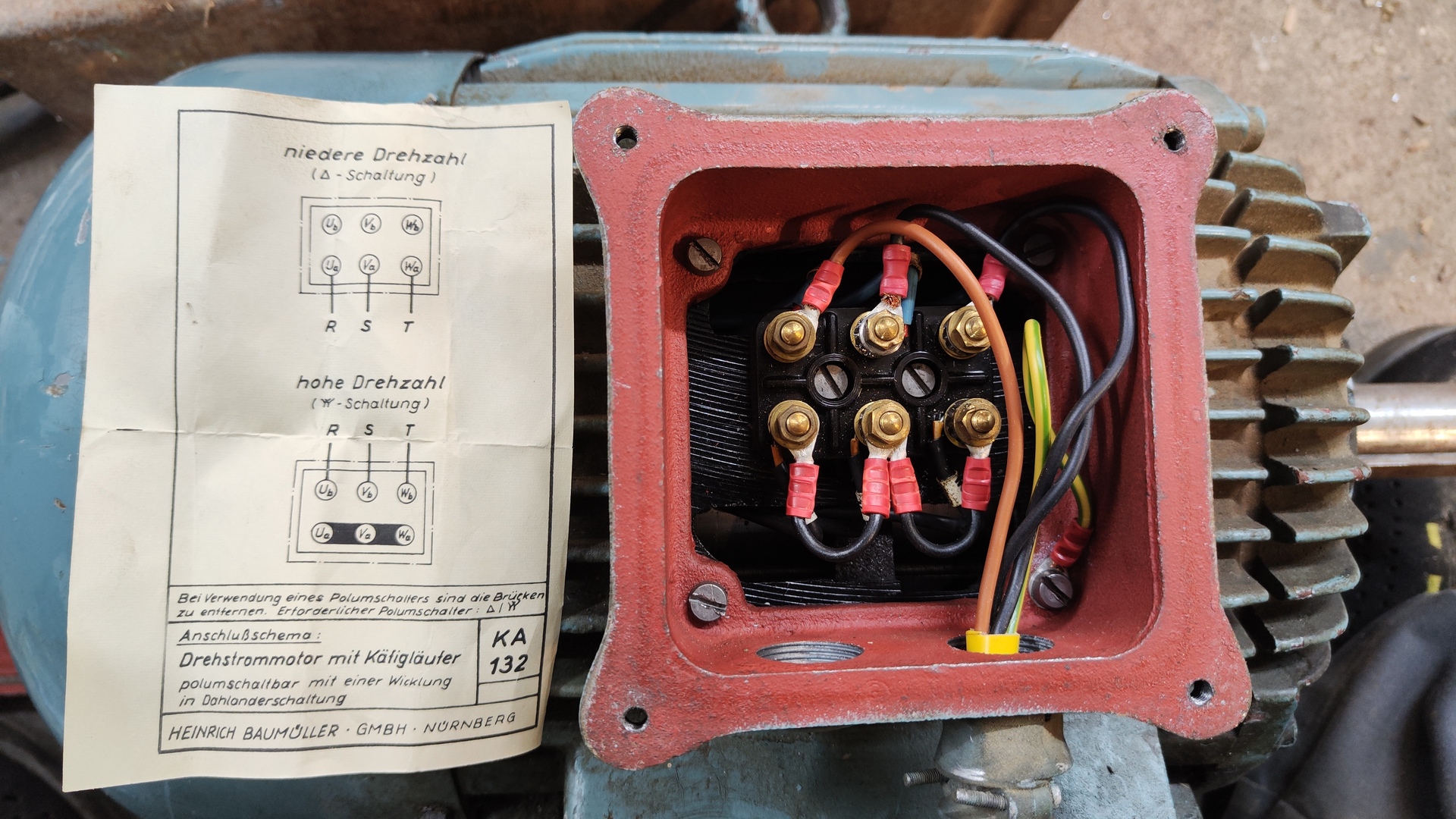
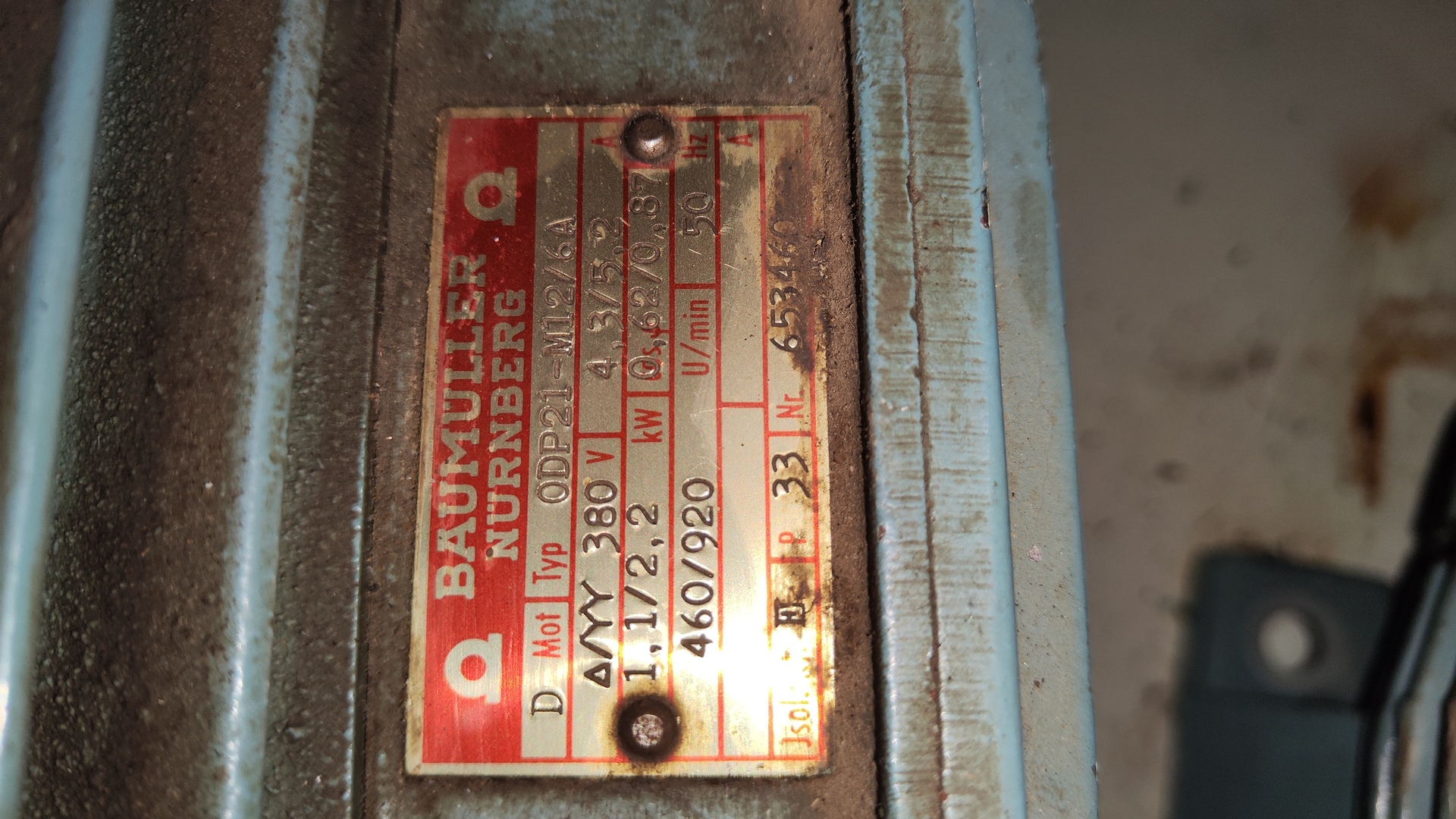
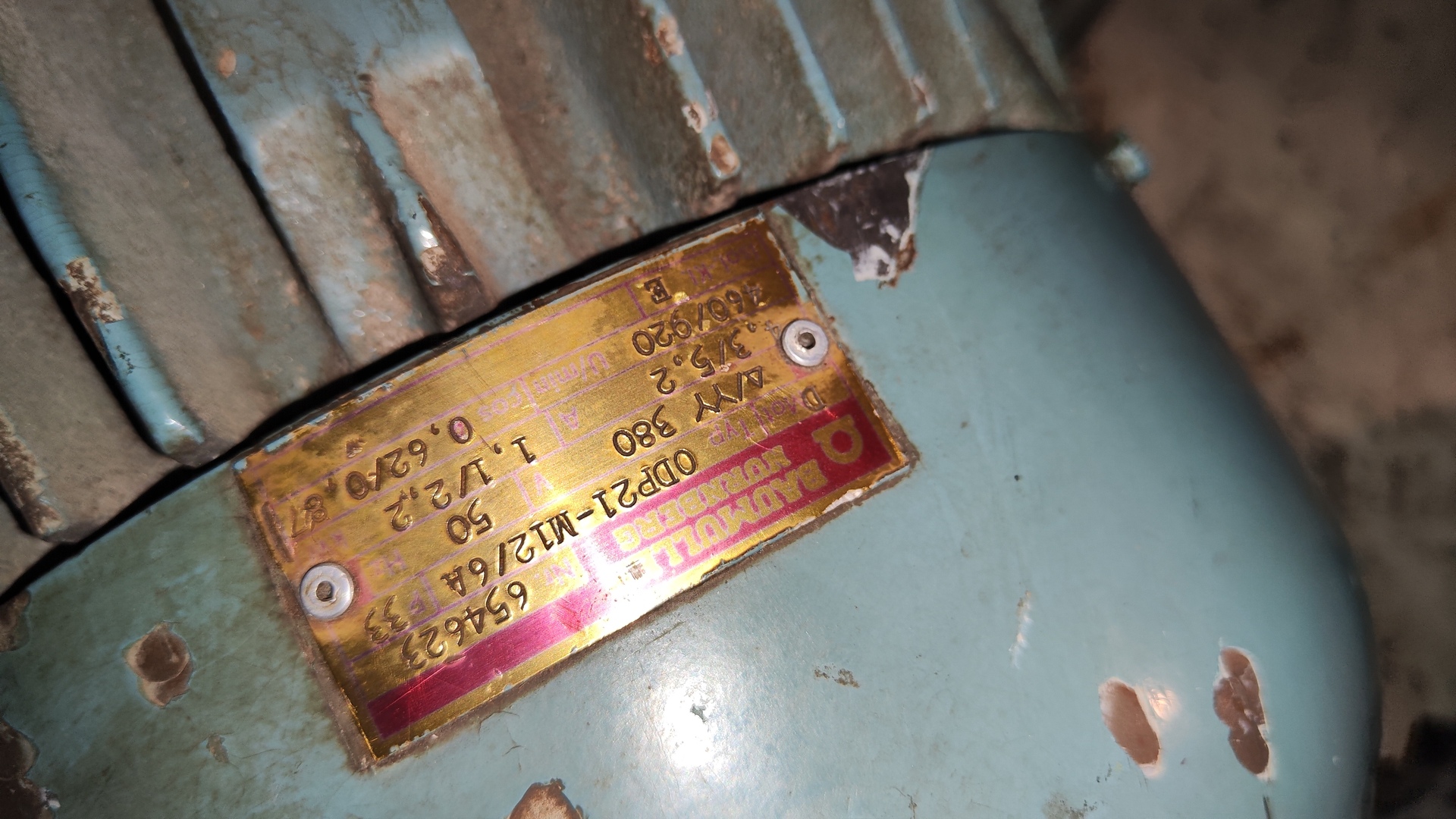
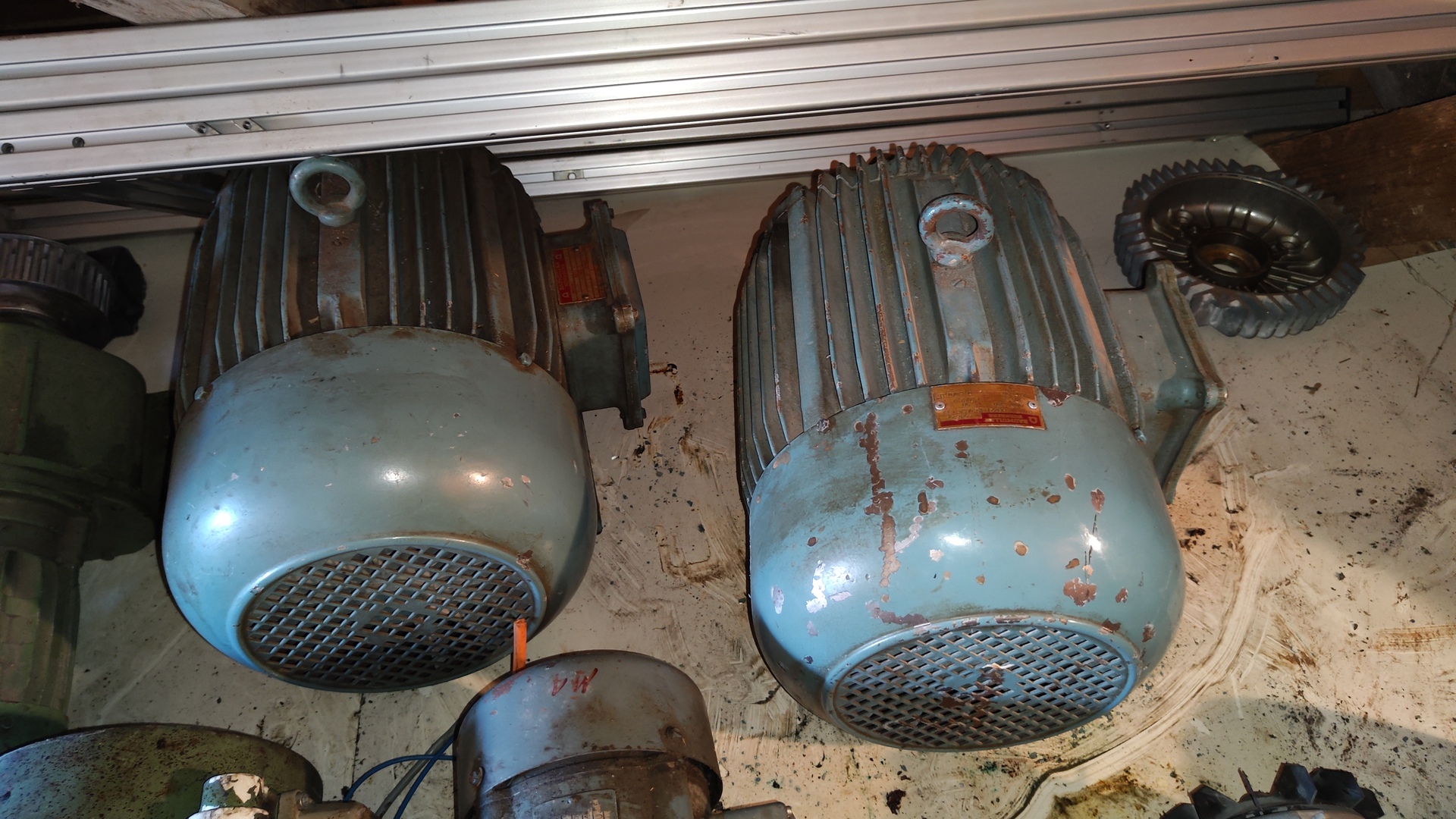
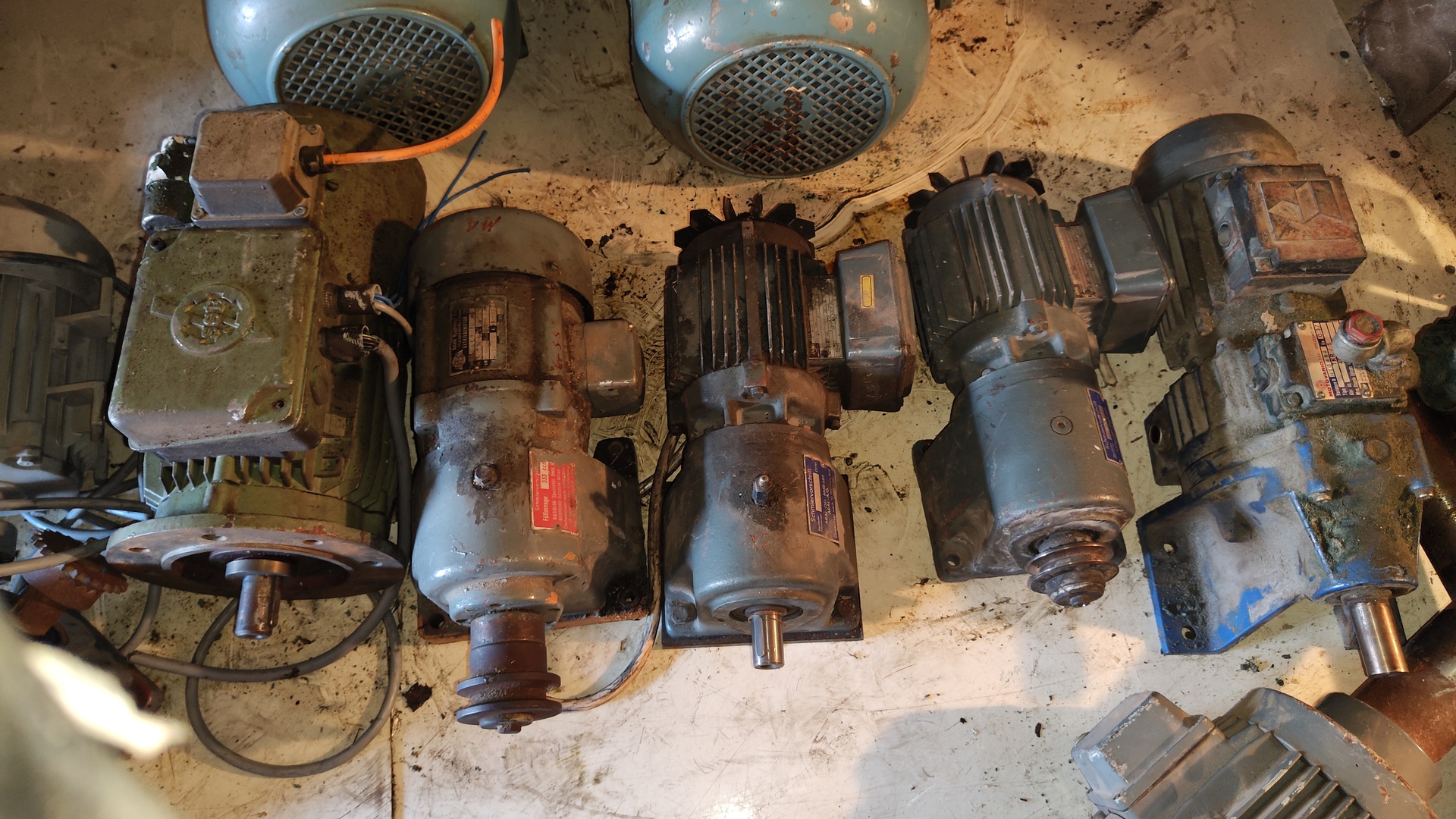
Motor: 3-phase Dahlander
- Manufacturer: Baumüller Nürnberg
- Power: 1.1 / 2.2 kW
- Speeds: 460 / 920 rpm
- Voltage: 380 V
- Frequency: 50 Hz
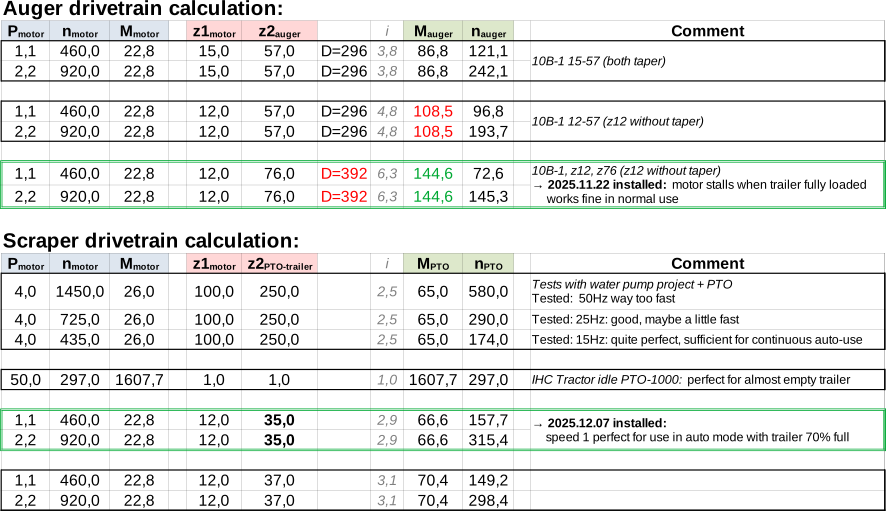
- Resulting speeds: PTO ~160 / ~320 rpm
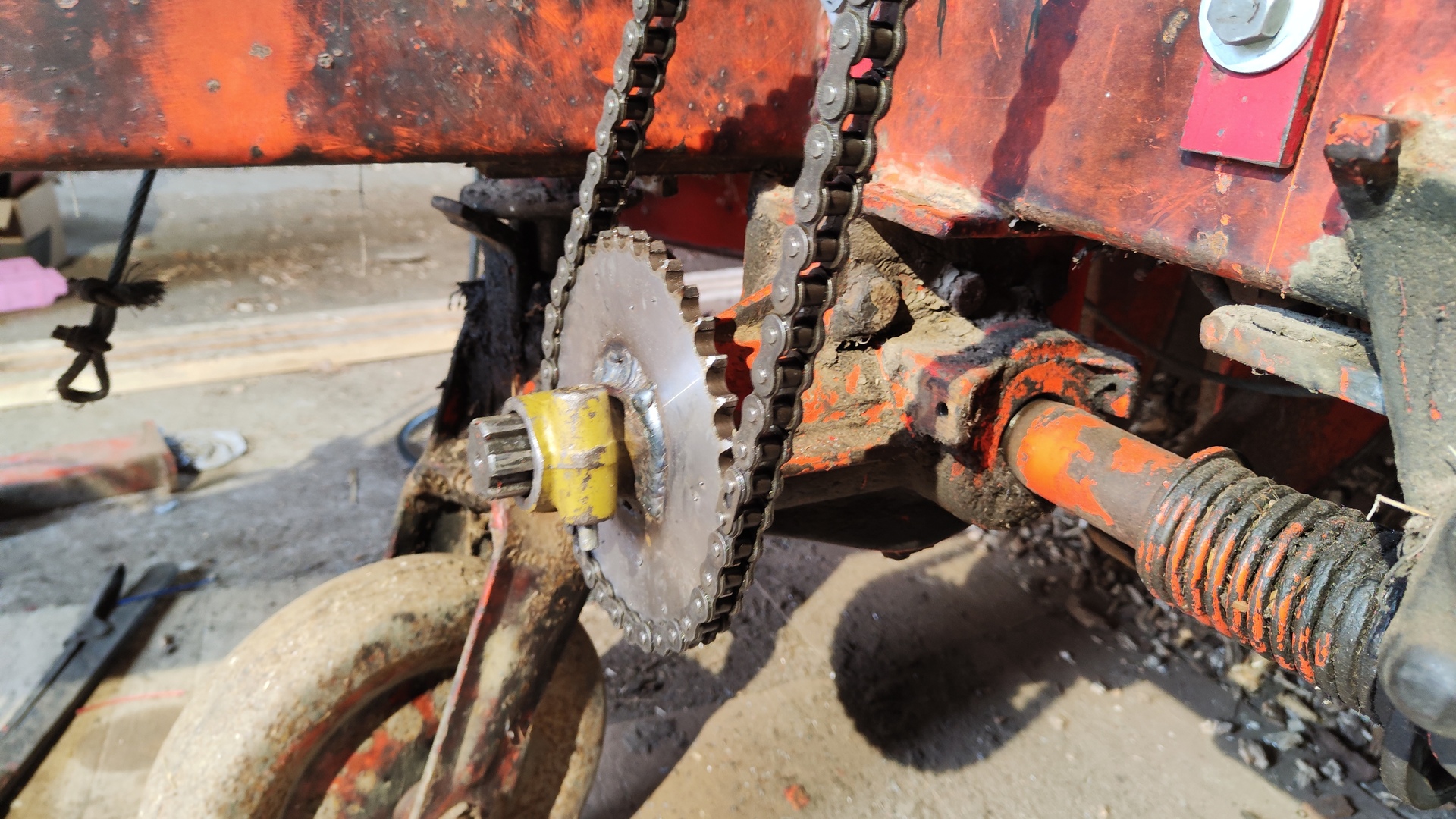
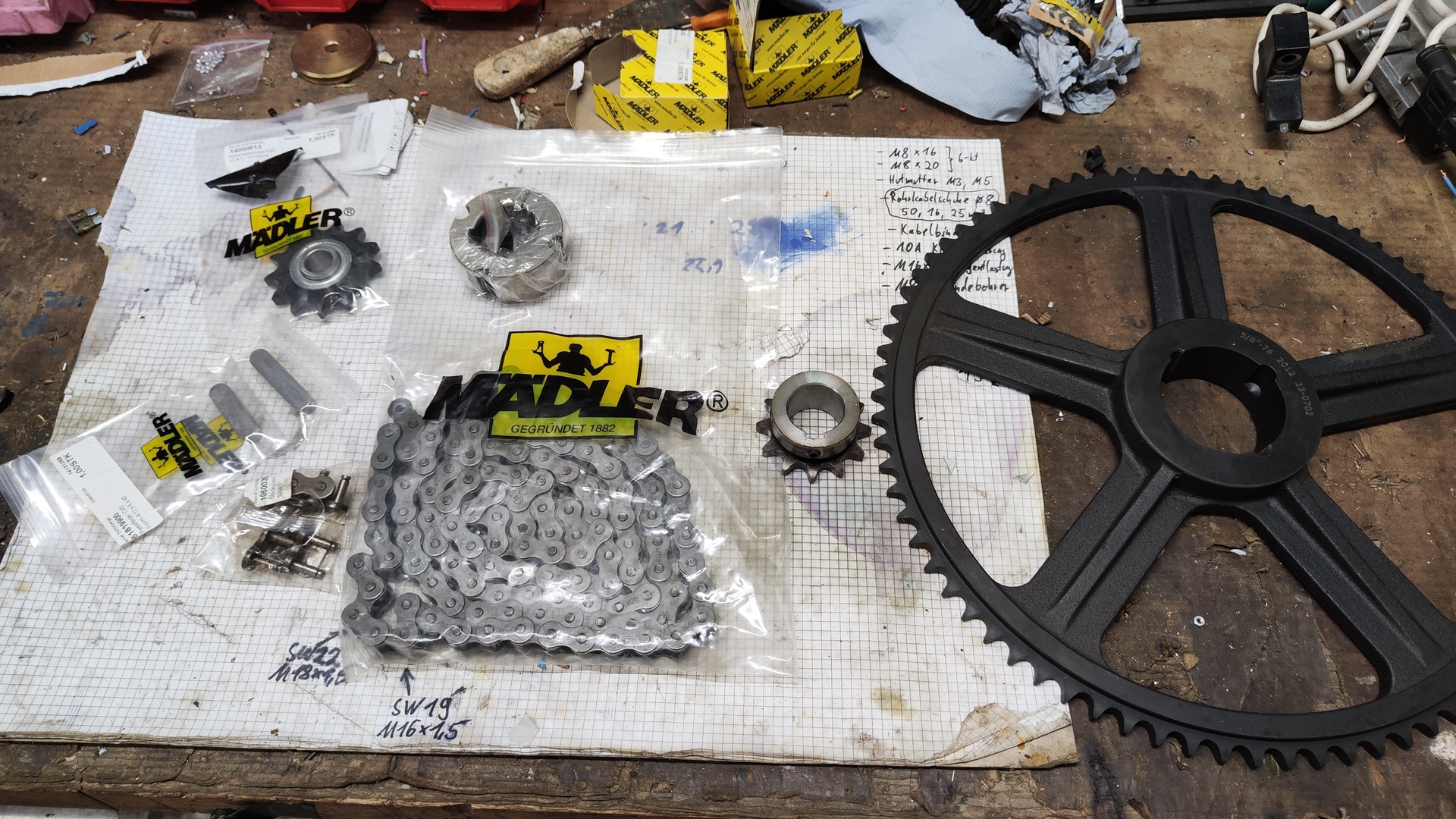
- Sprockets: z12 → z35
- Shafts: 32 mm motor, trailer PTO (custom adapter; chain blade on old PTO fork)
- Chain: 10B-1
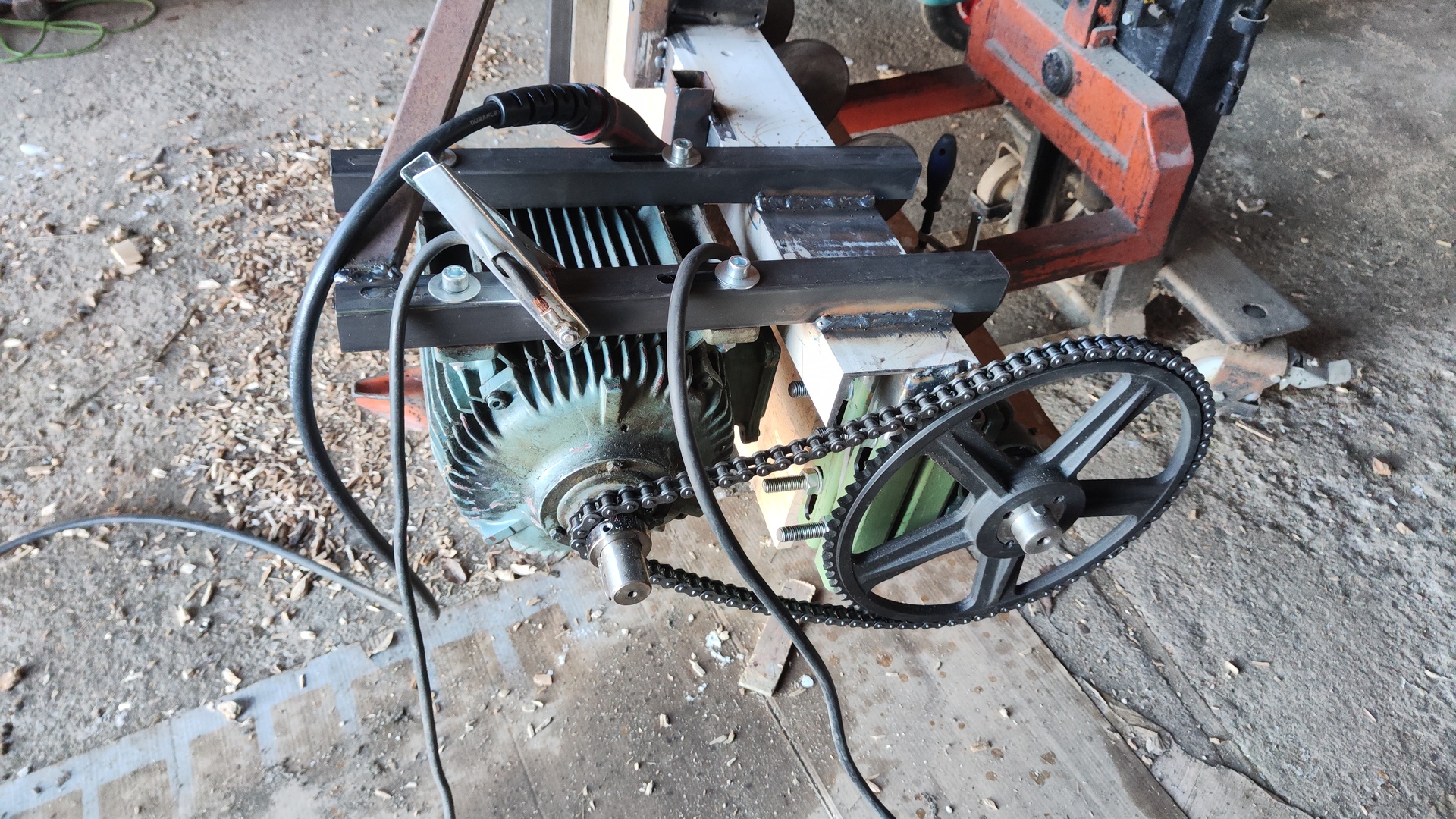
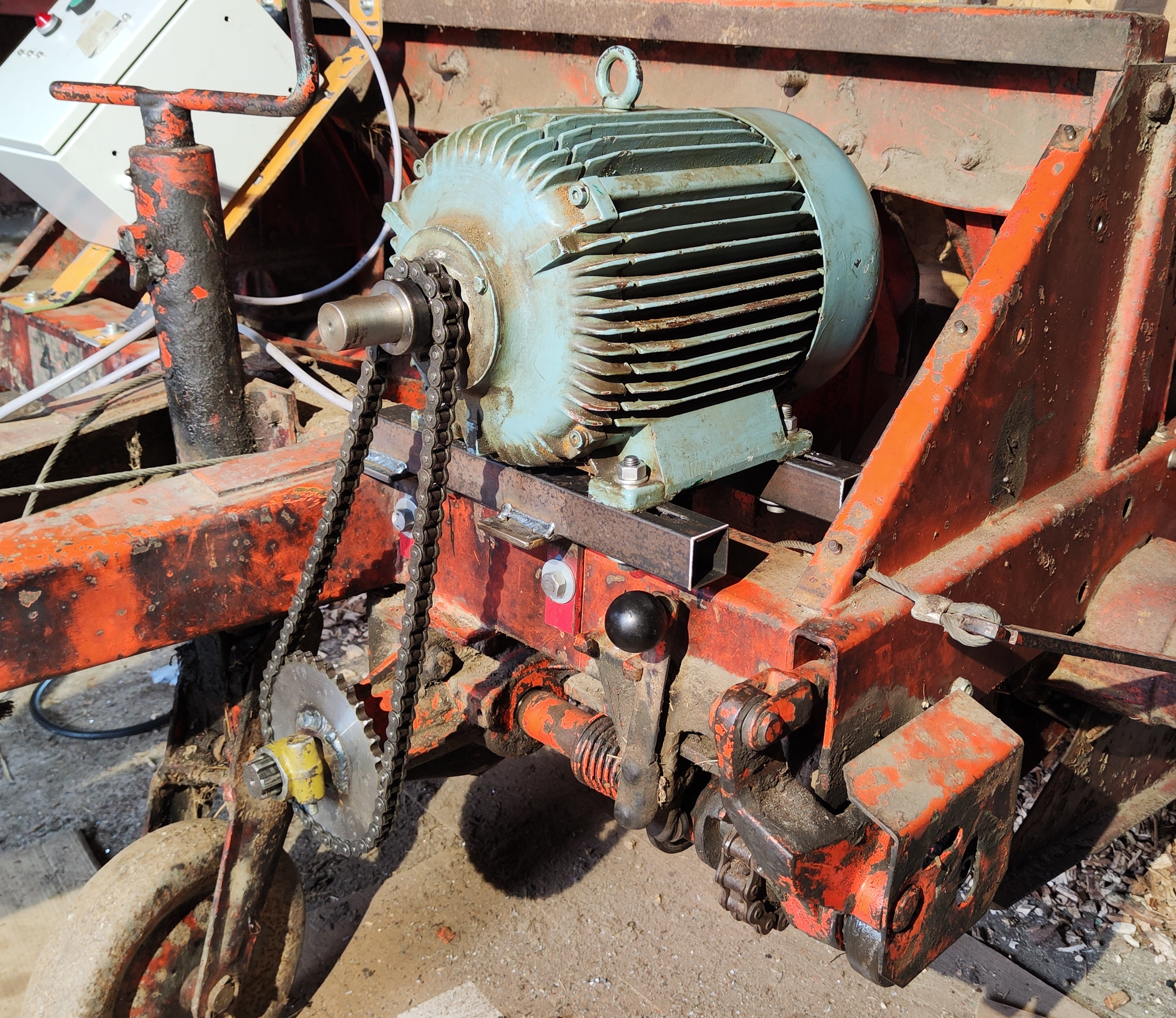 Scraper chain and sprocket layout
Drivetrain - Auger drive
-
Motor: 3-phase Dahlander
- Manufacturer: Baumüller Nürnberg
- Power: 1.1 / 2.2 kW
- Speeds: 460 / 920 rpm
- Voltage: 380 V
- Frequency: 50 Hz
- Resulting speeds: auger ~73 rpm
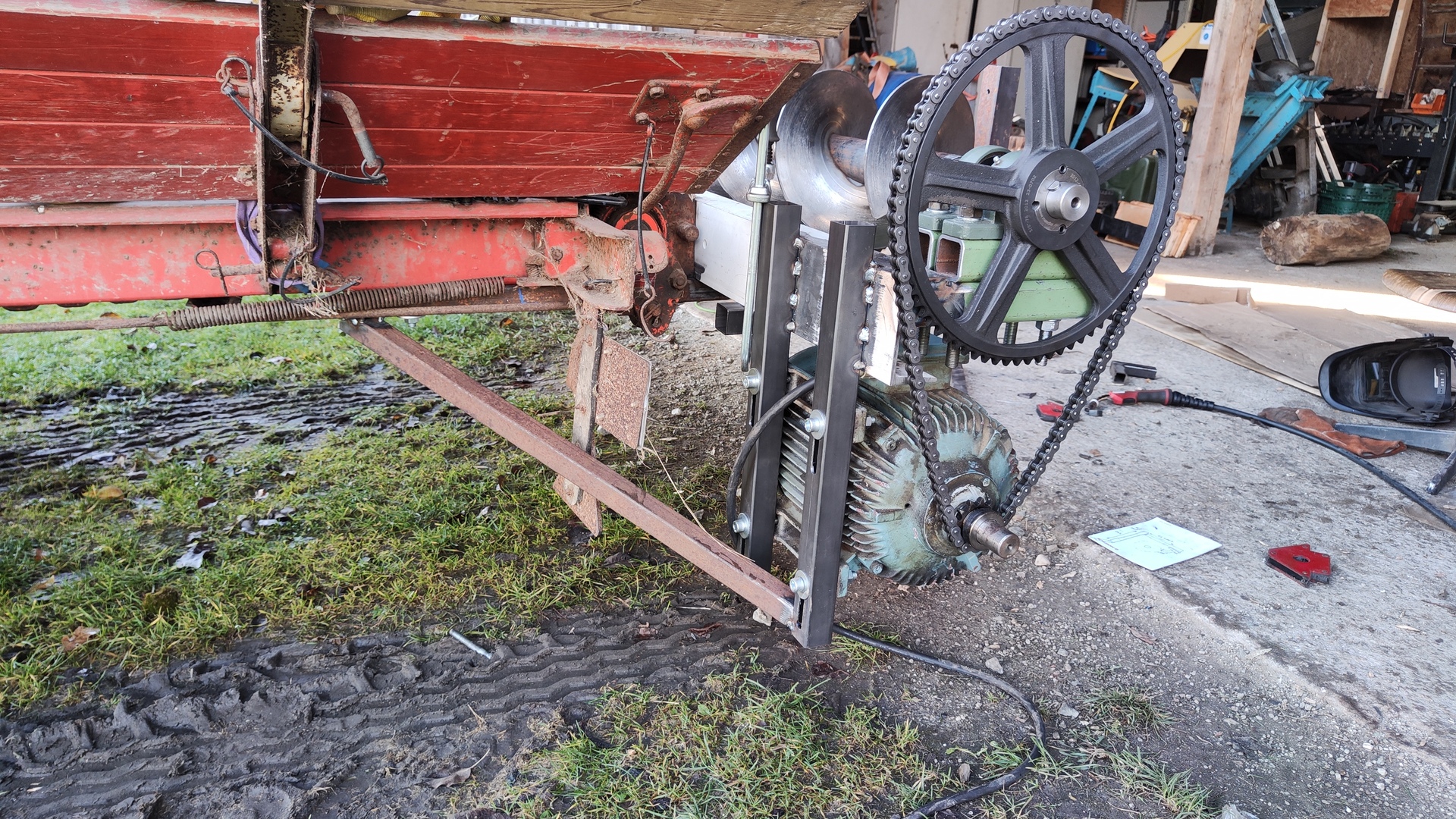
- Sprockets: z12 → z76
- Shafts: 32 mm motor, 40 mm auger
- Chain: 10B-1
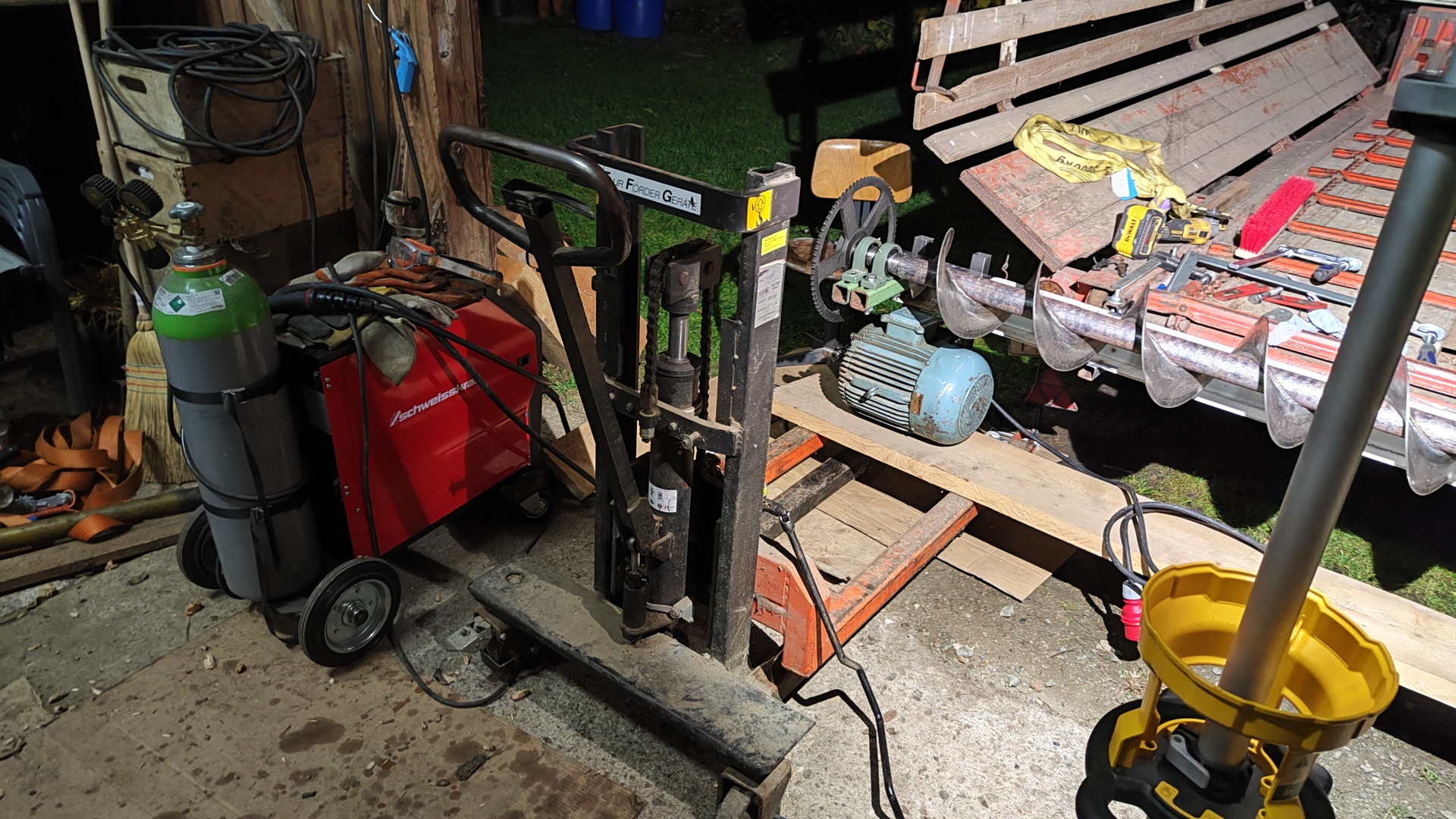
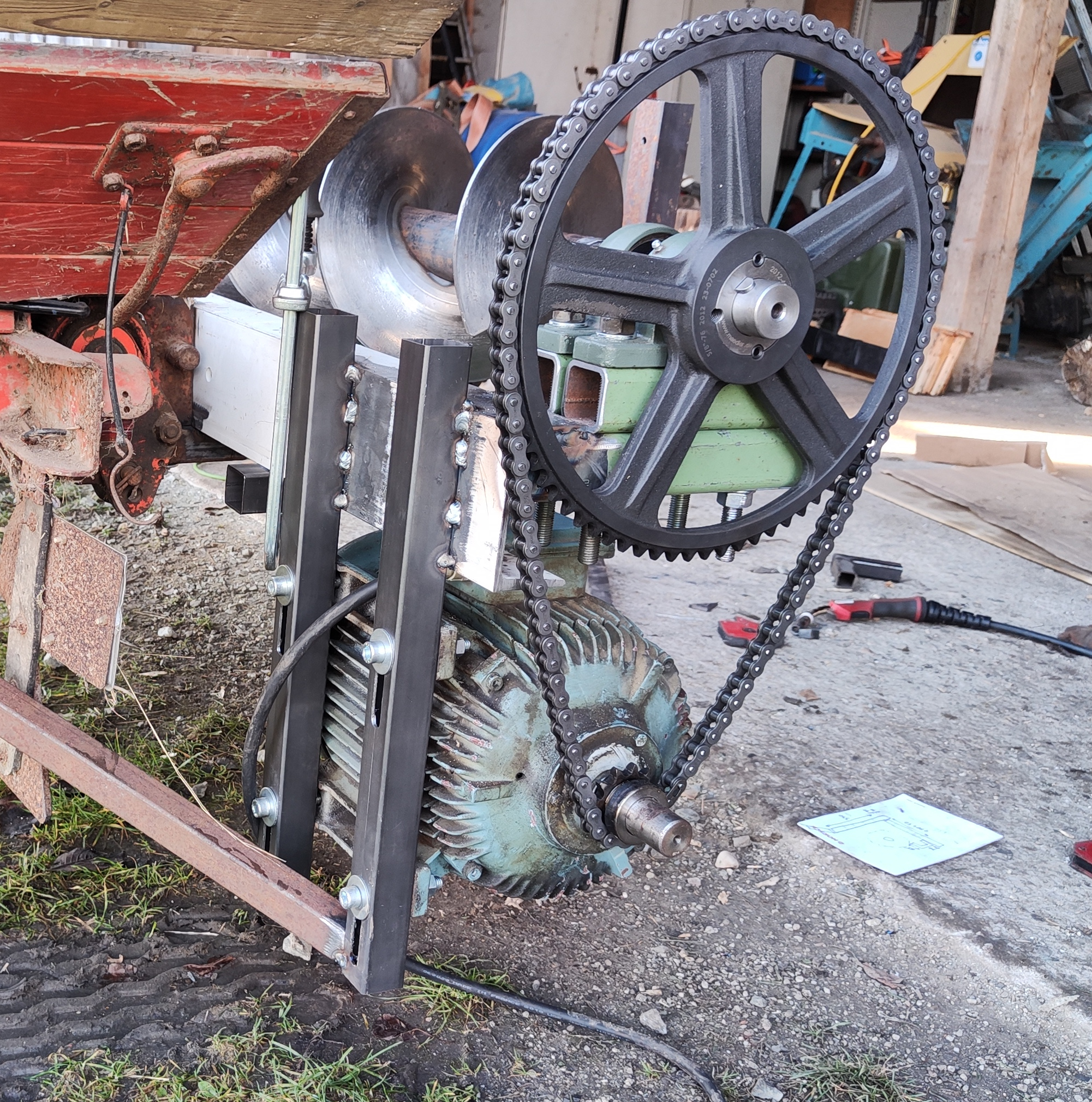 Motor and auger drive
Controls & Wiring
-
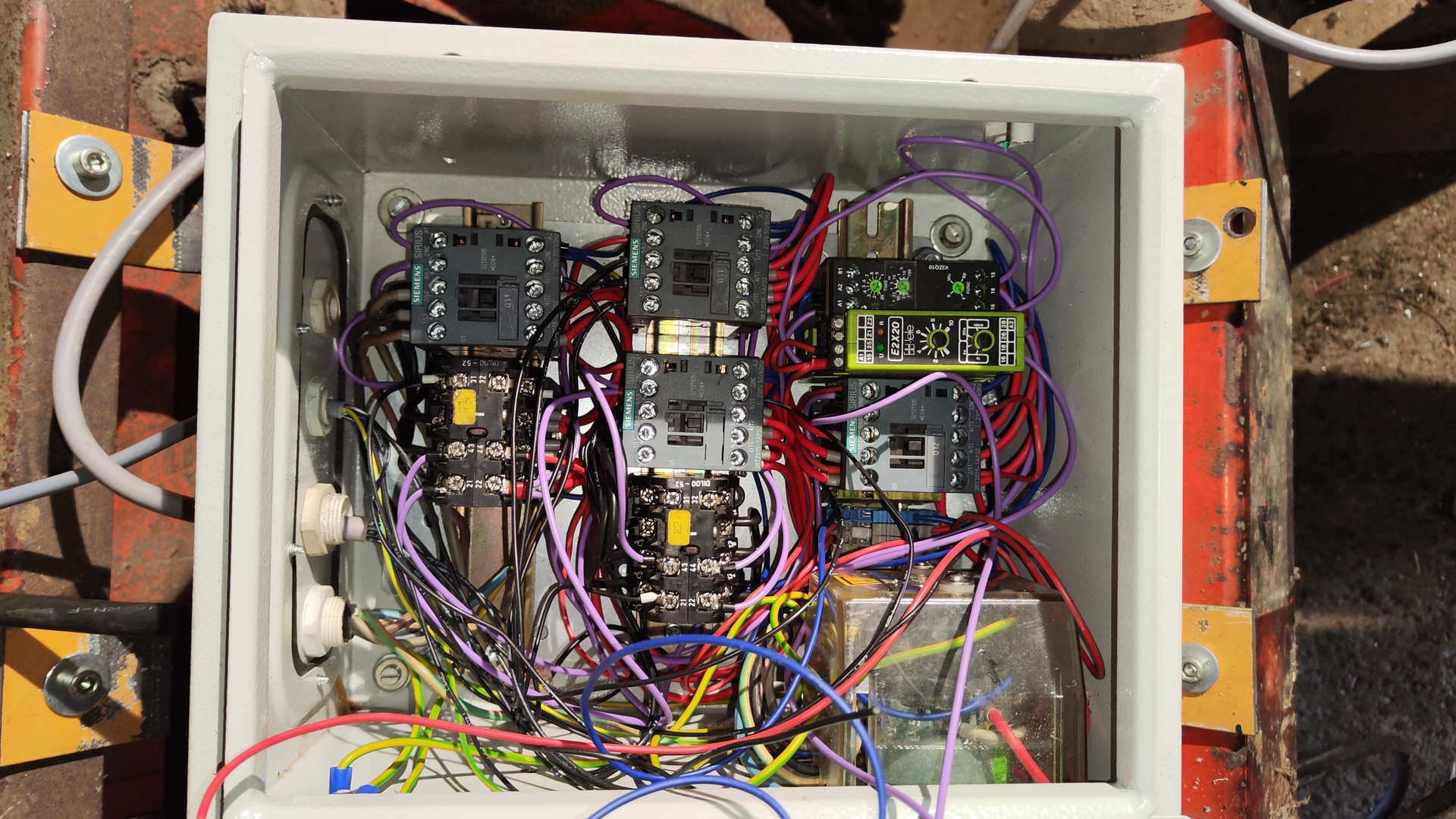
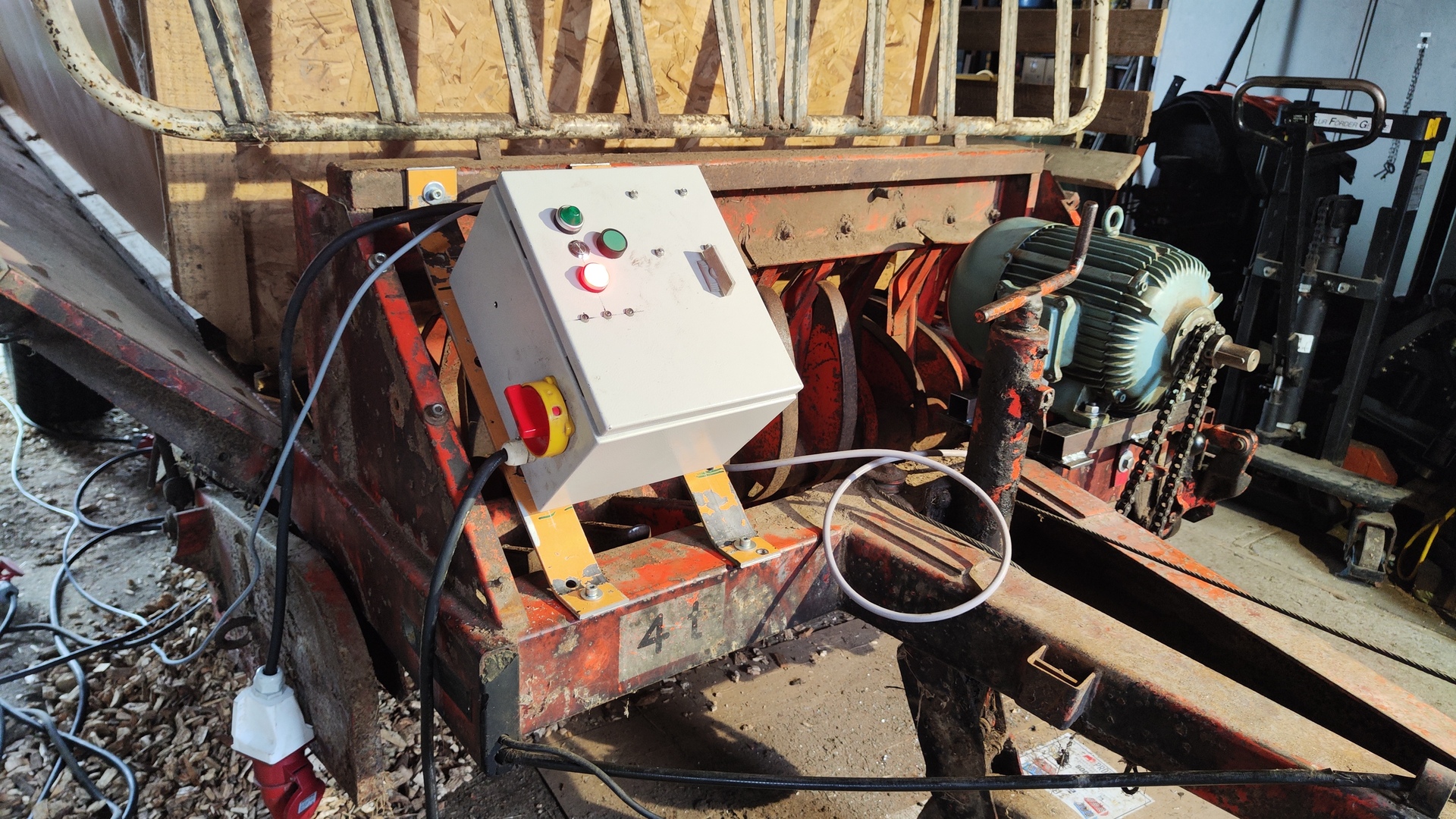
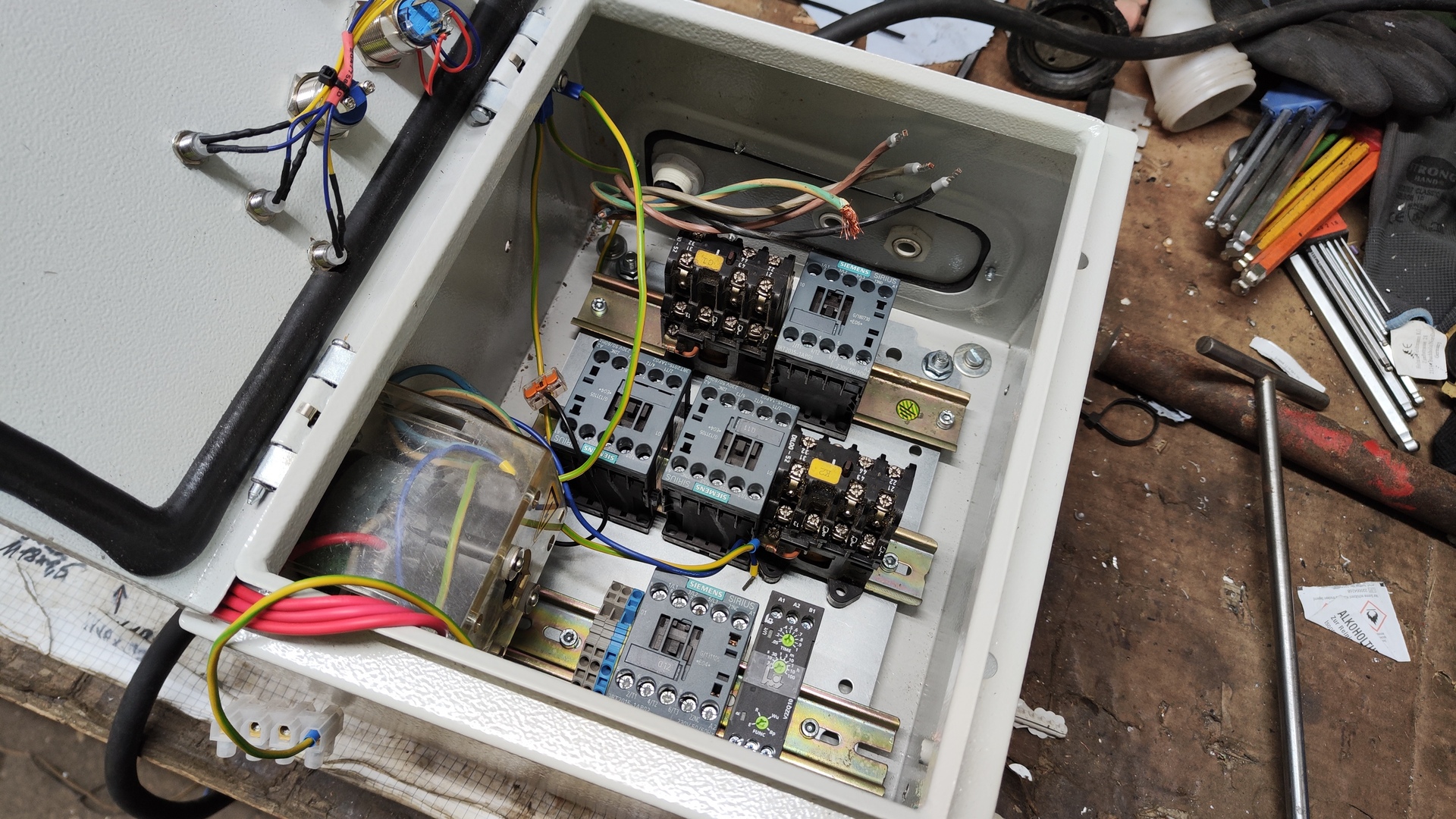
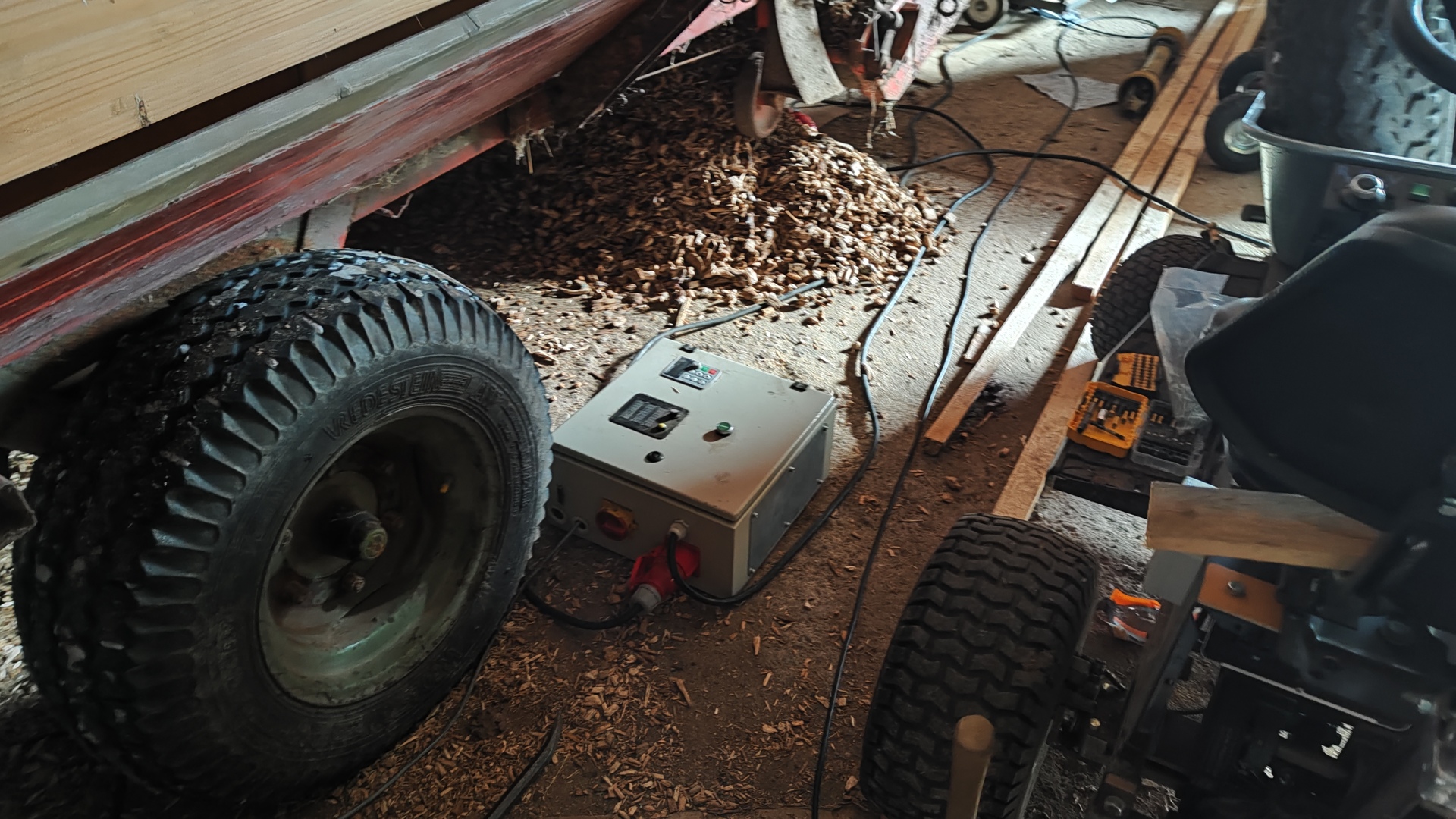
Contactor cabinet
- Devices: 6 contactors, 2 time-delay relays
- Functions: Dahlander 2-speed (scraper), auto-reverse auger (0–1 s adjustable), interlocks & timeouts
- UI: Main power switch, latching power toggle, 2 indicator lights
-
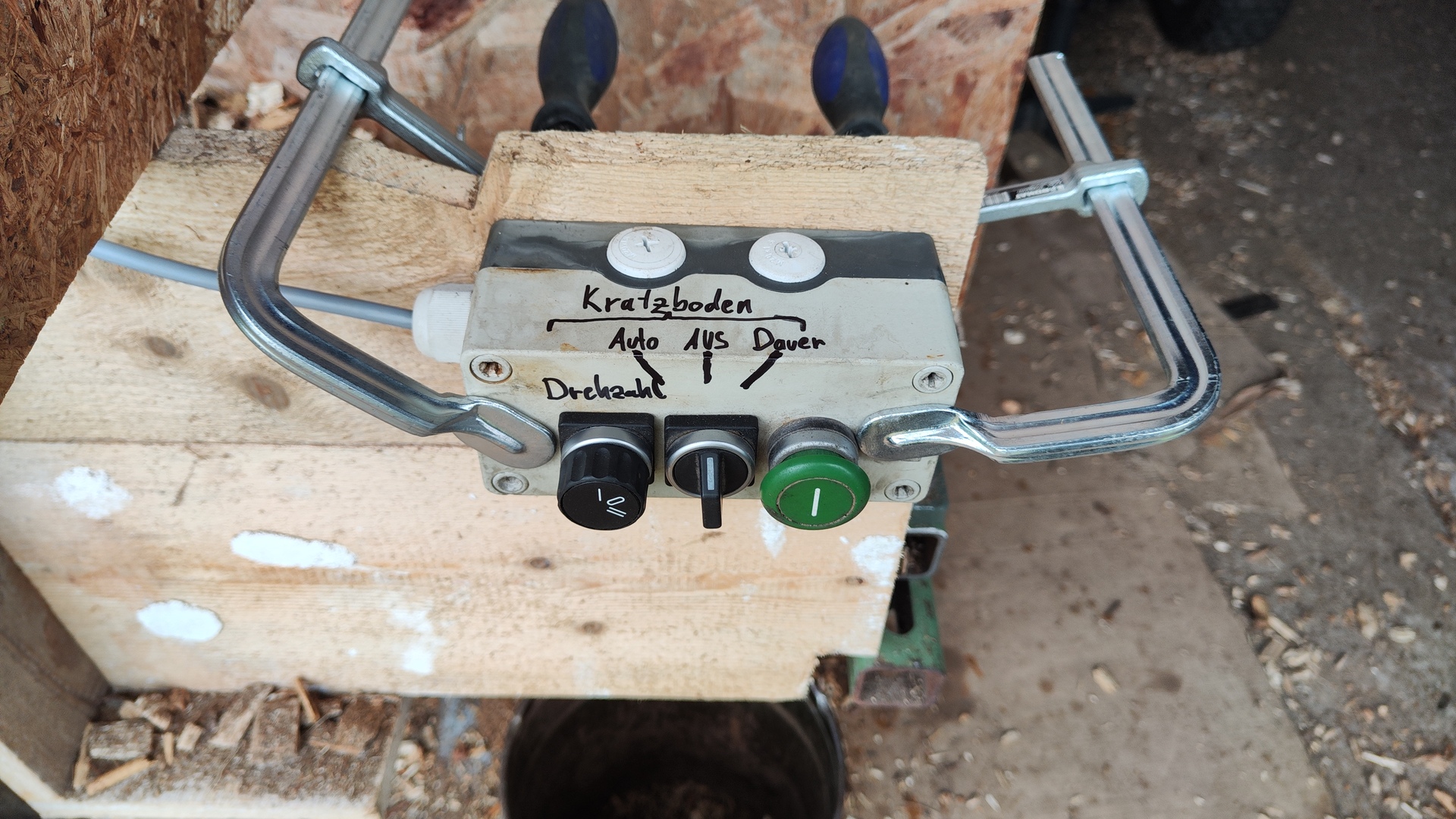
UI box
- Controls: Run (auger), AUTO/MAN (scraper), scraper speed
-
Wiring
- Motors:
- 7G0.75 mm² for scraper (Dahlander)
- CEE 16 A outlet for auger motor
- Supply: CEE 16 A, 5×2.5 mm²
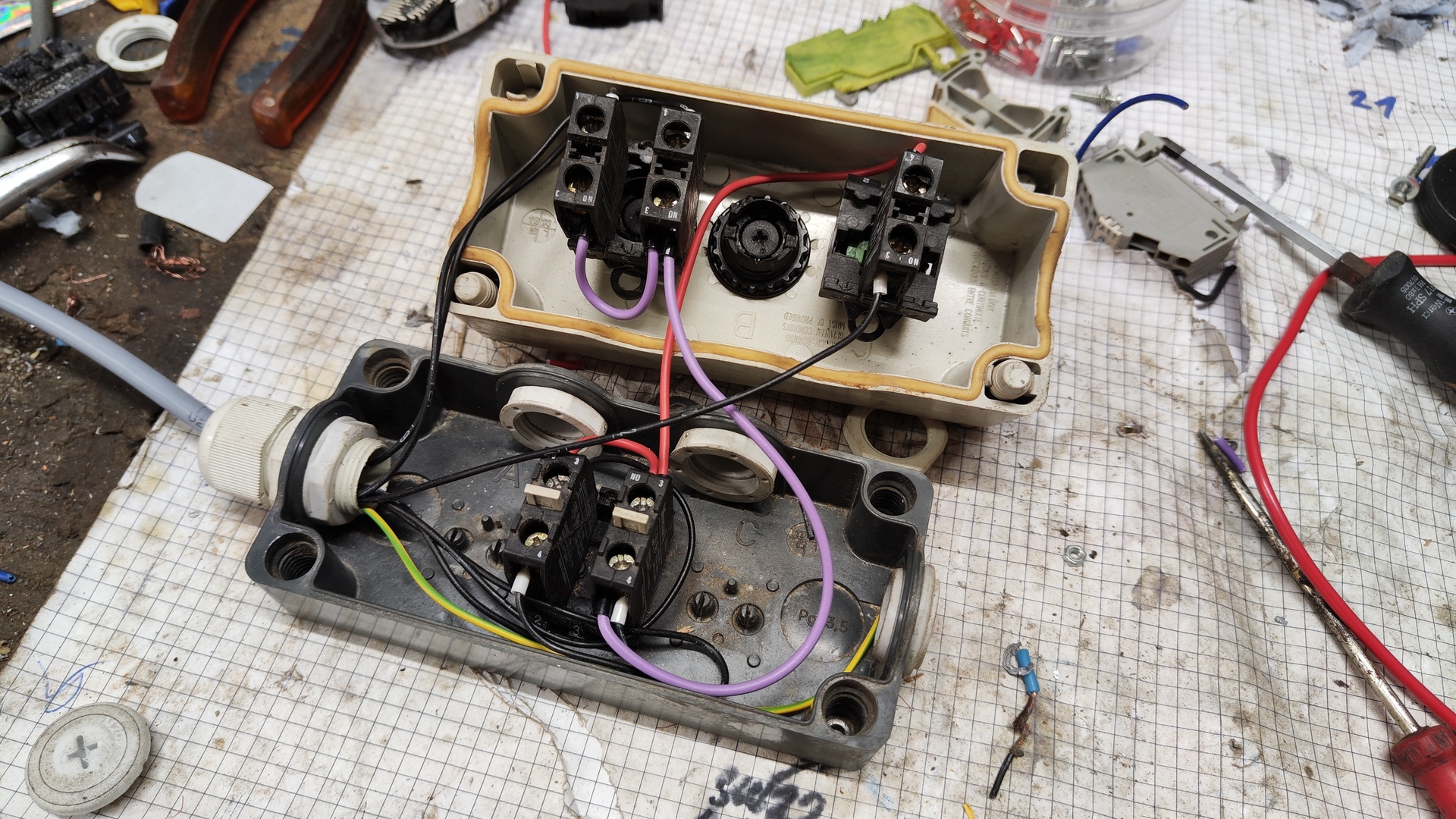
- UI harness: 9×0.5 mm² to rear UI box
- Motors:
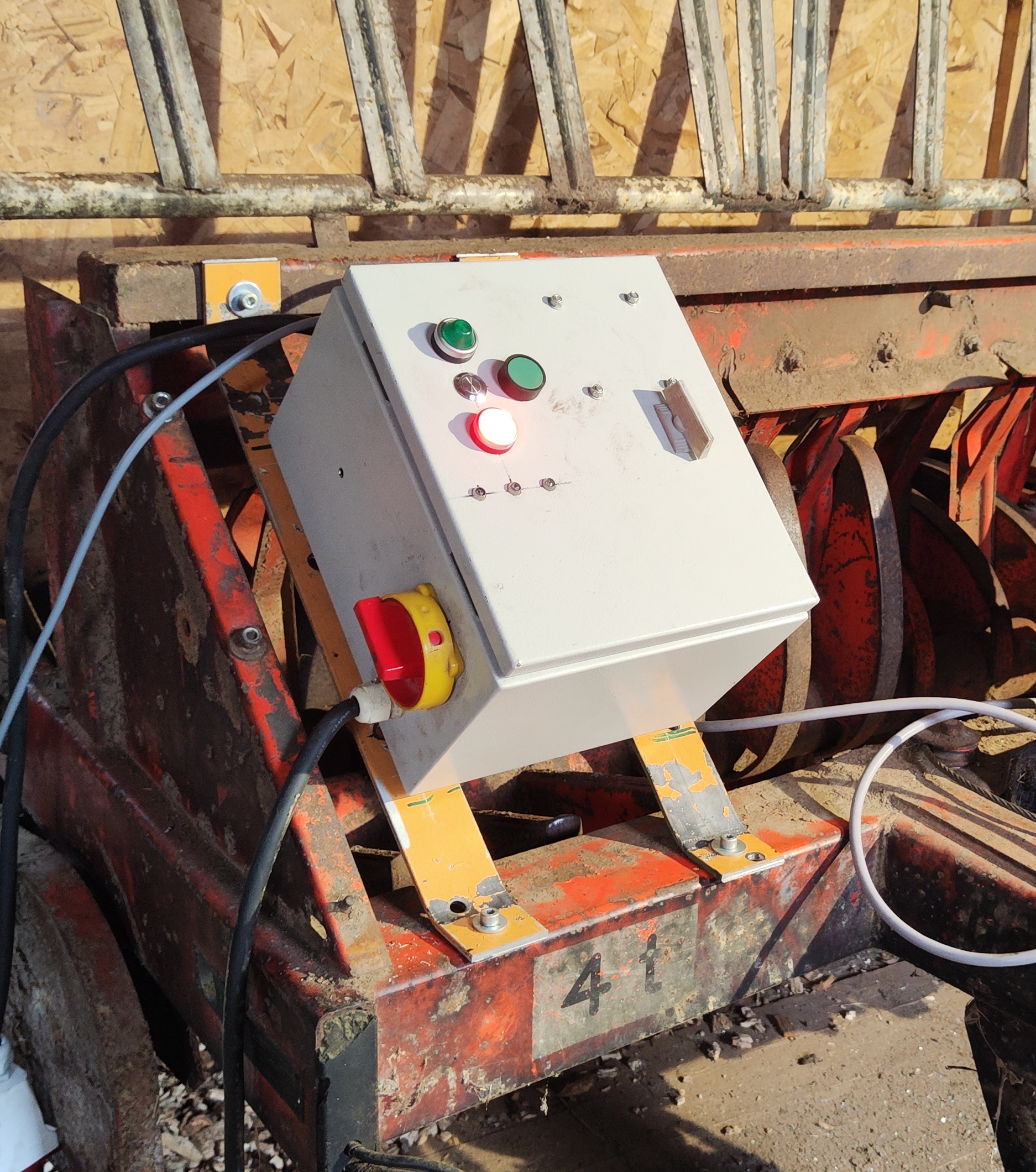 Contactor cabinet (mounted)
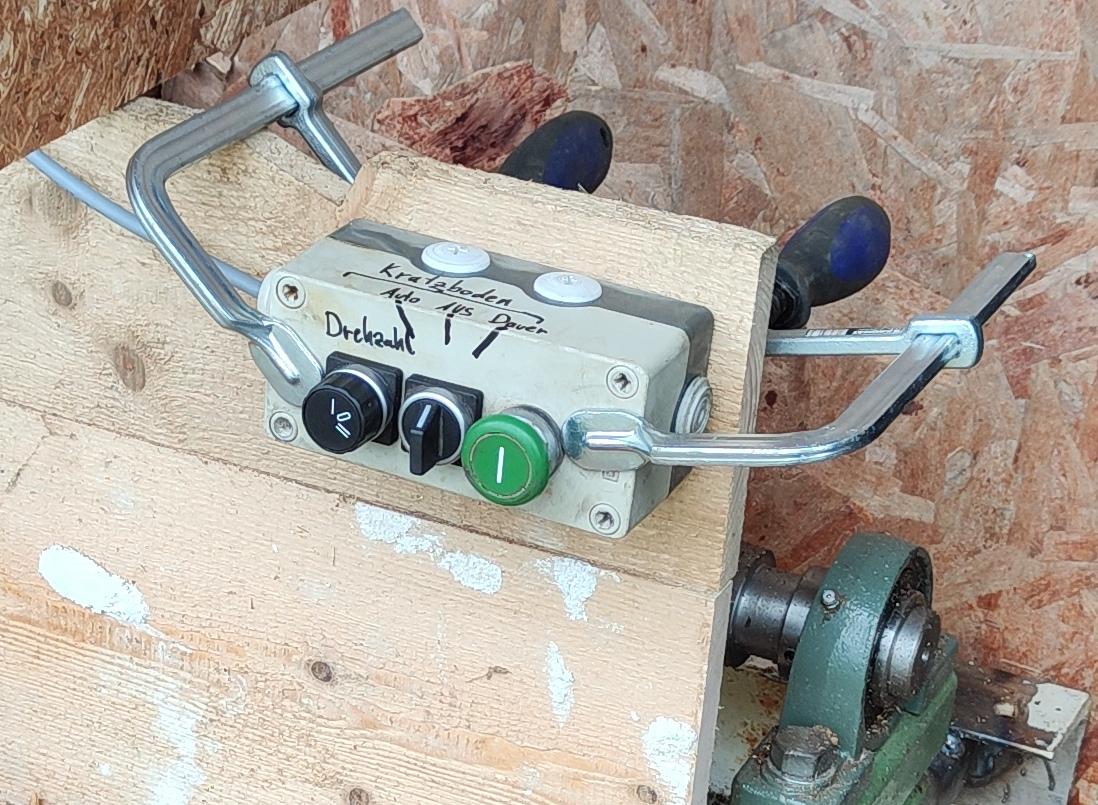 UI box at the outlet: scraper speed, scraper mode, start
Planning
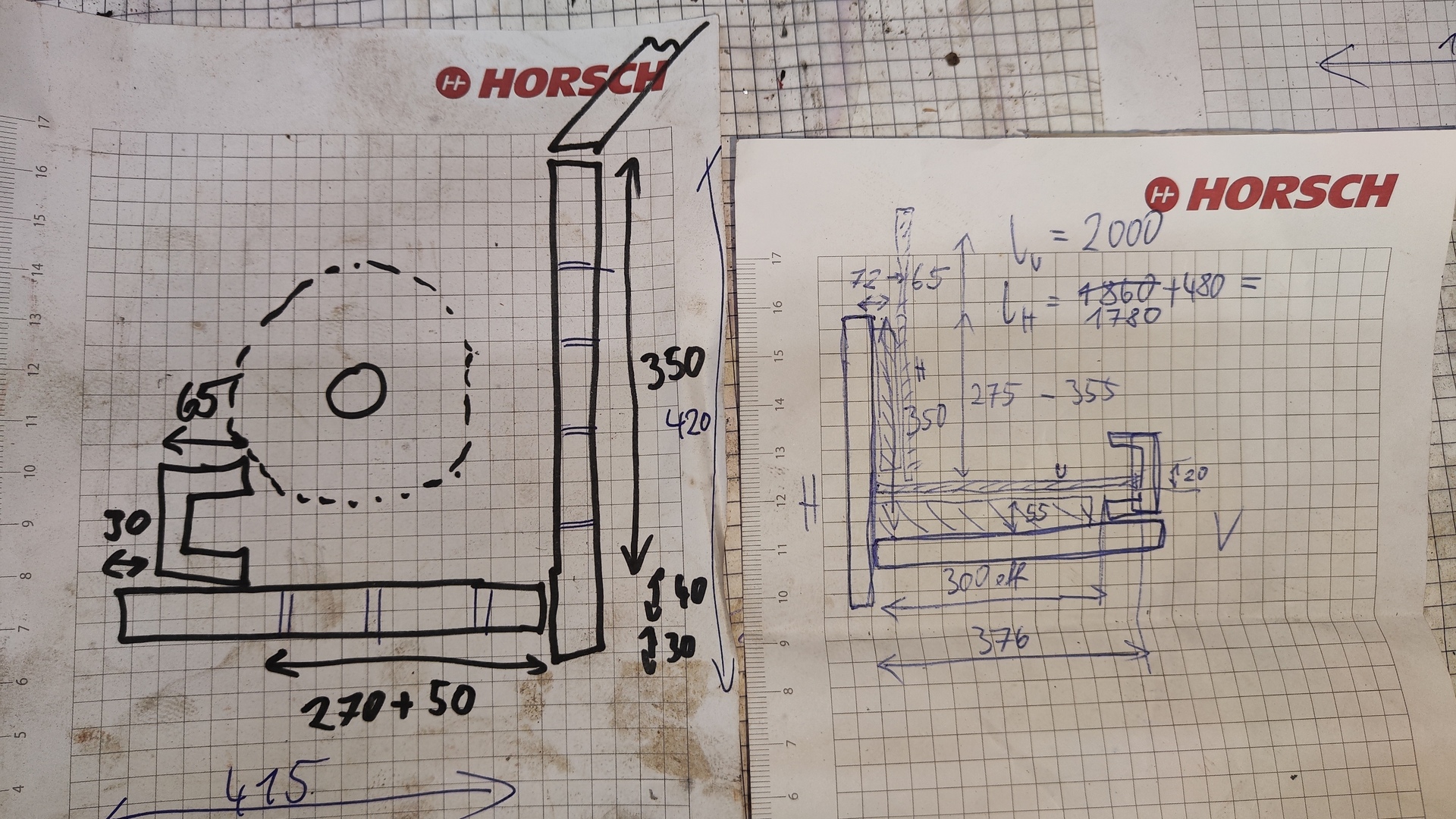
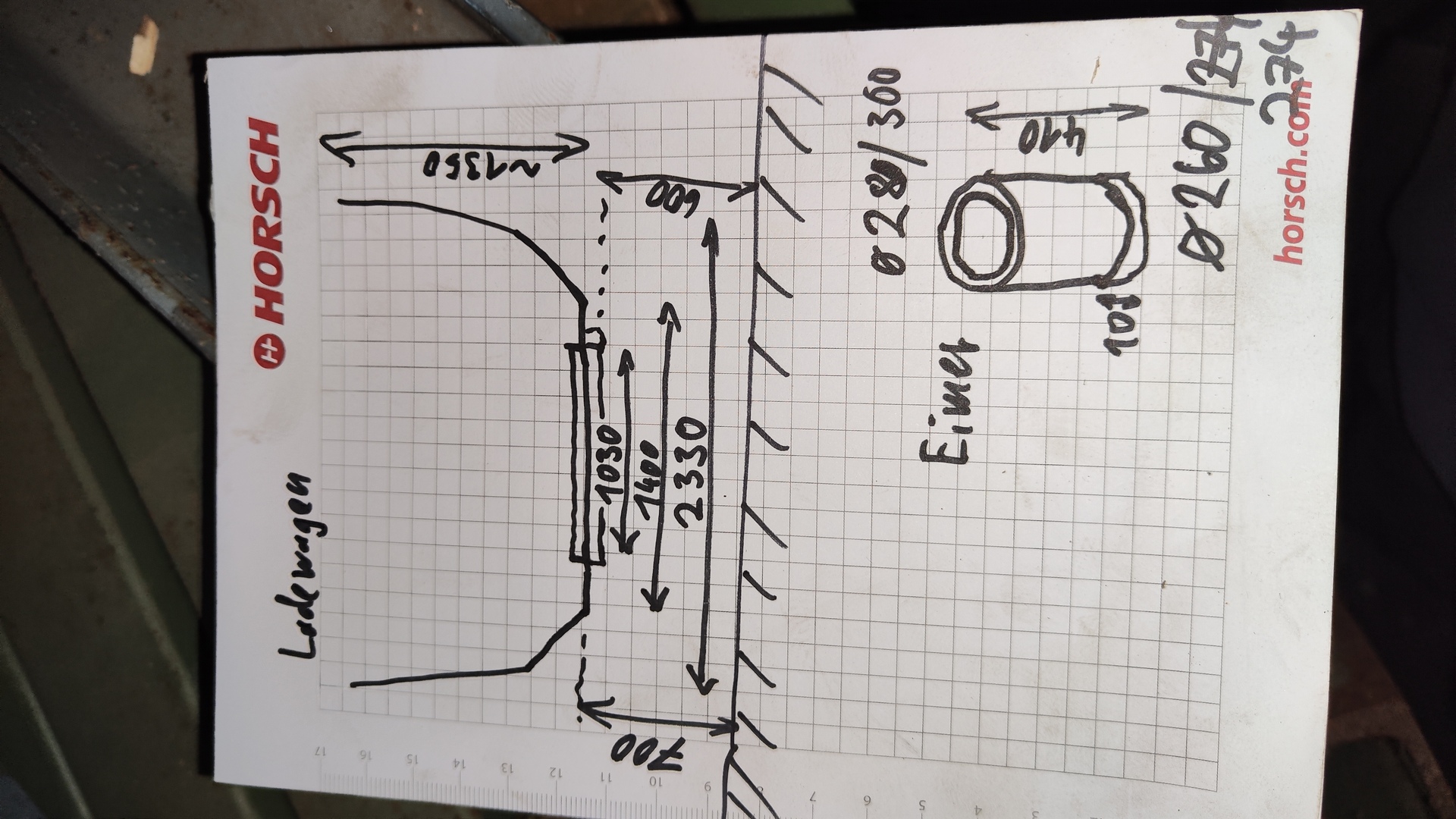
This project was modeled in CAD first.
A simplified trailer model with only the relevant features and an exact attachment design was created.
This made it possible to try different arrangements and positions, check clearances and mounts, and settle the layout before building.
sanity-check of auger rpm:
Technical Assets
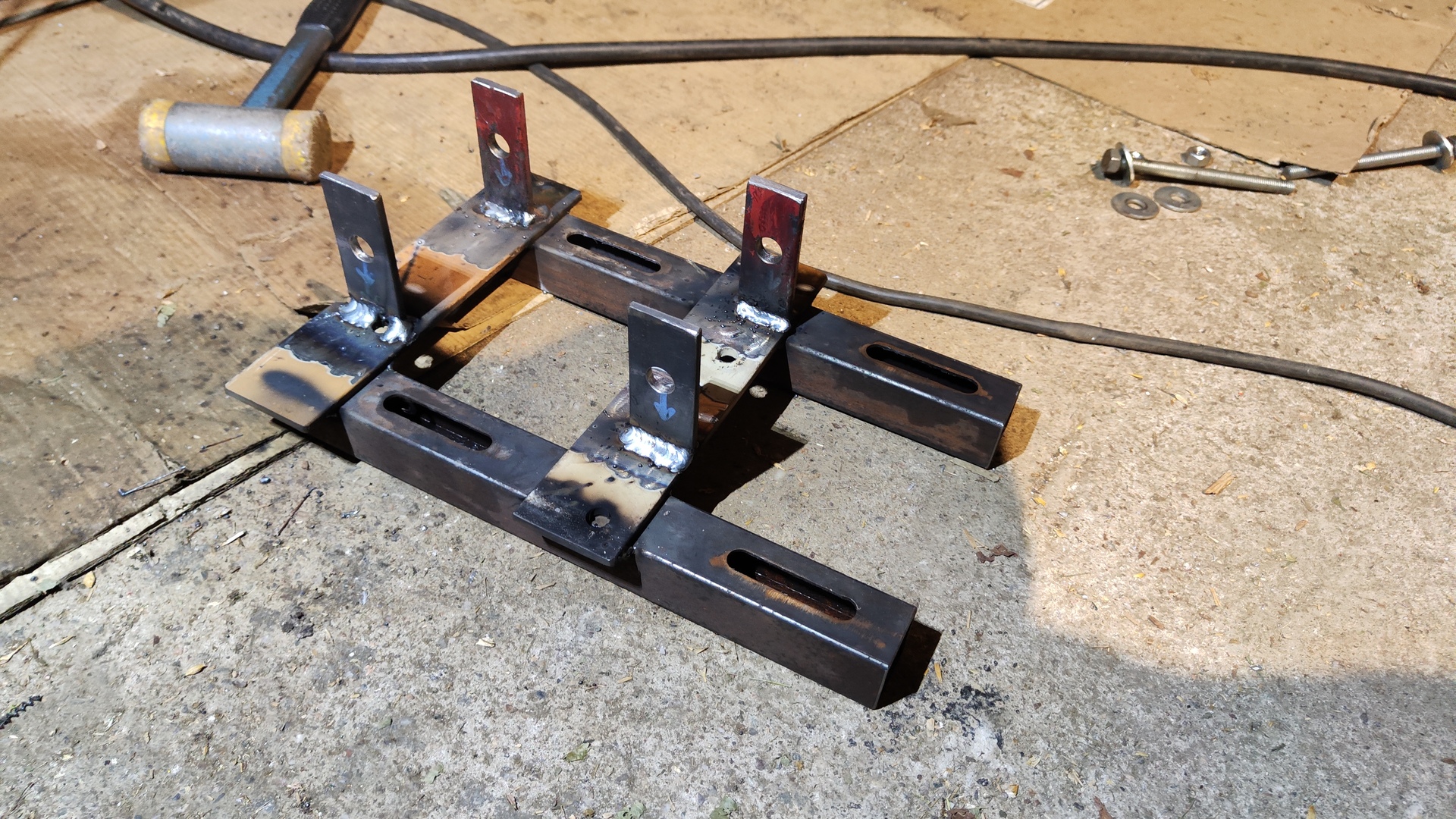
Part drawings
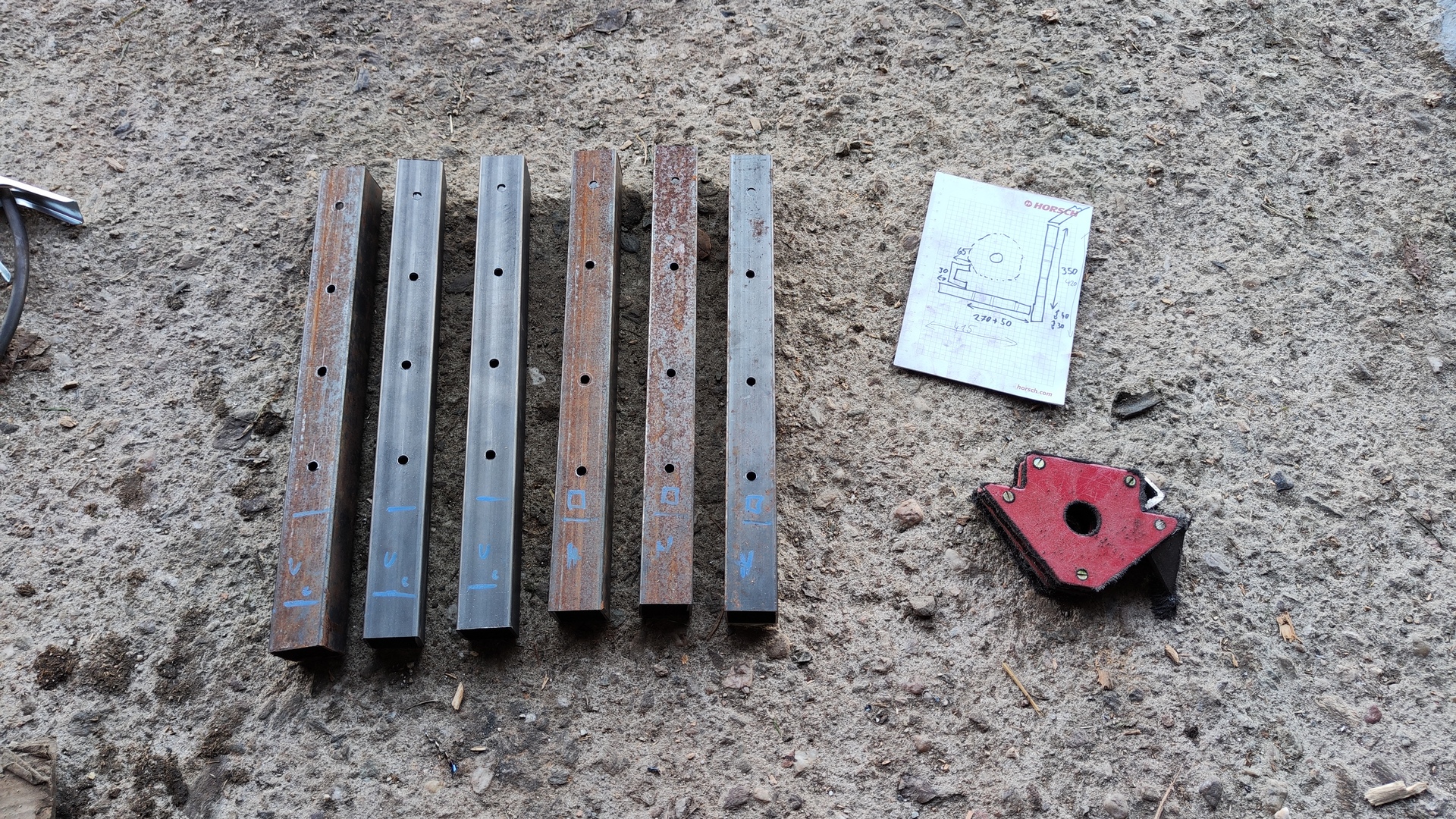
Only the parts that benefited from exact dimensions were built from CAD drawings; the rest were straightforward workshop parts built directly from the model and measurements.
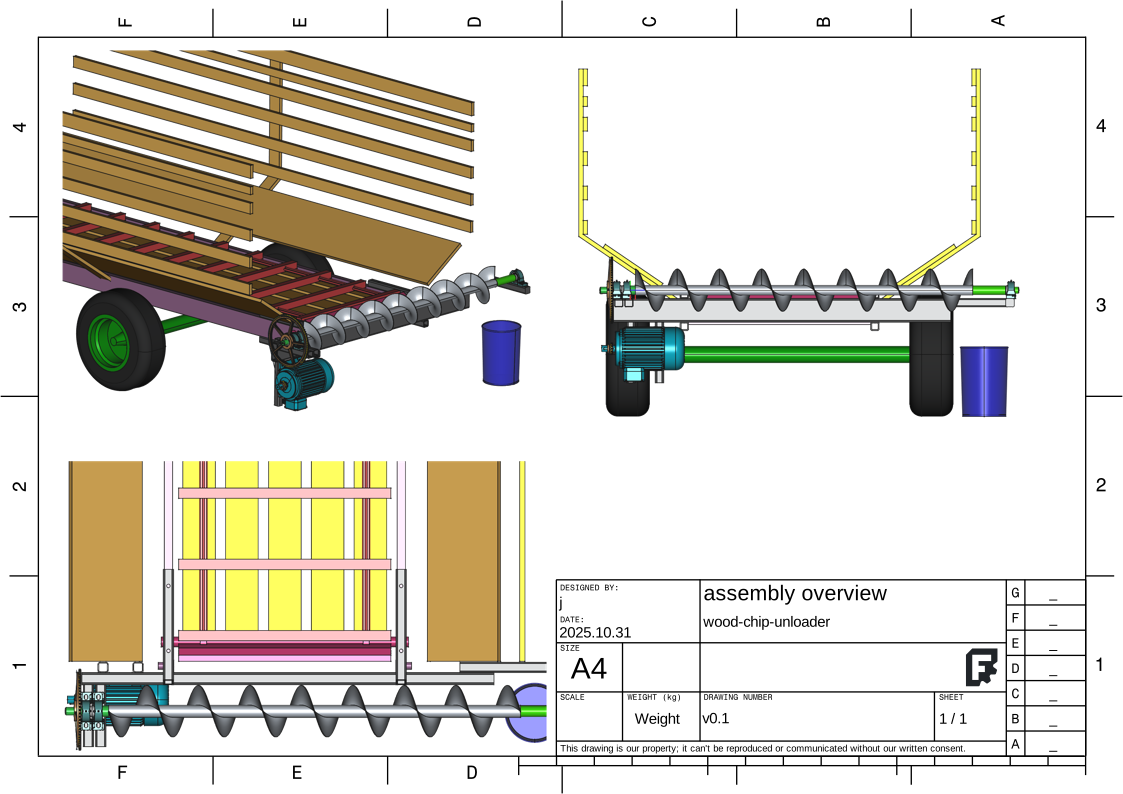 Assembly overview
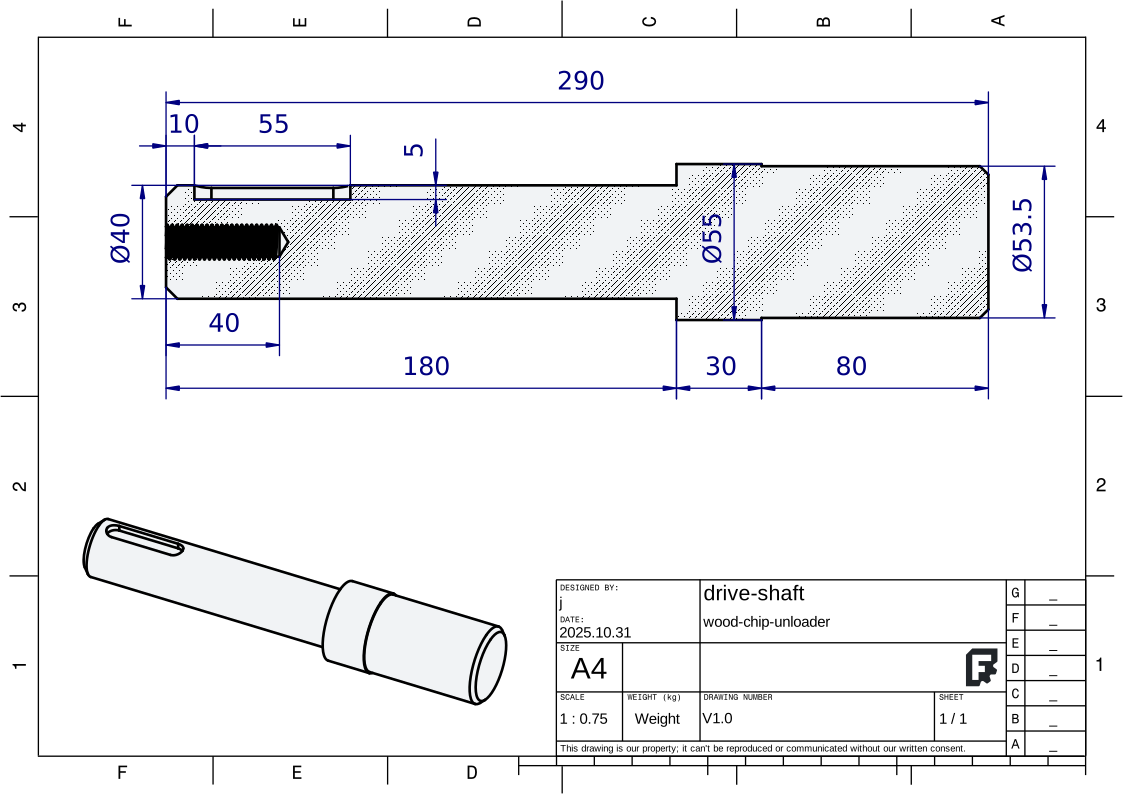 Driveshaft detail
Drivetrain calculation
A small spreadsheet was used to try different motor/ratio/chain options with available and bought parts, the final choices are highlighted.
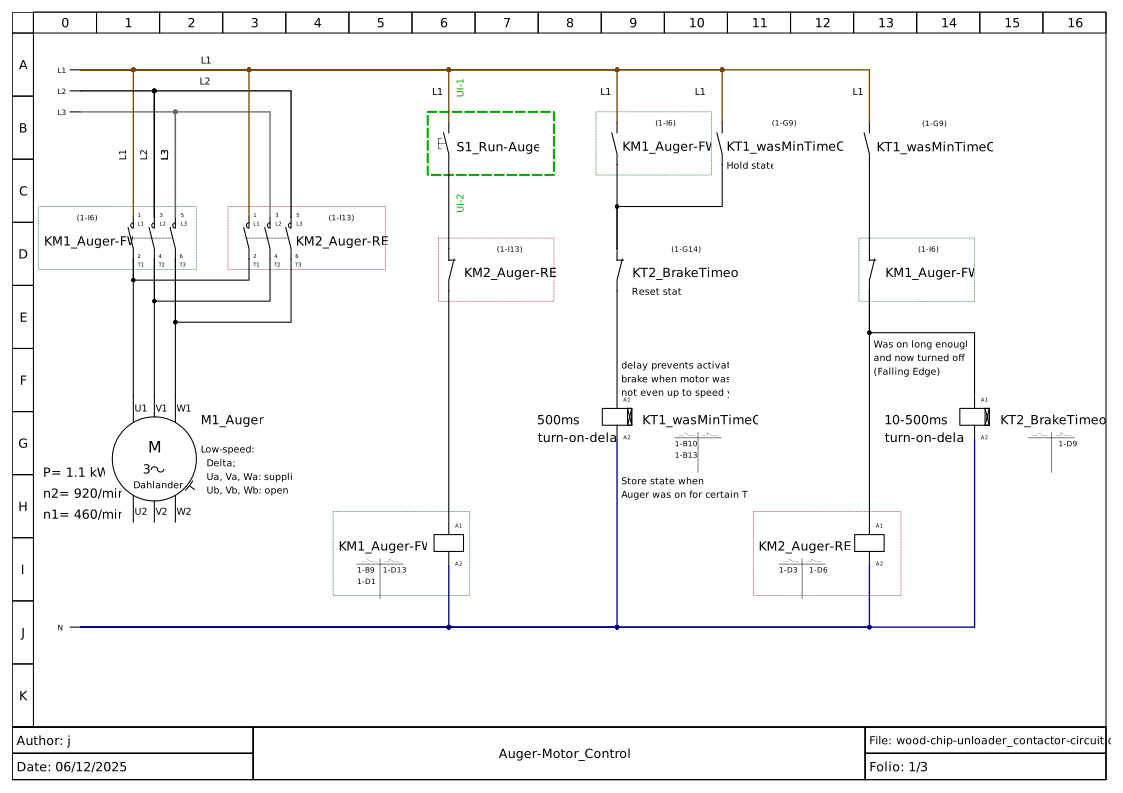
Electrical schematic
Features
- Emergency stop (cut all power)
- Main power switch (supply isolation)
- Indicator lamps: Turned ON / Enabled, Disabled / Fault
- Auger control: forward run, reverse-current braking (plugging) with adjustable timer
- Interlocks: electrical + mechanical FW/REV; Dahlander bridge/line
- Scraper control: AUTO / MAN selector
- Dahlander speed-select (scraper): bridge → line
Contactor circuit test:
Testing the contactor circuit after initial wiring
Schematic
Videos
Runs
Second test (2025-12-07):
First test (2025-11-23):
Loading
Loading with chips (2025-11-22):
Tests
Loader wagon pickup & scraper test (2025-10-31):
First auger spin (empty) (2025-11-05):
First scraper + auger test with chips (2025-11-06):
First electrical scraper drive test (2025-12-07):
Fails
Loaded start jam (2025-11-22):
Controls & braking
Contactor circuit test (2025-12-06):
Plugging (counter-current) braking test (2025-12-06):
Gallery